Processed Foods and Heart Health: Risks and Tips
Medical Disclaimer: The information provided in this article is for educational and informational purposes only and does not constitute medical advice. Always consult a qualified healthcare provider regarding any medical condition or treatment.
Ultra-Processed Foods and Heart Health: What Research Shows
Ultra-processed foods and heart health are closely connected in nutrition research. Studies have linked higher consumption of these foods with a greater risk of cardiovascular disease. However, these findings do not mean that an occasional packaged snack damages your arteries or that every ultra-processed food has the same nutritional value.[bmj][heart]
A large review published in The BMJ in 2024 found associations between higher ultra-processed food intake and several health problems, including cardiovascular disease and related deaths. Most of the evidence came from observational studies, which cannot establish cause and effect on their own.[bmj]
The practical message is to focus on your overall eating pattern. Choosing more vegetables, fruit, whole grains, beans, nuts and other nutritious foods can support heart health without requiring a completely package-free diet.[heart]
Key Takeaways
- Higher ultra-processed food intake is associated with a greater risk of cardiovascular disease, but the research does not prove that every product directly damages blood vessels.[bmj]
- Many ultra-processed foods contain substantial amounts of sodium, added sugars or saturated fat. Their nutritional quality varies.[heart]
- Some foods classified as ultra-processed, including certain whole-grain breads and low-sugar yogurts, can fit into a healthy diet.[heart]
- Start with realistic changes, such as replacing sugary drinks with water and choosing lower-sodium meals.[heart][heart]
- Seek personalized advice from a doctor or registered dietitian if you have high blood pressure, diabetes, kidney disease or an existing heart condition. Your food choices may need to fit a specific treatment plan.
- Everyone’s health needs and symptoms differ. Do not use your diet history alone to diagnose a circulation problem or assume that a food swap replaces medical care.
What Are Ultra-Processed Foods?
Ultra-processed foods are industrial formulations that often contain ingredients or additives used to change flavor, texture, appearance or shelf life. Researchers commonly identify them using the Nova food classification system.[bmj]
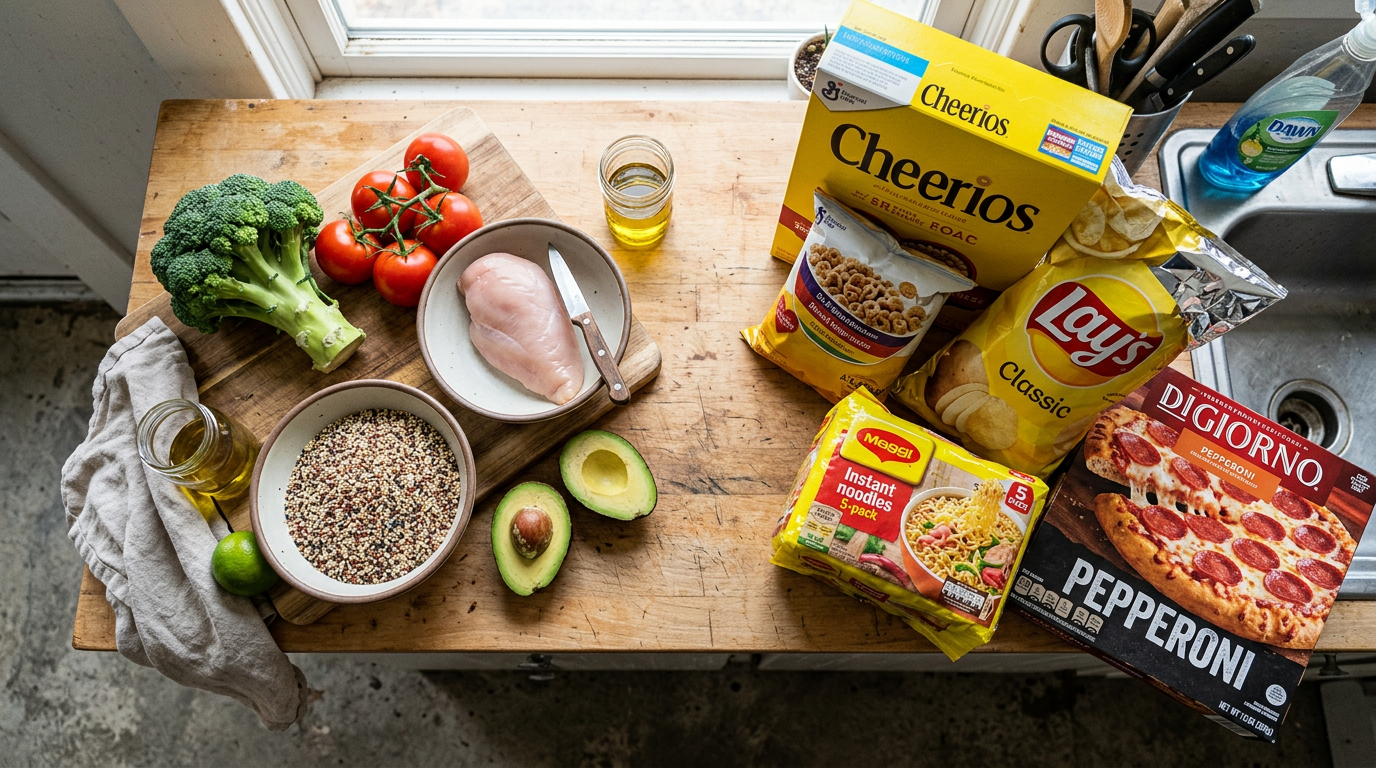
Examples include:
- Sugary soft drinks.
- Many packaged cakes, cookies and sweets.
- Instant noodles.
- Some ready-made meals and frozen pizzas.
- Certain processed meat products.[bmj][heart]
However, processing is not automatically harmful. Freezing, canning and packaging can make nutritious foods more convenient and accessible. Plain frozen vegetables, bagged beans and unsalted nuts are examples of useful options.[heart]
The Four Nova Food Groups
| Group | Meaning | Common examples |
| Unprocessed or minimally processed foods | Foods that remain close to their original form | Fruit, vegetables, plain oats and eggs |
| Processed culinary ingredients | Ingredients used to prepare meals | Oil, butter, sugar and salt |
| Processed foods | Foods made by adding ingredients such as salt, oil or sugar | Some canned vegetables, cheeses and simple breads |
| Ultra-processed foods | Industrial formulations, often containing ingredients used for flavor, texture or appearance | Soft drinks, packaged sweets and many instant meals |
The Nova system classifies processing rather than providing a complete nutritional assessment. A product’s fiber, sodium, added sugar and saturated fat content still matter.[bmj][heart]
What Did the 2024 Review Find?
The BMJ umbrella review combined evidence from existing meta-analysis studies. An umbrella review helps researchers assess patterns and limitations across a large body of research.[bmj]
The researchers included:
- 14 meta-analysis studies.
- 45 distinct pooled analyses.
- A reported combined participant count of 9,888,373 across those analyses.[bmj]
That total should not be described as a single clinical trial involving nearly 10 million different people. It is the sum reported across multiple analyses.[bmj]
Higher ultra-processed food intake was associated with cardiovascular events, cardiovascular deaths and hypertension. However, the strength and quality of the evidence differed between outcomes. Most analyses were rated low or very low quality under the GRADE evidence-assessment system.[bmj]
Why Association Is Not the Same as Causation
Observational studies track people’s diets and health outcomes without randomly assigning their long-term eating habits.
They can identify important links, but other factors may influence the results. These include differences in lifestyle, overall diet and how accurately participants report their food intake. The review also identified variation between studies and limitations in the available evidence.[bmj]
Therefore, the findings support concern and further research. They do not establish that ultra-processed foods cause permanent artery damage in every person who eats them.
How Might Ultra-Processed Foods Affect Cardiovascular Health?
Several pathways may help explain the association. Some involve well-established nutritional risks, while others remain under investigation.
1. Excess Sodium Can Raise Blood Pressure
Many packaged meals, snacks and restaurant foods contain substantial amounts of sodium. Excess sodium causes the body to retain more water, increasing the volume of blood inside blood vessels and potentially raising blood pressure.[heart]
Over time, high blood pressure increases the risk of heart attack, stroke and other health problems. Reducing sodium intake can help support blood pressure management.[heart]
Compare labels rather than assuming all products in the same category contain similar amounts.
2. Some Eating Patterns Encourage Excess Calorie Intake
A small NIH randomized trial provides evidence that an ultra-processed diet can increase food intake under controlled conditions.[pubmed.ncbi.nlm.nih]
Twenty adults followed an ultra-processed diet and a minimally processed diet for two weeks each. Participants could eat as much or as little as they wanted. During the ultra-processed phase, they consumed approximately 500 more calories per day and gained an average of about 0.9 kilograms.[pubmed.ncbi.nlm.nih]
This trial supports a short-term effect on calorie intake and weight. It did not measure long-term artery damage, heart attacks or strokes.[pubmed.ncbi.nlm.nih]
3. Nutritional Quality Matters
Many ultra-processed foods are high in added sugars, saturated fat or sodium. Regularly relying on these products can make it harder to follow a heart-healthy eating pattern.[heart]
However, some products have better nutritional profiles. Certain whole-grain breads, low-sugar dairy products and nut spreads can contribute useful nutrients.[heart]
This is why “ultra-processed” should not be the only information you consider when choosing food.
4. Inflammation and Gut Changes Are Being Studied
Researchers are investigating whether food structure, certain additives and changes in gut bacteria help explain some of the observed health associations.[bmj]
These are possible mechanisms—not proof that every emulsifier, sweetener or preservative harms blood vessels. The BMJ review describes this area of mechanistic research as still developing.[bmj]
Claims that all additives cause “leaky gut” or directly injure arteries go beyond what this review establishes.
Are All Ultra-Processed Foods Equally Unhealthy?
No. The American Heart Association recognizes that some foods classified as ultra-processed have nutritional value and can be part of a healthy dietary pattern.[heart]
For example, a whole-grain bread with useful fiber is not nutritionally equivalent to a sugary soft drink, even if both fall into the same processing category.
When comparing products, consider:
- Fiber and whole-grain content.
- Sodium.
- Added sugars.
- Saturated fat.
- Portion size.
- How the food fits into your usual meals.[heart][heart]
A long ingredient list can provide clues about processing, but ingredient count alone is not a reliable measure of healthfulness.
Practical Ways to Eat Fewer Ultra-Processed Foods
You do not need to remove every packaged food. The American Heart Association recommends limiting less nutritious ultra-processed foods and choosing a dietary pattern centered on vegetables, fruit, whole grains, beans, nuts, seeds and suitable protein sources.[heart]
Start With Foods You Eat Most Often
Choose one or two changes that fit your routine.
For example:
- Replace a daily sugary drink with water.
- Add vegetables to a convenient meal.
- Choose a lower-sodium version of a regularly purchased product.
- Use plain oats instead of a heavily sweetened breakfast cereal.
These are practical ways to move toward the dietary pattern recommended by the American Heart Association.[heart][heart]
Use Convenient, Nutritious Ingredients
Healthy eating does not require cooking every meal from scratch.
Useful options include:
- Plain frozen vegetables.
- Frozen fruit without added syrup.
- Canned beans with lower sodium.
- Plain oats.
- Unsalted nuts.
- Whole-grain products with suitable nutrition labels.[heart][heart]
These foods can save time while helping you build more balanced meals.
Compare Nutrition Labels
When choosing between similar products, look for options with less sodium, less added sugar and less saturated fat.[heart]
Do not assume that “natural,” “organic” or attractive packaging tells you everything about a food’s nutritional quality.
Simple Food Swaps for a Heart-Healthy Eating Pattern
| If you often choose… | Consider… |
| Sugary soft drinks | Water or unsweetened sparkling water |
| Heavily sweetened cereal | Plain oats with fruit and nuts |
| Salty packaged snacks | Unsalted nuts, fruit or plain popcorn |
| A ready meal with few vegetables | A lower-sodium option with added frozen vegetables or beans |
| Sweetened yogurt | Plain or lower-sugar yogurt with fruit |
These examples follow guidance to reduce added sugars and sodium while increasing fruit, vegetables, whole grains and nuts. They are not treatments for blocked arteries and do not promise immediate blood vessel repair.[heart][heart]
When Should You Ask a Doctor for Advice?
Ask your doctor or registered dietitian for an individualized plan if you already have a condition that affects your dietary needs, or if you are unsure how to make changes safely.
Useful questions include:
- Should I change my sodium intake?
- Which foods best fit my blood pressure or diabetes treatment plan?
- Do I need a cholesterol, blood pressure or blood sugar review?
- How can I improve my diet within my budget and routine?
People’s symptoms and health needs vary. This article cannot determine whether you have cardiovascular disease, and dietary changes should not replace prescribed treatment or an assessment of persistent symptoms.
Frequently Asked Questions
Do Ultra-Processed Foods Cause Heart Disease?
Higher intake is associated with a greater risk of cardiovascular disease. However, much of the long-term evidence is observational, so it does not prove that ultra-processed foods alone cause heart disease.[bmj]
Can One Ultra-Processed Meal Damage My Arteries?
The research discussed here does not establish that one meal causes permanent artery damage. It mainly examines usual dietary intake and health outcomes over time.[bmj]
Focus on your overall eating pattern rather than fearing an occasional convenience food.
Is All Packaged Food Ultra-Processed?
No. Packaging alone does not determine the processing category. Plain frozen vegetables, bagged beans and unsalted nuts can be nutritious packaged choices.[heart]
Is Packaged Whole-Grain Bread a Bad Choice?
Not necessarily. Some whole-grain breads are classified as ultra-processed but can still fit into a healthy diet. Compare fiber, sodium and added sugar rather than judging the product by processing alone.[heart]
Can Reducing Ultra-Processed Foods Improve Blood Pressure?
Replacing high-sodium foods with lower-sodium alternatives can help lower blood pressure. The benefit depends on what you replace, your overall diet and your individual health.[heart]
It is more accurate to discuss these specific changes than to promise that avoiding all ultra-processed foods will produce the same result for everyone.
Conclusion
Research links higher ultra-processed food intake with poorer cardiovascular outcomes, but it does not justify claims that every packaged food causes irreversible vascular damage. Food quality varies, and many questions about processing-specific effects remain unresolved.[bmj][heart]
A practical approach is to limit sugary drinks and foods high in sodium, added sugars or saturated fat while eating more vegetables, fruit, whole grains, beans and nuts. Convenient options can still have a place in this pattern.[heart][heart]
Editorial Note and Medical Disclaimer
This article was prepared using publicly available peer-reviewed research and guidance from the National Institutes of Health and the American Heart Association. It distinguishes observational associations from findings supported by randomized trials.
The information is intended for general education, not diagnosis or personalized treatment. Symptoms, nutritional needs and responses to dietary changes differ between individuals. Consult a qualified healthcare professional about persistent symptoms, existing medical conditions or major dietary changes.
Source Details
- Lane MM and colleagues. “Ultra-processed food exposure and adverse health outcomes: umbrella review of epidemiological meta-analyses.” The BMJ. 2024;384:e077310. DOI: 10.1136/bmj-2023-077310.[bmj]
- Hall KD and colleagues. “Ultra-Processed Diets Cause Excess Calorie Intake and Weight Gain: An Inpatient Randomized Controlled Trial of Ad Libitum Food Intake.” Cell Metabolism. 2019;30(1):67–77.e3. DOI: 10.1016/j.cmet.2019.05.008.[pubmed.ncbi.nlm.nih]
- American Heart Association. “Are Ultraprocessed Foods Good or Bad?” Guidance on nutritional differences and healthier eating patterns.[heart]
- American Heart Association. “Can Processed Foods Be Part of a Healthy Diet?” Guidance on convenient foods and nutrition-label comparisons.[heart]
- American Heart Association. “Get the Scoop on Sodium and Salt.” Explanation of sodium, blood pressure and cardiovascular risk.[heart]