Heart Rate Variability Monitor: How to Choose and Use One
Medical Disclaimer: Educational content only. Not medical advice. Consult your doctor for personal health decisions.
Heart Rate Variability Monitor
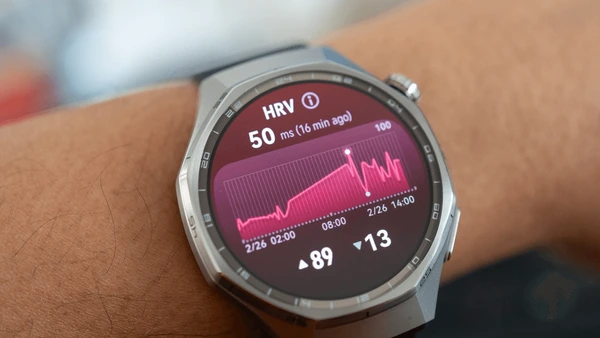
A heart rate variability monitor measures or estimates small differences in the time between heartbeats. Depending on the device, it may use electrical signals from your heart or optical signals from your pulse. These measurements can help you follow personal trends, but they do not provide a diagnosis or a complete picture of heart health.[ncbi.nlm.nih][fda]
When choosing an HRV monitor, prioritize evidence that the specific device measures accurately under the conditions in which you plan to use it. Also consider the measurement method, comfort, data access, and total cost. A convenient device is useful only if you understand what its numbers mean—and what they cannot tell you.[ncbi.nlm.nih]
Key Takeaways
- HRV describes variation in the time between beats, not the number of beats per minute. Two people can have the same average heart rate but different HRV.[ncbi.nlm.nih]
- An electrocardiogram, or ECG, is the reference method for measuring heartbeat timing. Optical wearables estimate variability from changes in blood volume, which is a related but different measurement.[ncbi.nlm.nih]
- Accuracy depends on the device, calculation method, recording conditions, and signal quality. Accurate heart rate tracking does not automatically establish accurate HRV tracking.[ncbi.nlm.nih]
- Compare readings collected with the same device, metric, and routine. A short morning measurement is not interchangeable with an overnight average or a 24-hour recording.[ncbi.nlm.nih]
- Individual baselines and health needs differ. Discuss persistent concerns with a qualified healthcare professional rather than changing treatment based on an app score.[my.clevelandclinic]
- Seek emergency help for palpitations accompanied by chest pain, shortness of breath, fainting, or other serious symptoms—even if your wearable reports a reassuring result.[medlineplus]
What Does a Heart Rate Variability Monitor Measure?
Heart rate tells you how many times your heart beats in a minute. Heart rate variability describes how much the intervals between those beats change. These intervals are often measured in milliseconds.[ncbi.nlm.nih]
Your autonomic nervous system—the network that regulates functions such as heart rate without conscious effort—helps influence this variation. Breathing, sleep, stress, age, and other physiological factors can affect the result.[ncbi.nlm.nih][my.clevelandclinic]
HRV therefore provides information about how heartbeat timing changes under particular conditions. It is not a direct measurement of “biological age,” a diagnosis of stress, or proof that someone is healthy or unhealthy. Research applications are extensive, but gaps in standardization and clinical interpretation remain.[ncbi.nlm.nih]
Why different devices show different numbers
“HRV” is an umbrella term for several calculations. Two common measures are:
| Metric | Plain-language explanation |
| RMSSD | A calculation emphasizing differences between successive normal heartbeat intervals. |
| SDNN | The standard deviation, or statistical spread, of normal heartbeat intervals across the recording. |
Both are commonly reported in milliseconds, but they describe different aspects of variability. Recording length also affects interpretation, so an RMSSD reading from one device should not be treated as equivalent to an SDNN reading from another.[ncbi.nlm.nih]
If an app shows a proprietary “readiness” or “recovery” score, check whether it also provides the underlying HRV metric. A branded score may combine HRV with other information and should not be assumed to be a raw millisecond measurement.
Types of HRV Monitors and Their Limitations
Electrical chest sensors
Electrical sensors detect the heart’s electrical activity and identify the timing of beats. Some chest-worn devices can provide beat-to-beat intervals for an HRV app or analysis program.[ncbi.nlm.nih]
However, not every chest strap offers the same data access or measurement quality. Check whether the specific model has been compared with a reference ECG for HRV—not simply for average heart rate.[ncbi.nlm.nih]
Optical watches, rings, and other trackers
Optical sensors use light to detect changes in blood volume. This method is called photoplethysmography, or PPG. The variability calculated from pulse timing is technically pulse rate variability, although consumer products often label it HRV.[ncbi.nlm.nih]
Some devices perform well under the conditions in which they have been validated. However, results should not automatically be generalized to other activities, populations, or settings. Optical pulse variability and ECG-derived HRV are not universally interchangeable.[pmc.ncbi.nlm.nih]
Clinical ECG and ambulatory monitors
Healthcare professionals can use ECG recordings or longer-term ambulatory monitors to evaluate heart activity. These tests serve a different purpose from a consumer recovery dashboard and may be appropriate when symptoms need investigation.[my.clevelandclinic][my.clevelandclinic]
An HRV tracker should not replace a prescribed monitor. If your goal is to investigate palpitations, fainting, or suspected rhythm problems, ask a clinician which test is appropriate before buying a wellness device.[medlineplus]
How to Choose a Heart Rate Variability Monitor
Start with what you want to learn, then evaluate the device against that goal.
| Feature | What to check before buying |
| Intended use | Is it designed for scheduled resting measurements, overnight trends, exercise, or clinical monitoring? |
| Validation | Has the exact model been tested against ECG for HRV? Were conditions similar to your intended use? |
| Reported metric | Does it show RMSSD, SDNN, raw intervals, or only a proprietary score? |
| Recording method | Does it take spot measurements, sample selected periods, or provide longer recordings? |
| Signal-quality handling | Does it flag poor contact, movement, missing data, or unreliable readings? |
| Comfort and fit | Can you comfortably wear it for the required measurement period? |
| Data access | Can you export readings and keep your history if you change phones or cancel a subscription? |
| Total cost | Are the app, historical trends, replacement accessories, and useful features included or subscription-based? |
| Privacy | Where is health data stored, who can access it, and how can you delete it? |
Validation deserves particular attention. A review of HRV measurement methods identified continuing concerns about inconsistent protocols, data accuracy, and the need for further validation of wearable devices. A scientific-looking dashboard is not a substitute for that evidence.[ncbi.nlm.nih]
Questions to ask about an accuracy claim
Look for answers to these questions:
- Was HRV tested, or only heart rate?
- Which HRV metric was evaluated?
- Was testing performed at rest, during sleep, or during movement?
- Who participated, and do they resemble the intended users?
- Were poor-quality readings excluded?
- Is the study publicly available, and was it independent of the manufacturer?
A device validated during controlled resting conditions may not have demonstrated equivalent accuracy during exercise or everyday movement.[pmc.ncbi.nlm.nih]
Is a more expensive monitor necessarily better?
Price alone does not answer whether a device measures your chosen HRV metric accurately. Compare the evidence and features you need rather than assuming that a higher price, more sensors, or a larger dashboard guarantees better information.
For a short daily measurement, you may value a compatible sensor and clear data export. For overnight tracking, comfort and reliable wear time may matter more. These are buying considerations—not claims that one device category is universally superior.
How to Use an HRV Monitor Consistently
Consistency reduces avoidable differences between readings. Research protocols emphasize standardized conditions because posture, recording duration, breathing, and other factors can influence HRV.[ncbi.nlm.nih]
1. Follow the device’s measurement instructions
Use the recommended placement and fit. If the app flags a poor-quality signal, do not interpret that reading as a meaningful physiological change. Signal artifacts and incorrectly identified beats can distort HRV calculations.[ncbi.nlm.nih]
2. Keep your measurement routine similar
For scheduled spot readings, use a similar time, posture, recording duration, and resting routine. Avoid comparing a relaxed seated measurement with a reading collected immediately after exercise.[ncbi.nlm.nih]
If you track overnight, compare overnight data with other overnight data from the same system rather than treating it as equivalent to a separate morning test. Recording conditions and duration affect the values.[ncbi.nlm.nih]
3. Breathe naturally unless using a separate guided protocol
Breathing changes heartbeat timing and can influence HRV. A reading collected during paced breathing answers a different question from one collected during your usual resting routine. Label these sessions separately rather than assuming a higher guided-breathing value means your baseline health has improved.[ncbi.nlm.nih]
4. Add context instead of reacting to one score
Record relevant changes such as poor sleep, unusual stress, illness, or a different exercise routine. Sleep and stress can influence HRV, but the device cannot establish which factor caused a particular reading.[ncbi.nlm.nih][my.clevelandclinic]
Use the information as context, not a diagnosis. If a reading concerns you, first check measurement quality and consider how you feel.
How to Interpret Your HRV Trends
Compare like with like
Your most interpretable comparisons use the same device, metric, recording method, and conditions. Switching products can introduce a change in measurement rather than a true change in your body.[ncbi.nlm.nih]
For example, an overnight average and a brief spot reading should not be expected to match simply because both are labeled “HRV.”
Do not treat age charts as personal diagnostic limits
Age affects HRV, but it is not the only influence. Measurement methods and individual differences make universal consumer cutoffs difficult to establish. A number that differs from an online chart does not, by itself, diagnose disease.[ncbi.nlm.nih][my.clevelandclinic]
Research reference values can be informative when the population, metric, and recording protocol match. They become less useful when those details are missing.
Higher is not always a reason to celebrate
HRV analysis is intended to evaluate variation in normal heartbeat intervals. Extra beats, rhythm disturbances, or signal errors can distort the calculation. An unexpectedly high value is therefore not automatically evidence of better fitness or recovery.[ncbi.nlm.nih]
Likewise, a low reading does not reveal a specific cause. Persistent changes should be considered alongside symptoms, health history, and other clinical information—not interpreted in isolation.[ncbi.nlm.nih][my.clevelandclinic]
Consumer Tracking vs. Medical Assessment
A wellness HRV monitor can support awareness of personal patterns. It cannot independently diagnose a heart condition, determine whether a medicine is working, or establish that a symptom is safe to ignore.[fda][medlineplus]
In the United States, FDA policy distinguishes low-risk general wellness products from products intended for diagnosis or treatment. Some noninvasive HRV features may fall within the general wellness category when they are intended solely for wellness use.[fda][fda]
Do not assume that every feature on a wearable has FDA authorization because one feature does. If a manufacturer makes a regulatory claim, check the specific feature, intended use, and whether the status is clearance or approval. A wellness HRV feature is not equivalent to an FDA-authorized diagnostic test.[fda][fda]
Do not start, stop, or change prescribed medicines based on an HRV score. If you have a known heart rhythm condition, ask your clinician whether the device’s HRV analysis is meaningful for you. Abnormal beats can complicate standard HRV analysis.[ncbi.nlm.nih]
Can Tracking HRV Improve Health or Longevity?
Measuring a signal and improving a health outcome are different things. HRV research has identified associations with health and physiological regulation, but these associations do not prove that buying a tracker or increasing its score will extend life. Important gaps remain in standardization and clinical application.[ncbi.nlm.nih]
A tracker may help you pay attention to sleep, exercise, and stress management. Those behaviors deserve attention for their own health value—not simply as ways to chase a higher number. Cleveland Clinic advises focusing on overall physical and mental health rather than becoming fixated on HRV.[my.clevelandclinic]
Questions to Ask a Healthcare Professional
- Would HRV tracking be useful for my goals or health history?
- Could my rhythm, medical condition, or treatment affect the reading?
- Should I use a consumer tracker or a prescribed medical monitor?
- What information should I bring if I notice a persistent change?
- Which symptoms require urgent assessment regardless of my device’s score?
When to Seek Medical Advice
Routine discussion
If you feel well but remain concerned about a persistent HRV pattern, discuss it at a healthcare appointment. Bring the device name, metric, recording method, and trend history. Your clinician can decide whether the pattern has clinical relevance.[my.clevelandclinic]
There is no universal consumer HRV number that, by itself, determines an emergency. Interpretation depends on measurement method, clinical context, and symptoms.[ncbi.nlm.nih]
Prompt assessment
Contact a healthcare professional promptly for new or different palpitations, particularly if you have known heart disease or cardiovascular risk factors. An HRV score cannot establish whether the rhythm is normal.[medlineplus]
Emergency care
In the United States, call 911 if palpitations occur with chest pain, shortness of breath, fainting, loss of alertness, or significant dizziness or lightheadedness. Outside the United States, use your local emergency number. Do not wait for the tracker to confirm a problem.[medlineplus]
Frequently Asked Questions
Is a smartwatch accurate enough to measure HRV?
Some devices have supportive validation for specific measurements and conditions, while others need more evidence. Check research on the exact model and HRV metric. Accuracy demonstrated at rest does not automatically establish accuracy during exercise or other settings.[ncbi.nlm.nih][pmc.ncbi.nlm.nih]
Is an HRV monitor the same as a heart rate monitor?
Not necessarily. Heart rate monitoring measures beats per minute. HRV requires sufficiently precise beat-to-beat timing and an appropriate calculation. A device that reports heart rate may not provide validated HRV data.[ncbi.nlm.nih]
Can I compare HRV numbers from different brands?
Not without checking how each system measures and calculates the result. Different metrics, recording lengths, and processing methods can produce different values. Compare matched methods whenever possible.[ncbi.nlm.nih]
Does low HRV mean I have heart disease?
No. Low HRV is not a standalone diagnosis. Age, sleep, stress, measurement conditions, and health conditions can all affect interpretation. Discuss persistent concerns with a healthcare professional.[ncbi.nlm.nih][my.clevelandclinic]
Do I need an HRV monitor to improve my health?
You do not need to base healthy habits on an HRV dashboard. Regular physical activity, attention to sleep, and appropriate stress management can be pursued without buying a tracker. HRV monitoring is an optional source of information, not a replacement for healthcare or a complete measure of well-being.[my.clevelandclinic]
Editorial Note
This article provides general education. It does not replace professional medical advice, diagnosis, or treatment. Individual symptoms, measurements, risks, and healthcare needs vary. Consult a qualified healthcare professional for guidance based on your medical history. No independent medical review of this article is claimed.
Sources
- Cleveland Clinic. “Heart Rate Variability (HRV).”[my.clevelandclinic]
- Sundas A, Contreras I, Navarro-Otano J, et al. “Heart rate variability over the decades: a scoping review.” PeerJ, 2025.[ncbi.nlm.nih]
- “Accuracy of Photoplethysmography-Derived Pulse Rate Variability Compared with Electrocardiography-Derived Heart Rate Variability: A Systematic Review and Meta-Analysis.”[pmc.ncbi.nlm.nih]
- U.S. Food and Drug Administration. “General Wellness: Policy for Low Risk Devices.”[fda]
- U.S. Food and Drug Administration. “General Wellness: Policy for Low Risk Devices—Guidance for Industry and Food and Drug Administration Staff.”[fda]
- U.S. Food and Drug Administration. “Refresh on General Wellness: Policy for Low Risk Devices.”[fda]
- Cleveland Clinic. “Heart and Ambulatory Monitors.”[my.clevelandclinic]
- MedlinePlus Medical Encyclopedia. “Heart palpitations.”[medlineplus]