Protein-Rich Dinner: Benefits for Muscle and Healthy Aging
By Maria Shafiq | Founder & Health Research Writer, The Veins Vercel | Updated:Sep 27, 2026
Medical Disclaimer: The information provided in this article is for educational and informational purposes only and does not constitute medical advice. Always consult a qualified healthcare provider regarding any medical condition or treatment.
Protein-Rich Dinner:
A protein-rich dinner can help supply the nutrients your body uses to maintain and repair muscle. This may be particularly useful for people who do resistance exercise or struggle to eat enough protein throughout the day.[pmc.ncbi.nlm.nih]
However, evening protein is not a shortcut to stronger muscles or a longer life. Research supports its role in overnight muscle repair, but it has not established that eating protein at night is better than getting adequate protein at other times.[pmc.ncbi.nlm.nih]
The most useful approach is to look at dinner as one part of your daily nutrition—not a special meal that can make up for everything else.
Key Takeaways
- Protein provides amino acids that your body uses to build and repair muscle tissue. Protein consumed before sleep can be digested and absorbed overnight.[pmc.ncbi.nlm.nih]
- Resistance exercise and adequate protein work together to support muscle health, including in older adults.[pmc.ncbi.nlm.nih]
- Expert recommendations discussed in research suggest approximately 1.0–1.2 grams of protein per kilogram of body weight daily for many healthy older adults. This is not a universal prescription.[pmc.ncbi.nlm.nih]
- Bedtime protein studies often use controlled protein drinks. Their findings should not automatically be applied to every type of dinner.[pmc.ncbi.nlm.nih]
- A large meal shortly before lying down may worsen heartburn or digestive discomfort in some people.[upmc]
When to Ask Your Doctor or Dietitian
Everyone’s symptoms, health conditions, appetite, and nutritional needs are different. Before substantially increasing protein, ask a doctor or registered dietitian to help you choose an appropriate daily amount—especially if you have kidney disease, follow a prescribed diet, or are recovering from illness.
This is a recommendation to seek individualized advice, not a claim that a doctor has reviewed or endorsed this article.
What Does “Anabolic Dinner” Mean?
“Anabolic” describes processes that build tissues. In discussions about nutrition, an anabolic meal usually means a meal that supplies nutrients needed for muscle building and repair.
Your body continually breaks down and replaces muscle proteins. Eating protein supplies amino acids for this renewal process, while resistance exercise stimulates muscles to adapt.[pmc.ncbi.nlm.nih]
Calling a meal an “anabolic dinner” does not make it a special treatment. The practical question is whether your meals provide enough protein and energy to support your needs.
Why Muscle Health Matters as You Age
Age-related declines in muscle mass and strength can affect everyday activities, including walking, climbing stairs, and getting up from a chair. Muscle weakness is also associated with falls and reduced independence.[pmc.ncbi.nlm.nih]
Nutrition is one part of protecting muscle function. Research supports combining adequate dietary protein with resistance exercise rather than relying on either approach alone.[pmc.ncbi.nlm.nih]
Older muscles may respond less strongly to a small protein serving than younger muscles. This reduced response is often called anabolic resistance, and it helps explain why protein quantity and meal distribution receive attention in healthy-aging research.[pmc.ncbi.nlm.nih]
However, eating more protein is not always the right response to weakness. Persistent changes in strength or function deserve individual medical assessment.
What Research Shows About Protein Before Sleep
Research indicates that the digestive system can process protein during sleep. The resulting amino acids can be used to make new muscle proteins overnight.[pmc.ncbi.nlm.nih]
A review by Snijders and colleagues discusses studies using approximately 20–40 grams of protein before bedtime, frequently in the form of casein, a dairy protein. Several studies found increases in overnight muscle-protein synthesis, particularly when protein intake followed evening exercise.[pmc.ncbi.nlm.nih]
Muscle Repair Is Not the Same as Guaranteed Muscle Growth
Muscle-protein synthesis measures the production of new muscle proteins over a particular period. An increase during one night does not automatically mean a person will gain substantial muscle over several months.
Some longer training studies have reported benefits from additional evening protein. However, researchers could not clearly separate the effects of bedtime timing from the effects of simply consuming more total protein.[pmc.ncbi.nlm.nih]
There is also an important difference between a protein drink taken shortly before sleep and a mixed dinner eaten several hours earlier. Findings from one setting should not be presented as proof of identical results in the other.
How Much Protein Should You Eat?
Start with your daily needs rather than choosing a dinner target in isolation.
A review of protein recommendations for older people describes expert guidance of about 1.0–1.2 grams per kilogram of body weight per day for many healthy adults aged 65 and above. Requirements may differ with activity, illness, nutritional status, and medical conditions.[pmc.ncbi.nlm.nih]
For example, that range would equal approximately 70–84 grams daily for a person weighing 70 kilograms. It is an illustration, not a personal recommendation.
Is There a Perfect Dinner Portion?
No single dinner portion suits everyone.
Research on protein distribution discusses servings of approximately 25–30 grams per meal, while some overnight studies have used 40 grams. These figures come from different research settings and should not be treated as a mandatory dinner prescription.[pmc.ncbi.nlm.nih][pmc.ncbi.nlm.nih]
A more practical approach is to:
- Work out an appropriate daily protein goal.
- Include protein at more than one meal.
- Avoid saving nearly all your protein for dinner.
- Adjust portions to your appetite, activity, and medical needs.
Research suggests that distributing protein more evenly may support daily muscle-protein synthesis, although the best pattern can vary.[pmc.ncbi.nlm.nih]
How to Build a Balanced Protein-Rich Dinner
Protein does not need to be the only focus of your evening meal. Use the following combinations as meal ideas rather than fixed nutrition prescriptions.
Chicken and Vegetable Plate
- Grilled or baked chicken.
- Brown rice or whole-wheat roti.
- Cooked vegetables or salad.
- A dressing or seasoning you enjoy.
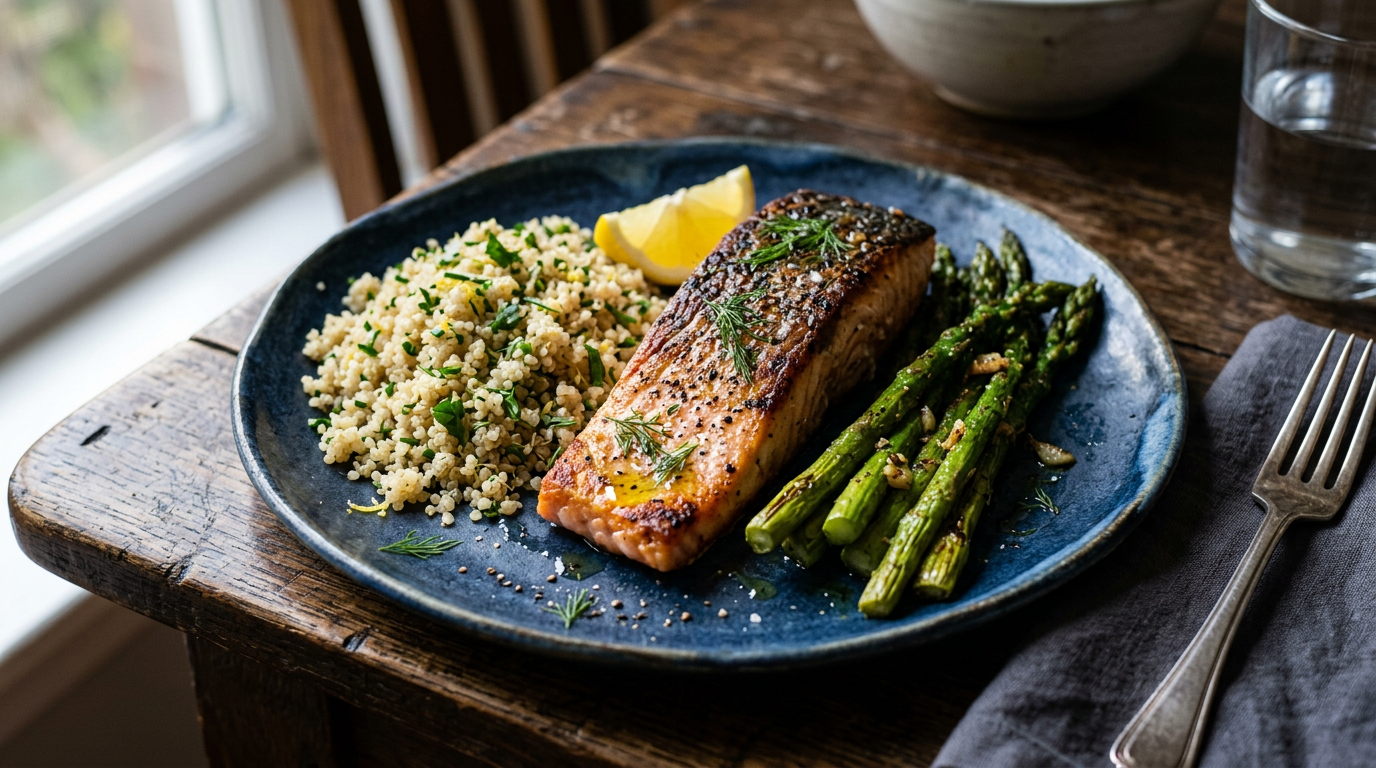
Fish With Potatoes and Greens
- Baked fish.
- Potatoes or another grain or starch.
- Broccoli, spinach, or mixed vegetables.
- Lemon and herbs.
Lentil and Tofu Bowl
- Lentils or beans.
- Tofu.
- Rice or another grain.
- Stir-fried or roasted vegetables.
Chickpea and Yogurt Meal
- Chickpea salad or chickpea curry.
- Plain yogurt, if tolerated.
- Whole-wheat roti.
- Seasonal vegetables.
These meals will provide different amounts of protein depending on the ingredients and portions. Check product labels or ask a dietitian if you need a precise target.
Do You Need a Bedtime Protein Snack?
Not necessarily.
A bedtime snack can be an additional opportunity to consume protein, but research has not established that everyone needs one or that it is superior to meeting protein needs earlier in the day.[pmc.ncbi.nlm.nih]
If you are hungry after an early dinner, a modest serving of yogurt or cottage cheese may be a comfortable option. UPMC includes these among lighter bedtime food choices.[upmc]
However, a snack should fit your nutritional needs rather than become an automatic extra meal. You do not need to eat before sleep simply because a study used bedtime protein.
When Should You Finish Dinner?
A large dinner and a small evening snack are not the same.
UPMC advises allowing about three hours between a substantial meal and bedtime to reduce digestive discomfort and sleep disruption. It also notes that smaller snacks may require less adjustment.[upmc]
Pay attention to your own response. If eating late causes heartburn, uncomfortable fullness, or disturbed sleep, an earlier or smaller meal may be more suitable. Persistent symptoms should be discussed with a healthcare professional.[upmc]
Can Evening Protein Speed Up Metabolism?
Do not expect a bedtime protein serving to create a meaningful “overnight metabolism boost.”
The research review on pre-sleep protein reports mixed findings from small studies of next-morning energy expenditure. It does not establish evening protein as a reliable weight-loss strategy.[pmc.ncbi.nlm.nih]
The stronger evidence concerns overnight protein availability and muscle-protein synthesis—not rapid fat burning.
Does Eating Protein at Night Cause Weight Gain?
Eating before bed does not automatically cause weight gain. Overall food intake and eating habits remain important.[upmc]
However, routinely adding an evening shake or snack without considering the rest of your diet can increase how much you eat. Meal size, food choices, and the reasons for nighttime eating all matter.[upmc]
Think of evening protein as part of your daily intake, not a calorie-free addition.
Frequently Asked Questions
Is protein at dinner useful if I do not exercise?
Protein still supplies nutrients needed for normal tissue maintenance. However, resistance exercise provides an important stimulus for muscle adaptation, and combining exercise with adequate protein is better supported than expecting food alone to build muscle.[pmc.ncbi.nlm.nih][pmc.ncbi.nlm.nih]
Is casein necessary before bed?
No specific bedtime supplement is established as necessary for everyone. Casein is commonly used in studies, but that does not mean everyone needs casein powder or a nightly shake.[pmc.ncbi.nlm.nih]
Should older adults put most of their protein into dinner?
Not necessarily. Research on protein distribution suggests there may be value in including meaningful amounts at breakfast and lunch rather than concentrating almost everything in the evening.[pmc.ncbi.nlm.nih][pmc.ncbi.nlm.nih]
Can a protein-rich dinner extend lifespan?
The research discussed here does not establish that a protein-rich dinner directly extends lifespan. Supporting muscle function is valuable, but it should not be presented as proof that a particular meal will help someone live longer.[pmc.ncbi.nlm.nih][pmc.ncbi.nlm.nih]
Editorial Note
This article summarizes selected publicly available research and health information. Study findings are described with their limitations, and no specific food, supplement, or meal schedule is presented as a guaranteed solution.
The organizations and researchers cited have not necessarily reviewed or endorsed this article. Their inclusion does not imply affiliation with this website.
Medical Disclaimer
This content is for general education and is not personal medical advice. Protein requirements and meal timing differ between individuals. Consult a qualified doctor or registered dietitian before making substantial dietary changes, particularly if you have a medical condition or have been instructed to follow a specific diet.
References
- Snijders, T., Trommelen, J., Kouw, I. W. K., Holwerda, A. M., Verdijk, L. B., and van Loon, L. J. C. (2019). The Impact of Pre-sleep Protein Ingestion on the Skeletal Muscle Adaptive Response to Exercise in Humans: An Update. Frontiers in Nutrition, 6, 17. DOI: 10.3389/fnut.2019.00017.[pmc.ncbi.nlm.nih]
- Nowson, C., and O’Connell, S. (2015). Protein Requirements and Recommendations for Older People: A Review. Nutrients, 7(8), 6874–6899. DOI: 10.3390/nu7085311.[pmc.ncbi.nlm.nih]
- UPMC HealthBeat. (2026, May 22). Myth or Fact: Is It OK to Eat Before Bed?[upmc]