Nitric Oxide Foods for Venous Compliance: What Science Says
Medical Disclaimer: The information provided in this article is for educational and informational purposes only and does not constitute medical advice. Always consult a qualified healthcare provider regarding any medical condition or treatment.
1. What Are Nitric Oxide Foods for Venous Compliance?
+-----------------------------------------------------------------------------------+
|                        VENOUS CAPACITANCE & HYDROSTATIC BALANCE                   |
+-----------------------------------------------------------------------------------+
  Dietary Nitrates & Precursors (Beets, Arugula, Citrulline)
              |
              v
  Endothelial Nitric Oxide Generation (eNOS Activation)
              |
              v
  Cyclic Guanosine Monophosphate (cGMP) Accumulation
              |
              v
  Vascular Smooth Muscle Relaxation in Capacitance Veins
              |
      +-------+-------+
      |               |
      v               v
  [High Venous Compliance]              [Low Venous Compliance]
  - Normal blood volume buffering       - Rigid, non-compliant venous walls
  - Low ambulatory venous pressure      - Sustained ambulatory hypertension
  - Preserved microvascular fluid       - Dependent edema & erythrocyte leakage
+-----------------------------------------------------------------------------------+
High-Pressure Arterial Dilation vs. Low-Pressure Venous Capacitance
Featured Snippet Direct Definition:Nitric oxide foods for venous compliance are whole foods rich in inorganic nitrates, L-arginine, and L-citrulline that stimulate endothelial nitric oxide production. This signaling gas relaxes venous smooth muscle, enhancing vein wall elasticity, lowering ambulatory venous pressure, and preventing lower extremity fluid stagnation.
The Central Nutritional Thesis
Low Venous Compliance vs. High Venous Compliance
| Vascular Marker | Low Venous Compliance (Valvular Stasis) | High Venous Compliance (Endothelial Health) |
| Endothelial Function | Reduced eNOS activity; high oxidative uncoupling | Robust eNOS signaling; sustained nitric oxide release |
| Hydrostatic Pooling | Severe dependent pooling in lower extremities | Balanced venous return; minimal dependent pooling |
| Structural Elasticity | Stiff, fibrotic vein walls; poor volume buffering | Supple, responsive vein walls with high elasticity |
| Inflammatory Status | High leukocyte adhesion (ICAM-1/VCAM-1 upregulation) | Suppressed leukocyte adhesion; low inflammation |
| Vasomotion | Impaired response to volume and pressure shifts | Rapid adaptive vasodilation and capacitance shifts |
| Clinical Risk Profile | Chronic venous insufficiency, varicose veins, edema | Healthy venous return, light legs, intact skin barrier |
2. How Nitric Oxide Foods for Venous Compliance Work in Vascular Walls
+-----------------------------------------------------------------------------------+
|                     THE DUAL PATHWAYS OF NITRIC OXIDE GENERATION                  |
+-----------------------------------------------------------------------------------+
  PATHWAY A: The Nitrate-Nitrite-Nitric Oxide Axis (Enterosalivary)
  Dietary Nitrate ($NO_3^-$)  --> Concentrated in saliva by salivary glands
               |
  Oral Anaerobic Bacteria     --> Reduces nitrate to Nitrite ($NO_2^-$)
               |
  Gastric Acid & Deoxyhemoglobin --> Systemic reduction to active Nitric Oxide ($NO$)
                                         vs.
  PATHWAY B: The Classical L-Arginine / eNOS Cascade (Enzymatic)
  Dietary L-Citrulline / Arginine --> Enters vascular endothelial cells
               |
  Endothelial NOS (eNOS + BH4)    --> Oxidizes L-arginine to L-citrulline and $NO$
               |
  Vascular Smooth Muscle Binding  --> Activates soluble Guanylyl Cyclase (sGC)
               |
  GTP Conversion to cGMP          --> Activates Protein Kinase G (PKG)
               |
  Intracellular Calcium Drop      --> Venous smooth muscle relaxation & compliance
+-----------------------------------------------------------------------------------+
The Nitrate-Nitrite-Nitric Oxide Pathway: Enterosalivary Mechanics
-
Dietary Absorption: When an individual consumes leafy greens or beetroot juice, the upper gastrointestinal tract absorbs inorganic nitrate ($NO_3^-$) directly into systemic circulation.
-
Salivary Concentration: The salivary glands extract circulating nitrate from the blood, concentrating it up to ten-fold inside saliva.
-
Oral Bacterial Reduction: Anaerobic commensal bacteria residing on the posterior tongue (specifically Veillonella and Actinomyces species) express nitrate reductase enzymes. These bacteria reduce nitrate into bioactive nitrite ($NO_2^-$).
-
Systemic Reduction: Swallowed nitrite enters gastric acid, forming nitrous acid and nitric oxide. Furthermore, unreduced nitrite enters systemic circulation, where deoxygenated hemoglobin, myoglobin, and endothelial enzymes reduce it into active nitric oxide ($NO$) within low-pressure venous beds.
The L-Arginine/eNOS Pathway and cGMP Signaling
Hemodynamic Impact on Venous Hypertension
-
Ambulatory Venous Pressure Drops: Increased wall compliance prevents volume shifts from spiking hydrostatic pressure against vein walls.
-
Valvular Mechanics Improve: Lower pressure reduces vein dilation. Consequently, valve leaflets remain closer together, preventing retrograde blood reflux.
-
Leukocyte Adhesion Ceases: Nitric oxide suppresses endothelial expression of vascular cell adhesion molecule-1 (VCAM-1) and intercellular adhesion molecule-1 (ICAM-1). Therefore, white blood cells do not adhere to valve leaflets, preserving structural valvular anatomy from inflammatory fibrosis.
3. Key Nitric Oxide Foods for Improving Venous Compliance
+-----------------------------------------------------------------------------------+
|                        THE VASCULAR NUTRITION SPECTRUM                            |
+-----------------------------------------------------------------------------------+
  [Inorganic Nitrates]   --> Arugula, red beetroot, Swiss chard, spinach, celery
            |
  [Amino Acid Donors]    --> Watermelon (L-citrulline), pumpkin seeds (L-arginine)
            |
  [Polyphenol Protectors]--> Dark cocoa (flavanols), pomegranate, citrus bioflavonoids
            |
  Combined Effect: Maximizes NO generation and protects molecules from oxidation
+-----------------------------------------------------------------------------------+
Dietary Inorganic Nitrate Powerhouses
-
Wild Arugula (Eruca vesicaria): Arugula ranks as the densest dietary nitrate source, providing between 4,000 to 5,000 mg of nitrate per kilogram of fresh weight. Consequently, a single two-cup serving supplies substantial raw material for enterosalivary conversion.
-
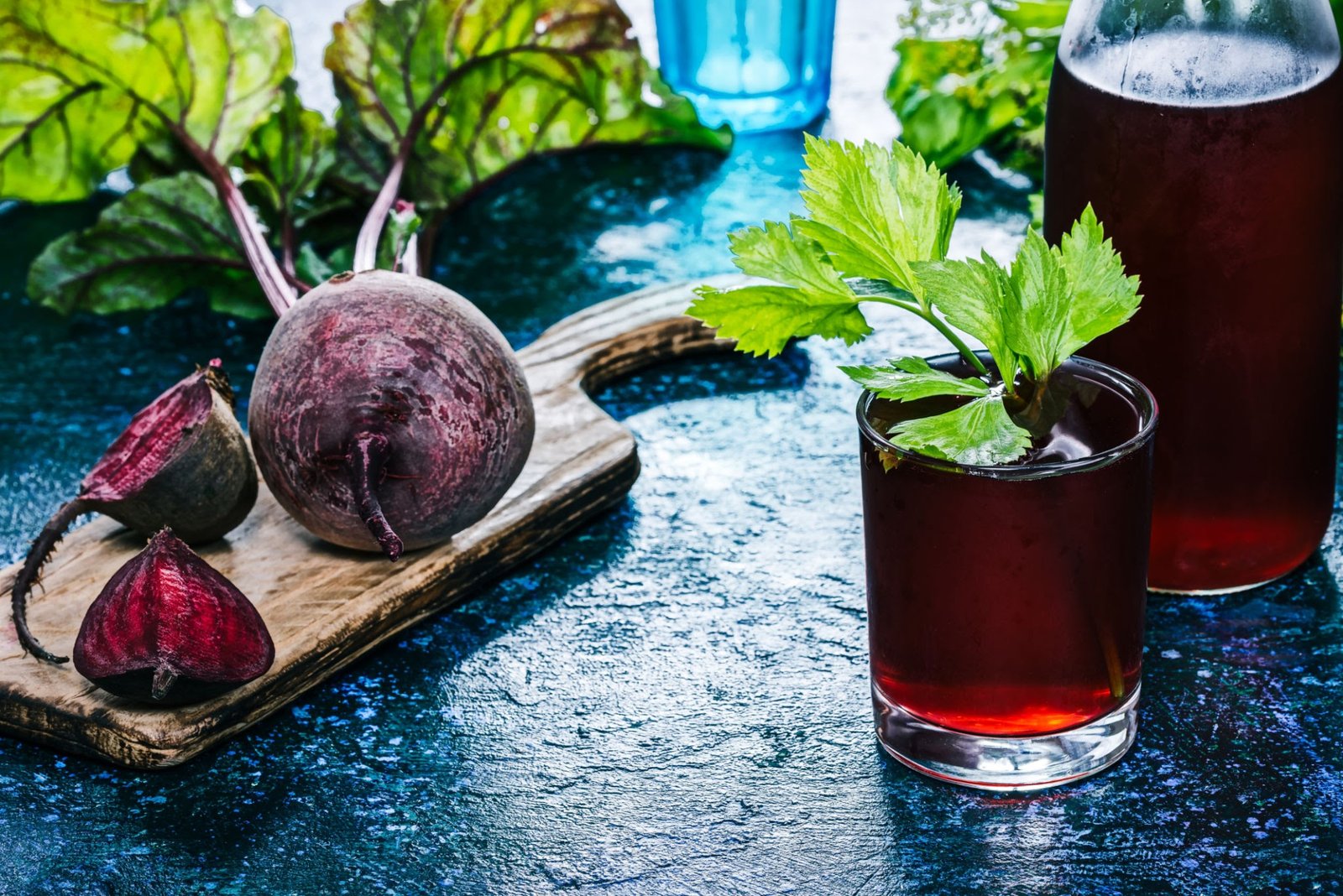
Red Beetroot and Fermented Beet Juice: Beets contain high levels of inorganic nitrate (roughly 1,500 to 2,500 mg/kg) alongside betalain pigments. Betalains act as powerful free-radical scavengers, preventing nitric oxide from breaking down prematurely in venous tissue.
-
Swiss Chard and Spinach: These dark leafy greens deliver 2,000 to 3,000 mg/kg of nitrate. Furthermore, they supply essential dietary potassium, which blunts sodium-induced fluid retention and relieves lower limb swelling.
-
Celery: Celery supplies approximately 1,100 to 1,500 mg/kg of nitrate, along with 3-n-butylphthalide (NBP), a phytochemical that relaxes vascular smooth muscle.
L-Arginine and L-Citrulline Donors
-
Watermelon (Citrullus lanatus): Watermelon contains high concentrations of L-citrulline. While the liver rapidly clears oral L-arginine through arginase enzymes, L-citrulline bypasses first-pass hepatic metabolism. The kidneys absorb L-citrulline and convert it into L-arginine, raising plasma arginine levels more effectively than oral arginine supplements.
-
Pumpkin Seeds and Walnuts: These whole seeds supply dense concentrations of L-arginine alongside healthy omega-3 alpha-linolenic acid (ALA). Walnuts protect endothelial health by dampening vascular inflammation.
-
Grass-Fed Poultry and Legumes: High-quality dietary proteins provide balanced arginine profiles, supporting ongoing structural protein synthesis within venous walls.
Polyphenol and Antioxidant Protectants
-
Dark Cocoa (70%+ Cocoa Solids): Cocoa beans contain high concentrations of monomeric epicatechin flavanols. Epicatechin activates eNOS phosphorylation directly, accelerating nitric oxide synthesis.
-
Pomegranates: Pomegranate extracts provide dense punicalagins and ellagitannins. These polyphenols protect nitric oxide from reacting with superoxide radicals, extending its physiological half-life in venous beds.
-
Citrus Bioflavonoids: Oranges and lemons provide hesperidin and rutin, bioflavonoids that reinforce microvascular walls. To discover how bioflavonoids protect fragile microvessels, read our analysis on capillary-resistance-and-fragility.
Dietary Precursor and Venous Impact Matrix
| Food Source | Primary Bioactive Component | Precursor Concentration | Optimal Culinary Preparation |
| Wild Arugula | Inorganic Nitrate ($NO_3^-$) | ~4,500 mg/kg (Extremely High) | Raw in fresh salads; avoid cooking |
| Red Beetroot Juice | Nitrate + Betalain pigments | ~2,000 mg/kg (Very High) | Cold-pressed raw juice or fermented kvass |
| Swiss Chard | Nitrate + Dietary Potassium | ~2,500 mg/kg (Very High) | Lightly steamed for 2–3 minutes; do not boil |
| Fresh Watermelon | L-Citrulline | ~2.5 to 3.0 g per 100g rind | Raw fresh fruit; include white inner rind |
| Raw Pumpkin Seeds | L-Arginine | ~5.3 g per 100g seeds | Raw or lightly sprouted; unroasted |
| Dark Cocoa Powder | Epicatechin Flavanols | ~100–150 mg flavanols/tbsp | Unsweetened, non-alkalized (non-dutched) |
4. What Clinical Science Says About Nitric Oxide and Venous Health
+-----------------------------------------------------------------------------------+
|                        CLINICAL HEMODYNAMIC EVIDENCE CASCADE                      |
+-----------------------------------------------------------------------------------+
  Dietary Nitrate Ingestion (500 mg $NO_3^-$) --> Plasma Nitrite peaks at 2.5–3 hours
                 |
  Venous Tone Reduction                       --> Capacitance veins expand elasticity
                 |
  Ambulatory Venous Pressure Normalizes       --> Microvascular filtration drops
                 |
  Endothelial Junction Stabilization (VE-Cad) --> Dampens fluid leakage (Edema drops)
+-----------------------------------------------------------------------------------+
Reviewing Clinical Trials on Dietary Nitrates and Venous Volume
The Critical Oral Microbiome Interaction
PAA Snippet Extraction Block:
Antiseptic mouthwash eliminates the vascular benefits of nitric oxide foods.
Chlorhexidine destroys the beneficial bacteria living on your tongue that convert dietary
nitrate into bioactive nitrite. Without these bacteria, your body cannot produce
therapeutic nitric oxide, blunting any improvement in venous compliance.
Microvascular Permeability and Edema Reduction
5. Maximizing Nitric Oxide Foods for Venous Compliance
+-----------------------------------------------------------------------------------+
|                        MOLECULAR COFACTOR SYNERGY MATRIX                          |
+-----------------------------------------------------------------------------------+
  Tetrahydrobiopterin (BH4) Support --> Folate (5-MTHF) prevents eNOS uncoupling
               |
  Antioxidant Shielding             --> Vitamins C and E neutralize peroxynitrite
               |
  Enzyme Phosphorylation            --> Quercetin and Resveratrol boost eNOS activity
               |
  Outcome: Sustained, high-efficiency nitric oxide generation in venous walls
+-----------------------------------------------------------------------------------+
Preventing eNOS Uncoupling with Tetrahydrobiopterin (BH4) and Folate
-
Active Folate (L-Methylfolate / 5-MTHF): Methylated folate regenerates oxidized BH2 back into active BH4. Consequently, adequate folate intake preserves eNOS coupling, maintaining clean nitric oxide production.
-
Whole Food Sources: Dark green leafy vegetables, lentils, and avocados supply natural folates that support microvascular health.
Antioxidant Quenching: Vitamins C and E
-
Vitamin C (Ascorbic Acid): Ascorbic acid donates electrons to quench superoxide radicals before they react with nitric oxide. Furthermore, vitamin C stabilizes BH4, supporting continuous eNOS activity.
-
Vitamin E (Alpha-Tocopherol): Vitamin E halts lipid peroxidation within endothelial cell membranes, protecting capillary boundaries. To explore how systemic inflammatory cascades compromise cutaneous tissue integrity, review our research on eczema-flare-ups-triggers.
Polyphenol Synergy: Quercetin and Resveratrol
-
Quercetin (Red Onions, Capers, Apples): Quercetin stimulates protein kinase B (Akt), which phosphorylates eNOS at the Serine-1177 residue. This phosphorylation doubles the baseline enzymatic activity of eNOS.
-
Resveratrol (Red Grapes, Blueberries): Resveratrol upregulates eNOS gene transcription, increasing the total concentration of synthase enzymes inside venous endothelial cells. To learn how micronutrient timing ensures optimal mineral balance, read our clinical guide on zinc-timing-and-interactions-guide.
6. Evidence-Based Dietary Protocols for Venous Compliance
                           +---------------------------------------+
                           |    DAILY VASCULAR NUTRITION PROTOCOL  |
                           +---------------------------------------+
                                              |
        +-------------------------------------+-------------------------------------+
        |                                     |                                     |
        v                                     v                                     v
+-------------------------------+   +-------------------------------+   +-------------------------------+
|      Target Ingestion Dosing  |   |     Culinary Preparation      |   |     Synergistic Movement      |
+-------------------------------+   +-------------------------------+   +-------------------------------+
| - 300 to 500 mg daily nitrate |   | - Raw salads or light steam   |   | - 30-minute daily walking     |
| - 2 to 3 grams L-citrulline   |   | - Avoid boiling vegetables    |   | - Calf muscle pump activation |
| - High-polyphenol breakfast   |   | - Stop antiseptic mouthwash   |   | - Gradient compression wear   |
+-------------------------------+   +-------------------------------+   +-------------------------------+
Daily Dosing Targets for Therapeutic Response
Preparation and Culinary Methods
-
Avoid Boiling Vegetables: Inorganic nitrates are water-soluble. Boiling spinach, chard, or beets leaches up to 60% of their nitrate content into the discarded cooking water.
-
Favor Raw or Lightly Steamed Greens: Consuming greens raw in salads, lightly steamed for under three minutes, or blended into smoothies preserves total nitrate concentrations.
-
Chew Greens Thoroughly: Chewing breaks down plant cell walls and mixes nitrates with saliva, allowing oral bacteria to begin reduction immediately.
Pairing Nutrition with Calf Muscle Pump Activation
-
Brisk Daily Walking: A 30-minute walk activates the calf muscle pump. The gastrocnemius contracts, driving pooled blood out of relaxed veins toward the heart.
-
Graduated Compression Therapy: Wearing 15–20 mmHg or 20–30 mmHg graduated compression stockings complements nitric oxide foods by preventing excessive venous distention in individuals with damaged valves.
Daily Dietary Protocol Breakdown
| Timing | Nutritional Component | Target Foods & Serving Sizes | Clinical Purpose |
| Morning Breakfast | Flavonoid Activators + Citrulline | 1 cup fresh watermelon + 1 tbsp raw cacao in oatmeal | Boosts eNOS phosphorylation; raises plasma arginine |
| Midday Lunch | Nitrate Mega-Dose | 2 cups wild arugula salad with olive oil and lemon juice | Delivers ~350 mg nitrate for peak afternoon venous stress |
| Afternoon Boost | Polyphenol Antioxidants | 1/2 cup fresh pomegranate seeds or green tea | Shields circulating nitric oxide from oxidative decay |
| Evening Dinner | Steamed Nitrate + Potassium | 1 cup lightly steamed Swiss chard + baked salmon | Sustains nighttime venous compliance; balances sodium |
7. Clinical Red Flags and Vascular Risk Factors
+-----------------------------------------------------------------------------------+
|                        VASCULAR EMERGENCY RED FLAGS                              |
+-----------------------------------------------------------------------------------+
  [Deep Vein Thrombosis (DVT)] --> Sudden unilateral calf swelling, severe redness,
                                   warmth, and tenderness. Requires immediate duplex.
              |
  [Dangerous Hypotension]      --> Combining concentrated nitrates with PDE-5 inhibitors
                                   (Sildenafil) or organic nitrates (Nitroglycerin).
              |
  [Advanced CEAP Disease]      --> Active skin ulceration (C6), lipodermatosclerosis (C4),
                                   requiring surgical ablation rather than diet alone.
+-----------------------------------------------------------------------------------+
Critical Drug Interactions
-
Phosphodiesterase-5 (PDE-5) Inhibitors: Medications like sildenafil and tadalafil inhibit cGMP breakdown. Combining high-dose nitrates with PDE-5 inhibitors can cause dangerous, life-threatening drops in systemic blood pressure.
-
Organic Prescription Nitrates: Patients taking prescription nitroglycerin or isosorbide mononitrate for angina should avoid concentrated nitrate supplements, as concurrent use can trigger severe hypotension and syncope.
Identifying Deep Vein Thrombosis (DVT)
When Nutrition Must Yield to Medical Intervention
-
CEAP Classes C1–C2 (Spider veins, mild varicose veins): Dietary nitric oxide, exercise, and compression stockings provide effective conservative management.
-
CEAP Classes C3–C6 (Chronic edema, hyperpigmentation, active venous stasis ulcers): Nutrition serves only as an adjunct therapy. Patients require intervention by a board-certified vascular surgeon or phlebologist for endovenous thermal ablation, ultrasound-guided sclerotherapy, or surgical repair.
8. Frequently Asked Questions About Nitric Oxide Foods and Venous Compliance
Q1. Can eating beetroot juice reverse varicose veins?
Q2. How long does it take for nitric oxide foods to affect venous circulation?
Q3. Does antiseptic mouthwash stop nitric oxide production?
Q4. What is the difference between arterial dilation and venous compliance?
Q5. Are nitric oxide supplements better than whole foods for venous health?
9. Conclusion: Protecting Circulation with Nitric Oxide and Venous Compliance
Editorial Note
This article was independently researched and written based on current publicly available peer-reviewed nutritional literature and does not represent the views of, and is not affiliated with, any external publication referenced.
References
-
Lundberg, J. O., et al. (2018). Metabolic and vascular effects of dietary nitrate: mechanisms and clinical implications. Nature Reviews Cardiology, 15(9), 561–572. https://doi.org/10.1038/s41569-018-0024-x
-
Kapil, V., et al. (2015). Dietary nitrate provides sustained blood pressure lowering in hypertensive patients: a randomized, phase 2, double-blind, placebo-controlled study. Hypertension, 65(2), 320–327. https://doi.org/10.1161/HYPERTENSIONAHA.114.04675
-
Förstermann, U., & Sessa, W. C. (2012). Nitric oxide synthases: regulation and function. European Heart Journal, 33(7), 829–837. https://doi.org/10.1093/eurheartj/ehr304
-
Govoni, M., et al. (2008). The increase in plasma nitrite after a dietary nitrate load is markedly attenuated by an antibacterial mouthwash. Nitric Oxide, 19(4), 333–337. https://doi.org/10.1016/j.niox.2008.08.003
-
Bahadoran, Z., et al. (2017). The nitrate-nitrite-nitric oxide pathway in physiology and therapeutics. Trends in Endocrinology & Metabolism, 28(1), 31–43. https://doi.org/10.1016/j.tem.2016.09.002
-
Raffetto, J. D., & Khalil, R. A. (2008). Mechanisms of varicose vein formation and the role of matrix metalloproteinases in vein wall remodeling. Journal of Vascular Surgery, 47(3), 669–679. https://doi.org/10.1016/j.jvs.2007.09.033
-
Lau, D. H., et al. (2020). Modifiable risk factors and the global burden of chronic venous disease. Journal of the American College of Cardiology, 75(17), 2150–2162. https://doi.org/10.1016/j.jacc.2020.02.063
-
Schwager, S. L. U., et al. (2019). Endothelial nitric oxide synthase uncoupling and vascular oxidative stress in vascular disease. Antioxidants & Redox Signaling, 30(7), 963–987. https://doi.org/10.1089/ars.2017.7471
Comments (2)
Ear Pain When Swallowing: The Hidden Nerve Connection - The Veins Vercel
[…] Stop Eating Three Hours Before Sleep: To prevent nighttime laryngopharyngeal reflux, elevate the head of your bed by six inches and avoid late-night snacks. Keeping stomach contents settled prevents acidic vapors from burning laryngeal nerves overnight.Protecting irritated throat membranes requires gentle nutrition; to learn how dietary compounds enhance mucosal blood flow and tissue healing, read our guide on nitric oxide foods for vascular health […]
Palo Azul Tea: Real Scientific Benefits vs. Popular Detox Myths - The Veins Vercel
[…] Nitric Oxide Foods for Venous Compliance: What Science Says – The Veins Vercel on Capillary Resistance and Fragility: Causes & Bruising Care […]