Autumn Seasonal Foods: Healthy Fall Eating Made Simple
Medical Disclaimer: The information provided in this article is for educational and informational purposes only and does not constitute medical advice. Always consult a qualified healthcare provider regarding any medical condition or treatment.
Seasonal Eating in Autumn
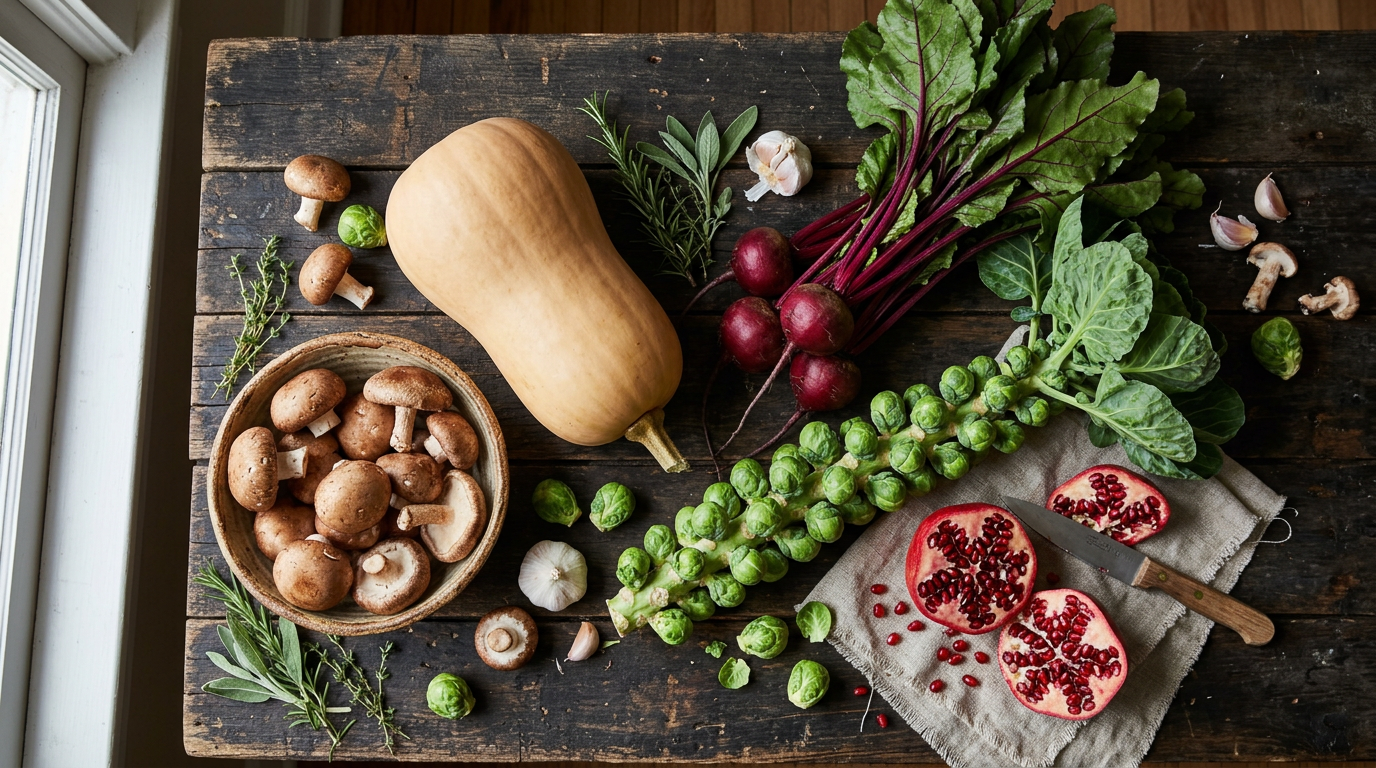
Autumn brings a wide range of nutritious foods, including pumpkin, winter squash, sweet potatoes, beets, Brussels sprouts, apples, mushrooms, and leafy greens. Eating a variety of these foods can help you build balanced meals during the cooler months.
No single autumn food can repair cells, prevent disease, or slow aging. But a colorful, fiber-rich diet can support overall health, digestion, heart health, and steady energy.[canr.msu][nutritionsource.hsph.harvard][nutritionsource.hsph.harvard]
Why Eat Seasonally in Autumn?
Seasonal eating simply means choosing produce that is fresh, widely available, and often more affordable during a particular time of year. In autumn, that may include root vegetables, squash, cruciferous vegetables, apples, pears, and mushrooms.
The main benefit is practical: seasonal foods can make it easier to eat more vegetables, fruits, whole grains, and fiber-rich meals. Variety matters because different foods provide different nutrients.[nutritionsource.hsph.harvard][nutritionsource.hsph.harvard]
Pumpkin and Winter Squash
Pumpkin, butternut squash, acorn squash, and other orange vegetables are rich in beta-carotene, a carotenoid the body can convert into vitamin A. Vitamin A supports vision, immune function, and normal cell function.[ods.od.nih][mayoclinic][nutritionsource.hsph.harvard]
These foods also provide fiber, potassium, and other nutrients. Try them roasted, steamed, added to soups, or mixed into whole-grain dishes.
Simple tip
Pair squash or pumpkin with a small amount of healthy fat, such as olive oil, nuts, or yogurt. Fat can improve the absorption of carotenoids.[ods.od.nih][nutritionsource.hsph.harvard]
Cruciferous Vegetables
Brussels sprouts, broccoli, cauliflower, cabbage, and kale are common autumn vegetables. They provide fiber, vitamin C, folate, and plant compounds called glucosinolates.
Cruciferous vegetables are part of a healthy dietary pattern associated with better cardiovascular and digestive health. However, they do not “detox” the body or cure disease.[nutritionsource.hsph.harvard]
Easy ways to enjoy them
- Roast Brussels sprouts with olive oil and herbs
- Add shredded cabbage to soups or grain bowls
- Steam broccoli and serve with lemon
- Add kale to stews, pasta, or eggs
If cruciferous vegetables cause gas or bloating, start with small portions and increase gradually.
Beets and Root Vegetables
Fall brings hearty root vegetables such as beets, parsnips, and sweet potatoes. Among these options, beets contain dietary nitrates, while sweet potatoes provide potassium and fiber.[canr.msu][thedacare]
Fiber supports digestion and can help with fullness after meals. A diet rich in vegetables, fruits, whole grains, and legumes is associated with better blood-pressure, blood-sugar, and heart-health outcomes.[nutritionsource.hsph.harvard][nutritionsource.hsph.harvard]
Simple meal ideas
- Roasted beet and carrot salad
- Sweet-potato and lentil soup
- Mashed sweet potato with olive oil
- Roasted root vegetables with herbs
Mushrooms in Autumn
Mushrooms such as white button, cremini, shiitake, oyster, and portobello mushrooms can add flavor and nutrients to autumn meals. They provide B vitamins, minerals, and fiber, depending on the variety.
Some mushrooms exposed to ultraviolet light contain vitamin D2, but the amount varies widely by type and preparation. Mushrooms can be a useful food, but they are not a replacement for vitamin D supplements when a clinician has identified a deficiency.[ods.od.nih]
Cook mushrooms before eating them. Sautéing, roasting, or adding them to soups and stir-fries makes them easier to digest and more enjoyable for most people.
Apples, Pears, and Other Autumn Fruits
Apples, pears, cranberries, pomegranates, and citrus fruits can add fiber, vitamins, and natural sweetness to autumn meals. Whole fruit is generally a better choice than juice because it contains more fiber and is less concentrated in sugar.[canr.msu][nutritionsource.hsph.harvard]
Try:
- Sliced apple with peanut butter
- Pear added to oatmeal
- Pomegranate seeds on yogurt
- Cranberries in a whole-grain salad
Build a Balanced Autumn Plate
A healthy plate does not need to be complicated. Aim for:
- Half the plate: vegetables and fruits
- One quarter: whole grains, such as brown rice, barley, oats, or whole-wheat bread
- One quarter: protein, such as beans, lentils, eggs, fish, chicken, tofu, or yogurt
- A small amount of healthy fat, such as olive oil, nuts, or seeds[nutritionsource.hsph.harvard][nutritionsource.hsph.harvard][nutritionsource.hsph.harvard]
Simple Autumn Meal Ideas
| Meal | Easy seasonal idea |
| Breakfast | Oatmeal with apple, cinnamon, and walnuts |
| Lunch | Lentil soup with roasted carrots and kale |
| Snack | Pear with yogurt or a handful of nuts |
| Dinner | Roasted chicken or tofu with sweet potato, Brussels sprouts, and olive oil |
| Side dish | Roasted beets or pumpkin with herbs |
Who Should Adjust Their Diet?
Nutrition needs differ from person to person. Speak with a doctor or registered dietitian before making major changes if you have diabetes, kidney disease, heart disease, food allergies, celiac disease, or take regular medicines.
For example:
- Diabetes: Watch portion sizes of starchy vegetables and pair them with protein, fiber, and healthy fats.
- Kidney disease: Potassium and phosphorus needs may require individual guidance.
- Digestive conditions: Increase fiber slowly and identify personal triggers.
- Vitamin A concerns: Avoid high-dose vitamin A supplements unless advised by a clinician.[ods.od.nih][mayoclinic]
Key Takeaway:
Autumn is a great time to add variety to your diet with squash, sweet potatoes, beets, cruciferous vegetables, mushrooms, apples, and pears. These foods can support a balanced, fiber-rich eating pattern, but they are not cures or anti-aging treatments. Focus on overall dietary variety, portion balance, regular activity, sleep, and medical care that fits your personal needs.
Editorial Note
This article is for general educational purposes only and is not medical advice. It does not diagnose, treat, cure, or prevent any disease. Nutritional needs vary by age, health condition, medication use, and activity level. Consult a qualified healthcare professional or registered dietitian before making significant dietary changes.
References
- National Institutes of Health Office of Dietary Supplements. Vitamin A and carotenoids: Health professional fact sheet.[ods.od.nih]
- National Institutes of Health Office of Dietary Supplements. Vitamin D: Health professional fact sheet.[ods.od.nih]
- Harvard T.H. Chan School of Public Health. Vegetables and fruits: The Nutrition Source.[nutritionsource.hsph.harvard]
- Harvard T.H. Chan School of Public Health. What should I eat?[nutritionsource.hsph.harvard]
- Harvard T.H. Chan School of Public Health. Recipes and healthy eating guidance.[nutritionsource.hsph.harvard]
- Mayo Clinic. Vitamin A.[mayoclinic]
- Michigan State University Extension. Explore fall’s seasonal foods.[canr.msu]