Your Guide to Lifelong Vascular Health & Circulation
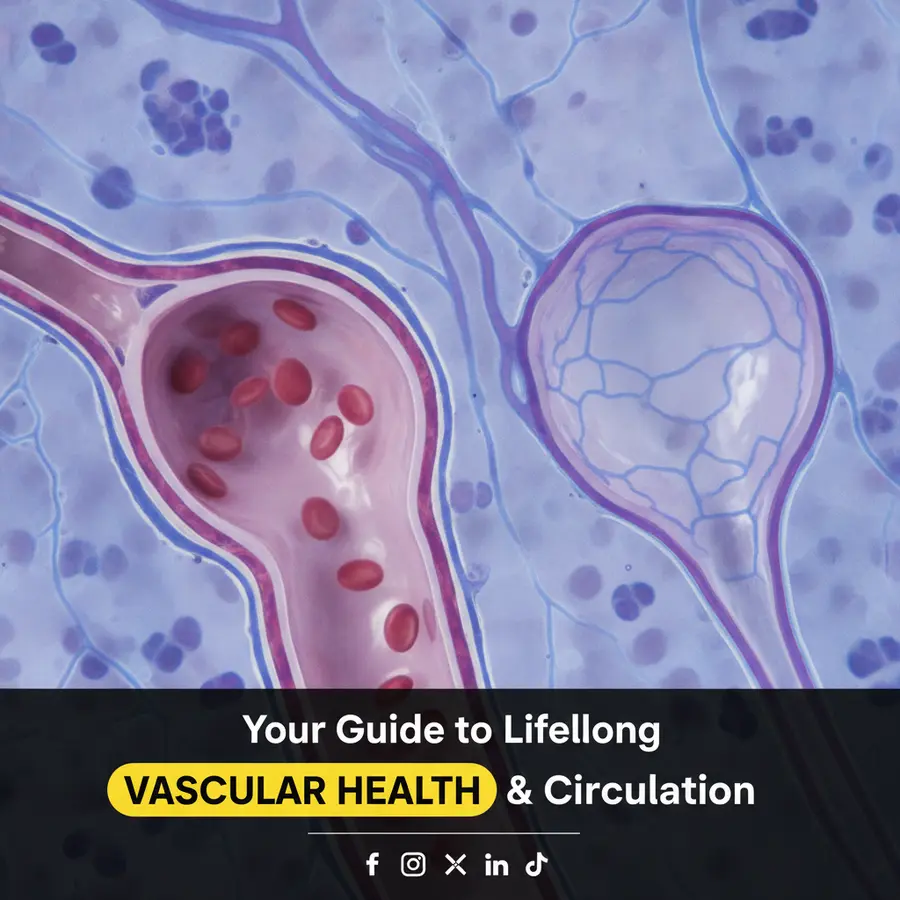
By Maria Shafiq | Founder & Health Research Writer, The Veins Vercel | Updated: 5, September 2026
Medical Disclaimer: The information provided in this article is for educational and informational purposes only and does not constitute medical advice. Always consult a qualified healthcare provider regarding any medical condition or treatment.
Lifelong Vascular Health and Circulation: Your Complete Guide
Maintaining lifelong vascular health and circulation represents the single most important factor for human longevity. Your circulatory system forms an intricate, sixty-thousand-mile network of arteries, capillaries, and veins.
Every single cell in your body relies on this dynamic pipeline for survival. Specifically, blood vessels deliver oxygen, hormones, and glucose while removing metabolic waste products continuously.
However, modern lifestyle factors place unprecedented physiological stress on our vessels. Chronic physical inactivity, refined carbohydrates, and persistent psychological stress systematically degrade blood vessel elasticity over time.
Consequently, microvascular beds narrow and arterial walls stiffen decades before clinical symptoms emerge. Modern preventative medicine shifts the focus from managing late-stage vascular events toward early vascular preservation. By adopting evidence-based habits early, you can maintain elastic, responsive blood vessels throughout your entire life [1].
+-----------------------------------------------------------------------------------+
|                        THE DUAL-CIRCUIT VASCULAR NETWORK                          |
+-----------------------------------------------------------------------------------+
  High-Pressure Arterial Tree (Pulsatile Inflow)
  - Left ventricle ejects stroke volume under high hydraulic pressure (~120 mmHg)
  - Large conduit arteries expand elastically via the Windkessel effect
  - Smooth muscle dilates via endothelial nitric oxide release
                                    |
                                    v
  Microvascular Capillary Beds (Nutrient & Gas Exchange)
  - Single-cell endothelial monolayer coated with protective glycocalyx gel
  - Pressure drops smoothly to ~20 mmHg for optimal diffusion
                                    |
                                    v
  Low-Pressure Venous Tree (Capacitance Outflow & Return)
  - Contains up to 70% of total systemic blood volume under low pressure (~5-15 mmHg)
  - One-way bicuspid valves prevent retrograde pooling against gravity
  - Calf skeletal muscle contractions pump deoxygenated blood back to the heart
+-----------------------------------------------------------------------------------+
Anatomy of the Vascular Tree: High-Pressure Arteries vs. Low-Pressure Veins
Understanding vascular longevity requires appreciating the fundamental differences between arterial and venous biology. The human vascular tree operates as a dual-circuit closed hydraulic loop with distinct mechanical demands.
Arteries represent high-pressure resistance conduits. With every cardiac contraction, the aorta and large arteries absorb forceful systolic pressure waves.
Healthy arterial walls contain dense lamellae of elastin fibers that stretch and recoil smoothly. This elastic recoil cushions downstream microvessels and maintains uninterrupted blood flow while the heart rests.
In contrast, veins function as low-pressure capacitance reservoirs. Rather than withstanding high hydraulic forces, veins must transport deoxygenated blood upward against gravity.
Because venous pressure remains low, veins rely on delicate bicuspid valves and surrounding skeletal muscles. Understanding the mechanics of arterial stiffness vs venous insufficiency clarifies how these two circuits fail in distinct ways.
The Endothelial Shield: The Engine of Vascular Elasticity
The entire luminal surface of your circulatory tree is lined by a delicate monolayer of endothelial cells. This cellular layer does not act as a passive physical wallpaper.
Instead, the endothelium serves as the largest endocrine organ in the human body. Endothelial cells synthesize and secrete critical chemical messengers that govern vascular tone, platelet aggregation, and immune cell adhesion.
Nitric oxide (NO) represents the primary signaling gas responsible for vascular relaxation. Specifically, endothelial nitric oxide synthase (eNOS) oxidizes amino acids to generate nitric oxide continuously.
This signaling gas diffuses into adjacent vascular smooth muscle cells, triggering cyclic guanosine monophosphate (cGMP) synthesis. Elevated cGMP causes smooth muscle relaxation, expanding vessel diameter and lowering systemic blood pressure.
Furthermore, a microscopic, gel-like carbohydrate matrix coats the luminal surface of healthy endothelial cells. Understanding endothelial glycocalyx integrity and circulation reveals how this protective barrier repels inflammatory cells and prevents cholesterol penetration [2].
What Destroys Vascular Health: Stiffening, Plaque, and Stasis
Vascular decline progresses quietly across several decades through three primary pathological mechanisms:
+-----------------------------------------------------------------------------------+
|                        VASCULAR DEGRADATION MECHANISMS                            |
+-----------------------------------------------------------------------------------+
  Advanced Glycation (AGEs)       --> Stiffens structural collagen; fractures elastin
                |
  Lipid Infiltration & Oxidation  --> Oxidized ApoB particles trigger plaque formation
                |
  Valvular Reflux & Venous Stasis --> Sluggish drainage causes lower extremity edema
                |
  Microvascular Rarefaction       --> Capillary density drops; tissues suffer hypoxia
+-----------------------------------------------------------------------------------+
1. Structural Arterial Stiffening
As the aorta expands and recoils over 100,000 times daily, mechanical fatigue fractures delicate elastin fibers. Concurrently, elevated circulating blood sugars form advanced glycation end-products (AGEs) that cross-link structural collagen.
Rigid collagen strands cannot stretch, turning compliant arteries into rigid pipes. Stiffened arteries accelerate pulse wave velocity, driving isolated systolic hypertension and straining the left ventricle.
2. Atherosclerosis and Plaque Progression
When systemic inflammation strips away the endothelial glycocalyx shield, underlying cells express adhesion molecules. Circulating apolipoprotein B (ApoB) particles penetrate the subendothelial space and undergo oxidative modification.
Macrophages ingest these oxidized lipids, transforming into inflammatory foam cells that initiate atherosclerotic plaques. Over time, calcification narrows the arterial lumen, restricting vital tissue perfusion.
3. Venous Incompetence and Stasis
Unlike thick-walled arteries, veins readily dilate under sustained hydrostatic pressure. Prolonged standing, sedentary habits, or prior deep vein thrombosis can stretch vein walls, causing delicate valve leaflets to separate.
When valves fail, gravity pulls blood backward into the lower limbs, causing ambulatory venous hypertension. Over time, persistent backpressure causes capillary leakage, brawny edema, and skin discoloration.
Microvascular Resilience: Capillaries and Tissue Perfusion
Capillaries represent the ultimate destination of the cardiovascular tree. Measuring barely five to ten micrometers in diameter, these microscopic vessels permit single red blood cells to pass through in single file.
Nutrient and gas exchange occurs entirely across the ultra-thin capillary basement membrane. However, when systemic inflammation or chronic hyperglycemia impairs microvascular stability, capillary resistance falls.
Weakened microvessels rupture easily under minor physical forces. Exploring our clinical guide on capillary resistance and fragility demonstrates how structural basement membrane defects trigger easy bruising and petechiae [3].
Furthermore, sustained microvascular ischemia damages the body’s longest nerve axons. Reviewing diabetic peripheral neuropathy triggers and nerve preservation highlights how capillary occlusion starves peripheral nerves of vital oxygenation.
5 Science-Backed Strategies for Lifelong Vascular Health
Preserving your vascular network requires a structured, multi-system lifestyle protocol:
+-----------------------------------------------------------------------------------+
|               5 PILLARS OF DAILY VASCULAR INTEGRITY & CIRCULATION                 |
+-----------------------------------------------------------------------------------+
  1. Targeted Vascular Nutrition  --> Inorganic nitrates, marine omega-3s, & bioflavonoids
  2. Rhythmic Mechanical Pumping  --> Zone 2 walking, calf activation, & aerobic cycling
  3. Restorative Circadian Sleep  --> Nocturnal blood pressure dipping via deep REM cycles
  4. Hydration & Viscosity Care   --> Plasma volume expansion and mineral balance
  5. Proactive Biomarker Tracking --> Routine ApoB, hs-CRP, and pulse wave assessments
+-----------------------------------------------------------------------------------+
1. Optimize Diet with Dietary Nitrates and Polyphenols
Your nutritional choices supply the raw molecular building blocks for daily vessel maintenance. Specifically, vegetables rich in inorganic nitrates stimulate endogenous nitric oxide production via the enterosalivary pathway.
Wild arugula, red beetroot, Swiss chard, and spinach supply abundant nitrates that oral bacteria convert into bioactive nitrite. Exploring nitric oxide foods for venous compliance explains how dietary nitrates enhance venous capacitance and improve blood flow.
Concurrently, consume cold-water fatty fish to supply marine omega-3 fatty acids (EPA and DHA). These fatty acids integrate into endothelial cell membranes, promoting anti-inflammatory signaling.
Furthermore, incorporate polyphenol-rich fruits. Reviewing our research on the apple biohacking tool for longevity illustrates how quercetin protects circulating nitric oxide from free-radical oxidation.
2. Engage in Regular Rhythmic Aerobic Exercise
Physical movement acts as the primary mechanical pump for your entire circulatory network. Contracting skeletal muscles compress adjacent deep veins, propelling stagnant blood upward against gravity.
Furthermore, exercise increases laminar fluid shear stress along arterial endothelial surfaces. This healthy friction upregulates eNOS transcription, directly expanding microvascular reserve.
Aim for at least 150 minutes of moderate-intensity Zone 2 cardio weekly, such as brisk walking, swimming, or cycling [4]. Combine rhythmic cardio with simple calf-raise drills to activate your lower extremity venous pump throughout sedentary workdays.
3. Protect Sleep Architecture and Autonomic Reset
Sleep represents an active window of systemic vascular repair. During slow-wave and rapid eye movement sleep, the autonomic nervous system downregulates sympathetic vasoconstriction.
Consequently, systemic blood pressure drops by 10% to 20%—a vital biological process known as nocturnal dipping. This nightly pressure reduction relieves mechanical strain on arterial linings and allows endothelial cells to undergo metabolic restoration.
Learning how REM sleep protects your heart details how healthy sleep architecture shields blood vessels from chronic hypertensive remodeling.
4. Maintain Hydration and Mineral Balance
Blood plasma makes up roughly 55% of your total circulating blood volume. When you drink insufficient water, plasma volume contracts and blood viscosity rises significantly.
Thicker, viscous blood creates excess frictional resistance against vessel walls, forcing the heart to pump harder. Drink clean water consistently throughout the day to support smooth microvascular flow.
Furthermore, balance essential electrolytes that govern vascular smooth muscle tone. Reviewing magnesium for sleep vs digestion highlights how magnesium relaxes arterial walls, while understanding zinc timing and interactions ensures proper trace mineral absorption for vascular enzyme synthesis.
5. Schedule Precision Vascular Screenings
Preventative lifestyle habits work best alongside routine biomarker surveillance. Many vascular changes develop silently over decades without obvious physical discomfort.
Evaluate your cardiovascular profile using advanced diagnostic markers:
-
Apolipoprotein B (ApoB): Measures the total atherogenic particle count driving arterial plaque formation.
-
Carotid-Femoral Pulse Wave Velocity (cfPWV): Provides non-invasive quantification of central aortic stiffness.
-
High-Sensitivity C-Reactive Protein (hs-CRP): Evaluates baseline vascular and endothelial inflammatory tone.
-
Ankle-Brachial Index (ABI): Screens for lower extremity arterial narrowing and calcification.
Reviewing our comprehensive preventative health guide for longevity provides a complete framework for scheduling routine biomarker evaluations.
Daily Protocol Comparison Matrix
To optimize your daily vascular routine, review this clinical summary:
| Vascular Strategy | Primary Biological Mechanism | Recommended Daily Action | Clinical Outcome |
| Inorganic Nitrates | Enterosalivary nitric oxide synthesis | Consume 2 cups wild arugula or beetroot juice daily | Lowers arterial resistance; boosts venous compliance |
| Zone 2 Cardio | Endothelial shear stress; eNOS activation | Complete 30 minutes of brisk aerobic walking daily | Increases capillary density; prevents venous pooling |
| Restorative Sleep | Parasympathetic reset; nocturnal dipping | Maintain 7 to 9 hours of cool, dark sleep nightly | Relieves mechanical arterial strain; lowers inflammation |
| Collagen Peptides | ECM rebuilding; basement membrane repair | Consume 10g hydrolyzed peptides with vitamin C | Reinforces capillary wall resilience and joint tissue |
| Circadian Fasting | Autophagy stimulation; insulin stabilization | Restrict daily caloric intake to an 8–10 hour window | Reduces vascular glycation; restores flexibility |
Red Flag Symptoms: When to Seek Immediate Medical Evaluation
While proactive lifestyle strategies protect vascular function, certain acute symptoms represent dangerous cardiovascular emergencies:
+-----------------------------------------------------------------------------------+
|                        VASCULAR EMERGENCY WARNING FLAGS                           |
+-----------------------------------------------------------------------------------+
  ACUTE ARTERIAL OCCLUSION:
  [The Six "P"s] --> Sudden severe pain, pallor, pulselessness, paresthesias,
                     paralysis, and poikilothermia (ice-cold limb).
              |
  Requires immediate emergency revascularization within 6 hours to prevent amputation.
                                         vs.
  DEEP VEIN THROMBOSIS (DVT):
  [DVT Triad]    --> Sudden unilateral calf swelling, severe redness, heat, and deep
                     tenderness, with sudden shortness of breath signaling embolism.
              |
  Requires immediate diagnostic ultrasound and systemic anticoagulation therapy.
+-----------------------------------------------------------------------------------+
Seek prompt medical care if you experience:
-
Sudden, crushing chest tightness or pressure radiating to the jaw or left arm.
-
Sudden unilateral leg swelling accompanied by severe calf pain, redness, and warmth.
-
Transient weakness, facial drooping, or slurred speech signaling a transient ischemic attack (TIA).
-
A painful, cold, pale foot with absent pulses that develops suddenly.
Frequently Asked Questions
What is the most effective exercise for improving poor circulation?
Brisk aerobic walking is the single most effective exercise for overall circulation. When you walk, contracting calf muscles physically compress deep veins, pumping stagnant blood back toward the heart. Furthermore, steady walking creates healthy fluid shear stress that stimulates endothelial cells to produce vasodilating nitric oxide.
How do nitric oxide foods improve vascular elasticity?
Nitrate-rich vegetables like beets and arugula provide inorganic nitrates that oral bacteria convert into bioactive nitrite. Once swallowed, your body reduces nitrite into nitric oxide gas. This signaling molecule relaxes vascular smooth muscle, expanding vessel diameter and restoring arterial flexibility.
Can damaged blood vessels and stiffened arteries repair themselves?
Yes. Blood vessels are dynamic, living structures capable of remodeling. By managing blood pressure, eliminating refined sugars, adopting daily aerobic exercise, and consuming endothelial-supportive nutrients, you can significantly reduce arterial stiffness and restore microvascular perfusion over time.
Why do legs swell after prolonged standing or sitting?
Prolonged standing or sitting causes gravitational blood pooling in the lower extremities. Without rhythmic calf muscle contractions to pump blood upward, hydrostatic pressure rises inside leg veins. This elevated pressure forces plasma fluid out of microvessels and into surrounding tissues, producing dependent edema.
What is the difference between arterial plaque and arterial stiffness?
Arterial plaque involves the localized accumulation of oxidized lipids, calcium, and inflammatory cells within the inner lining of an artery, narrowing its lumen. Arterial stiffness represents a diffuse, structural loss of elastin and cross-linking of collagen throughout the entire medial wall, causing the artery to lose its elastic stretch.
Editorial Note
This article was independently researched and written based on current publicly available peer-reviewed cardiovascular and vascular biology literature and does not represent the views of, and is not affiliated with, any external publication referenced.
References
-
Townsend, R. R., et al. (2015). Recommendations for Improving and Standardizing Vascular Research on Arterial Stiffness: A Scientific Statement From the American Heart Association. Hypertension, 66(3), 698–716. https://doi.org/10.1161/HYP.0000000000000033
-
Reitsma, S., et al. (2007). The endothelial glycocalyx: composition, functions, and visualization. Pflügers Archiv – European Journal of Physiology, 454(3), 345–359. https://doi.org/10.1007/s00424-007-0212-8
-
Hallmann, R., et al. (2005). The vascular basement membrane: a dynamic interface in health and disease. Physiological Reviews, 85(3), 979–1000. https://doi.org/10.1152/physrev.00046.2004
-
Piercy, K. L., et al. (2018). The Physical Activity Guidelines for Americans. JAMA, 320(19), 2020–2028. https://doi.org/10.1001/jama.2018.14854
-
Eberhardt, R. T., & Raffetto, J. D. (2014). Chronic venous insufficiency. Circulation, 130(4), 333–346. https://doi.org/10.1161/CIRCULATIONAHA.113.006898