Light vs. Dark Roast: Which Coffee Is Best for Longevity and Health?
By Maria Shafiq | Founder & Health Research Writer, The Veins Vercel | Updated: 26 September 2026
Medical Disclaimer: The information provided in this article is for educational and informational purposes only and does not constitute medical advice. Always consult a qualified healthcare provider regarding any medical condition or treatment.
For millions, the morning begins with the rich aroma of brewing coffee. This daily ritual is more than just a caffeine delivery system; it’s a moment of comfort, focus, and preparation. But for those dedicated to optimizing human performance and extending healthspan, the question isn’t just *if* you should drink coffee, but *how*. What if the simple choice between a light and dark roast could be a powerful lever in your personal Biohacking & Longevity strategy?
The truth is, the journey a coffee bean takes through the roaster fundamentally transforms its chemical makeup. This process doesn’t just alter flavor; it creates two distinct biochemical profiles, each with unique implications for your health. The difference between a light and dark roast isn’t merely a matter of taste preference—it’s a strategic choice that can be tailored to your specific physiological goals, from enhancing cellular defense to promoting gut health.
Understanding the science behind the roast allows you to move from being a passive coffee consumer to an active biohacker, intentionally selecting your brew to support your body’s long-term wellness. Let’s delve into the chemistry of coffee to determine which roast aligns best with your health objectives.
The Crucible of Transformation: What Happens During Roasting
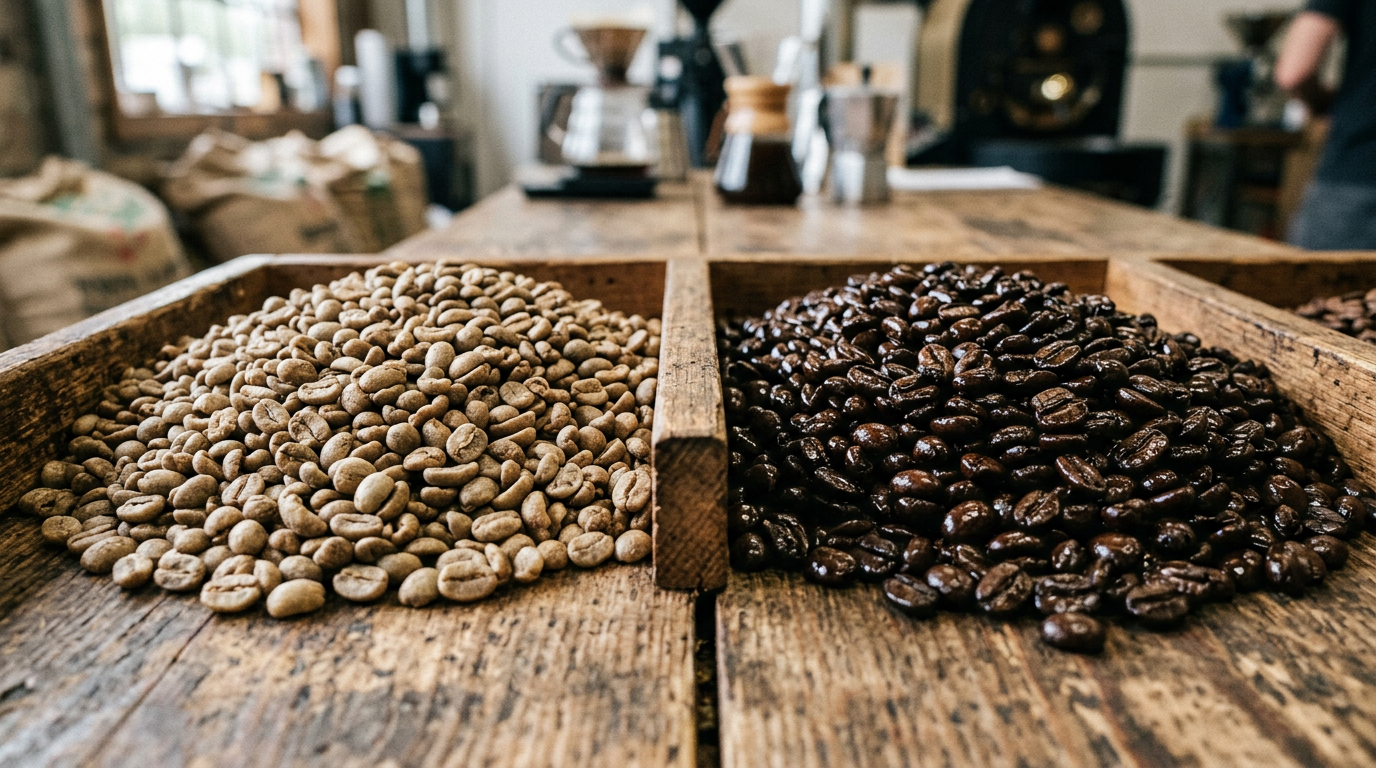
Every coffee bean starts its life green, dense, and grassy. The roasting process is a controlled application of heat that triggers a cascade of complex chemical reactions, turning the raw bean into the aromatic, brittle seed we recognize. The duration and temperature of this process determine the final roast level.
Light Roasts:
These beans are roasted for a shorter time, typically reaching an internal temperature of around 350-400°F (180-205°C). The roasting is stopped just after the “first crack,” a popping sound that occurs as water and gases escape the bean. Physically, light roast beans are light brown, have a matte surface, and are denser than their darker counterparts. Chemically, they retain more of the compounds inherent to the original bean.
Dark Roasts:
To achieve a dark roast, beans are heated for longer and at higher temperatures, often exceeding 465°F (240°C). They are roasted through the first crack and well into or beyond the “second crack.” This extended process causes the beans’ natural oils to migrate to the surface, giving them a characteristic dark, shiny appearance. The beans become less dense, more porous, and lose significant mass. This intense heat degrades some original compounds while creating entirely new ones.
This thermal transformation is the key to understanding coffee’s health impact. The two most significant classes of compounds affected are chlorogenic acids and N-methylpyridinium.
The Case for Light Roast: A Shield for Your Cells
If your primary goal is to maximize your intake of one of coffee’s most celebrated antioxidants, the light roast is your champion. Light roasts are exceptionally rich in a group of polyphenols called chlorogenic acids (CGAs).
CGAs are powerful antioxidants that play a crucial role in neutralizing free radicals—unstable molecules that cause oxidative stress, a key driver of aging and chronic disease. By quenching these free radicals, CGAs help protect your cells, DNA, and mitochondria from damage. This cellular protection is a cornerstone of Preventative Medicine and a critical factor in promoting longevity.
The benefits of CGAs extend beyond simple antioxidant activity:
* Metabolic Health:
Research suggests that CGAs can improve glucose metabolism by inhibiting the enzyme glucose-6-phosphatase, which plays a role in the liver’s production of glucose. This may contribute to coffee’s observed association with a lower risk of type 2 diabetes.
* Anti-Inflammatory Effects:
Chronic inflammation is another major contributor to age-related diseases. Studies have shown that coffee constituents, particularly CGAs, exhibit significant anti-inflammatory properties by modulating cellular signaling pathways.
* Vascular Support:
Some evidence indicates that CGAs may benefit cardiovascular health. They can improve endothelial function—the health of the lining of your blood vessels—and have a modest but beneficial effect on blood pressure in some individuals. This makes the high-CGA content of light roast a point of interest for anyone focused on Vascular Health & Circulation.
The catch? Chlorogenic acid is heat-sensitive. The longer a bean is roasted, the more its CGA content degrades. Therefore, by choosing a light roast, you are choosing to preserve the highest possible concentration of these protective compounds.
The Dark Roast Advantage: A Soothing Elixir for Your Gut
While the high heat of a dark roast degrades CGAs, it’s not a story of total loss. Instead, it’s a story of transformation. The intense roasting process, including the Maillard reaction (the same process that browns toast), creates a different, yet equally compelling, set of bioactive compounds.
For individuals who find coffee too acidic or irritating to their stomach, dark roast can be a game-changer. This is due to two key factors:
1. Lower Acidity:
The compounds that give coffee its perceived acidity, including CGAs, are broken down during a long roast. This results in a brew that is physically less acidic and often better tolerated by those with acid reflux or sensitive digestive systems.
2. N-methylpyridinium (NMP):
This unique compound is virtually absent in green coffee beans and is formed exclusively during the roasting process. The longer and darker the roast, the higher the concentration of NMP. Research has shown that NMP has a fascinating effect: it appears to inhibit the ability of stomach cells to produce hydrochloric acid. A 2010 study published in *Molecular Nutrition & Food Research* found that NMP, along with other dark roast compounds, led to lower gastric acid secretion, providing a chemical explanation for why dark roast is considered “stomach-friendly.”
Furthermore, dark roasts develop another class of antioxidants called melanoidins. These are complex, brown-colored polymers formed during the Maillard reaction. While less studied than CGAs, melanoidins have been shown to possess antioxidant, anti-inflammatory, and even prebiotic-like properties, potentially providing beneficial fuel for your gut microbiome.
In a surprising turn, some research even suggests specific benefits unique to dark roasts. A small human study published in the journal *Molecular Nutrition & Food Research* found that participants who drank dark roast coffee experienced more significant weight loss and a more favorable change in certain enzyme levels compared to those drinking a lighter roast.
The Caffeine Conundrum: Debunking the Myth
A common belief is that dark roast is “stronger” and therefore has more caffeine. The opposite is also frequently claimed: that light roast has more caffeine because less is “burned off.” The reality is more nuanced and depends entirely on how you measure your coffee.
Caffeine is a stable compound and is not significantly destroyed by the roasting process. However, roasting causes beans to lose mass (water) and increase in volume (they expand).
* If you measure by weight (e.g., 20 grams): A light roast will have slightly *more* caffeine. Because the beans are denser, 20 grams of light roast contains slightly more bean matter—and thus more caffeine—than 20 grams of a less dense dark roast.
* If you measure by volume (e.g., one scoop): A dark roast may have slightly *more* caffeine. Because dark roast beans are larger and less dense, a scoop might hold fewer beans by number, but the mass-to-caffeine ratio can sometimes tip in favor of the dark roast.
Ultimately, the difference in caffeine content between roasts is minimal and often overshadowed by other variables like the coffee plant varietal (Robusta has far more caffeine than Arabica), brewing method, and grind size. For the purpose of biohacking, it’s not a significant factor in choosing between light and dark roasts.
A Strategic Choice: Aligning Your Roast with Your Goals
There is no single “healthiest” coffee. The optimal choice is the one that best aligns with your individual biology, priorities, and health objectives. Here’s a simple framework for making your decision:
* Choose LIGHT ROAST if your primary goal is:
-
Maximizing Antioxidant Intake: This roast delivers the highest concentration of chlorogenic acids (CGAs) to combat oxidative stress and cellular damage.
-
Enhancing Metabolic Function: It actively supports glucose metabolism and improves insulin sensitivity.
-
Boosting Cellular Protection: Furthermore, these compounds safeguard cellular DNA and mitochondria for long-term health.
Choose DARK ROAST if your primary goal includes:
-
Supporting Gut Health: Lighter roas
The lower acidity and higher NMP content are your allies.
* Exploring Alternative Antioxidant Pathways: You are interested in the benefits of melanoidins and other compounds formed during deep roasting.
* Prioritizing Tolerability: You simply want to enjoy the health benefits of coffee without any digestive discomfort.
The most advanced approach is to periodize your coffee intake. You could use a light roast in the morning for its cellular-protective and stimulating effects, and perhaps enjoy a decaffeinated dark roast in the afternoon for its gut-soothing properties without the sleep-disrupting caffeine.
Your daily cup of coffee is a potent tool. By understanding the profound chemical differences between a light and dark roast, you can transform a simple habit into a conscious and powerful act of self-optimization. Listen to your body, define your goals, and choose your brew wisely.
Editorial Note: This article was independently researched and written based on current publicly available health information and does not represent the views of, and is not affiliated with, any external publication referenced.
References
1. Vollmer, M. K., et al. (2010). N-methylpyridinium, a degradation product of trigonelline, and its potential to reduce the risk of colorectal cancer. *Molecular Nutrition & Food Research*, 54(10), 1537-1547. https://doi.org/10.1002/mnfr.201000213
2. Kotyczka, C., et al. (2011). Dark roast coffee is more effective than light roast coffee in reducing body weight, and in reducing N-acetyltransferases in healthy volunteers. *Molecular Nutrition & Food Research*, 55(10), 1582-1586. https://doi.org/10.1002/mnfr.201100248
3. Liang, N., & Kitts, D. D. (2016). Cellular antioxidant and anti-inflammatory effects of coffee constituents. *BioFactors*, 42(2), 155-165. https://doi.org/10.1002/biof.1267
4. Tajik, N., et al. (2017). The potential effects of chlorogenic acid, the main phenolic components in coffee, on health: a comprehensive review of the literature. *European Journal of Nutrition*, 56(7), 2215-2244. https://doi.org/10.1007/s00394-017-1379-1