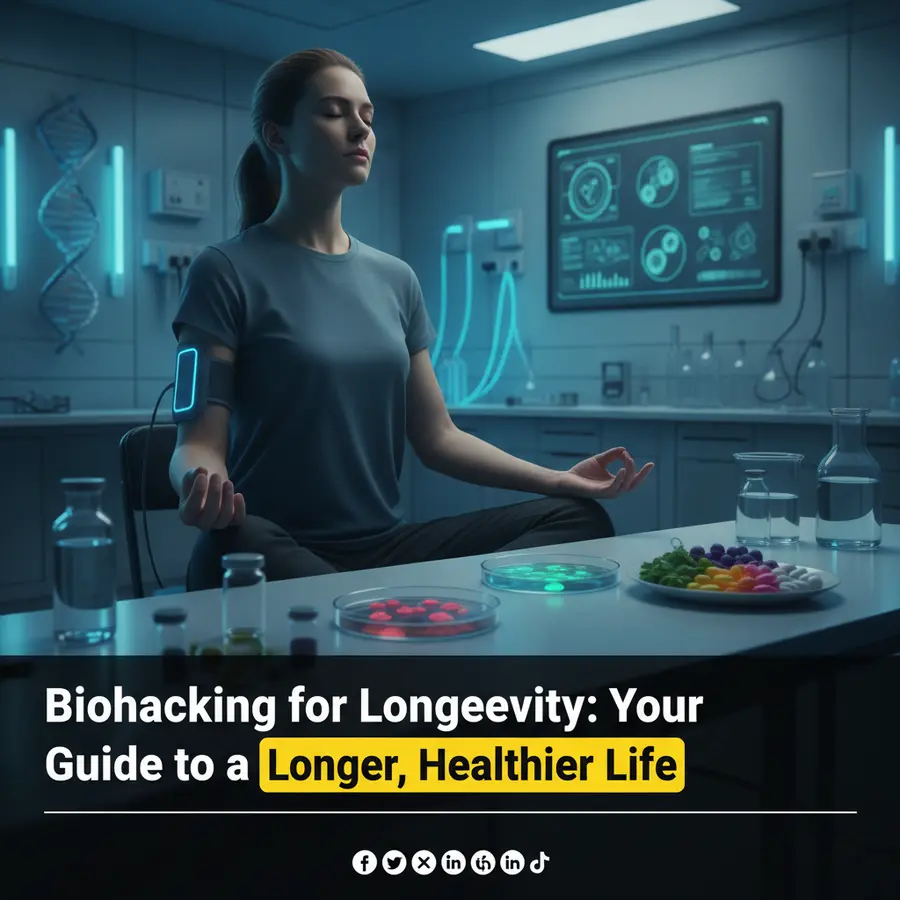
Biohacking for Longevity: Your Guide to a Longer, Healthier Life
“`html
Biohacking for Longevity: Your Guide to a Longer, Healthier Life
For centuries, humanity has been fascinated with the idea of extending life. Today, that fascination has evolved from a quest for a mythical fountain of youth into a data-driven, scientific pursuit known as biohacking. But what if the goal wasn’t just to live longer, but to live better for longer? This is the core principle of biohacking for longevity: using science and technology to optimize your biology, not just to extend your lifespan, but to dramatically improve your healthspan—the period of your life spent in good health, free from chronic disease.
This guide will demystify the world of longevity biohacking. Forget the sci-fi imagery of cyborgs and gene editing in a garage. We’ll focus on accessible, research-backed strategies you can use to take control of your health, slow down the aging process at a cellular level, and build a more vibrant, resilient future.
Understanding the Foundations of Longevity
Before diving into specific “hacks,” it’s crucial to understand what we’re up against. Aging is a complex biological process, but scientists have identified several key hallmarks that contribute to the decline we associate with getting older. These include:
- Mitochondrial Dysfunction: The mitochondria are the power plants of your cells. As we age, they become less efficient, leading to lower energy levels and increased cellular stress [1].
- Cellular Senescence: This is when cells stop dividing but don’t die, lingering and releasing inflammatory substances that can damage surrounding tissues. They are often called “zombie cells.”
- Inflammaging: This refers to the chronic, low-grade inflammation that develops with age. It’s a major driver of most age-related diseases, from heart disease to neurodegeneration [2].
The good news is that these processes are not entirely out of our control. The right lifestyle interventions can directly and positively influence these hallmarks of aging. That’s where biohacking comes in.
Key Biohacking Strategies for a Longer Healthspan
Longevity biohacking is built on a foundation of fundamental health principles, amplified by strategic interventions. Let’s explore the most impactful areas.
1. Nutritional Biohacking: Fueling Your Cells
What you eat is one of the most powerful levers you can pull for your health. Modern nutritional biohacking goes beyond simple calorie counting to focus on how food affects your cells.
Intermittent Fasting (IF): One of the most popular and well-researched biohacks is restricting your eating window. Practices like the 16:8 method (fasting for 16 hours, eating within an 8-hour window) do more than just help with weight management. During a fast, your body initiates a critical cellular cleanup process called autophagy [3]. Think of it as your body’s internal recycling program, clearing out damaged cells and proteins to make way for new, healthy ones. This process is fundamental to slowing cellular aging.
Nutrient-Dense, Anti-Inflammatory Diet: To combat “inflammaging,” focus on a diet rich in whole foods. The Mediterranean diet is an excellent, well-studied model. Prioritize:
- Polyphenols: Found in colorful fruits, vegetables, green tea, and dark chocolate, these compounds fight oxidative stress.
- Healthy Fats: Omega-3 fatty acids from fish, walnuts, and flaxseeds are potent anti-inflammatories [4].
- Fiber: Prebiotic fiber from vegetables and legumes feeds a healthy gut microbiome, which is intrinsically linked to reduced inflammation and better immune function.
A key part of this strategy is actively reducing or eliminating ultra-processed foods, refined sugars, and industrial seed oils, which are known drivers of inflammation and metabolic dysfunction.
2. Movement and Exercise: The Ultimate Longevity Drug
If there were a single pill for longevity, it would look a lot like exercise. A smart exercise protocol is a cornerstone of any biohacking routine.
Zone 2 Cardiovascular Training: This is low-to-moderate intensity cardio where you can still hold a conversation. Think of a brisk walk, a light jog, or cycling. The magic of Zone 2 is its ability to improve mitochondrial efficiency [5]. By training in this zone for 30-60 minutes, 3-4 times a week, you are essentially building more and better cellular power plants, boosting your energy and metabolic health.
Strength Training: After the age of 30, adults can lose 3-8% of their muscle mass per decade, a condition called sarcopenia. Resistance training is the single most effective way to combat this. Maintaining muscle mass is crucial for metabolic health, insulin sensitivity, bone density, and functional independence as you age [6]. Aim for 2-3 full-body sessions per week.
High-Intensity Interval Training (HIIT): Short bursts of all-out effort followed by brief recovery periods can provide remarkable benefits in a short amount of time. Research has shown that HIIT can be superior to other forms of exercise at reversing some cellular aspects of aging by boosting mitochondrial function and protein synthesis [7].
3. Temperature Stress: Hormesis in Action
The concept of hormesis suggests that small, controlled doses of stress can trigger a cascade of adaptive responses that make the body stronger and more resilient. Temperature exposure is a perfect example.
Cold Exposure: Whether it’s a cold shower or a deliberate ice bath, short-term cold exposure has been shown to reduce inflammation, improve immune function, and stimulate the production of brown adipose tissue (BAT), or “brown fat.” This metabolically active fat helps burn calories to generate heat, improving metabolic health [8].
Heat Exposure: Regular sauna use has been linked in large-scale studies to a significantly lower risk of cardiovascular events and all-cause mortality [9]. The heat stress triggers the release of “heat shock proteins,” which help repair damaged proteins within cells and reduce oxidative stress. It also improves circulation and promotes detoxification through sweat.
4. Sleep Optimization: The Nightly Reboot
Sleep is not a passive state; it’s when your body and brain perform their most critical repair work. During deep sleep, your brain clears out metabolic waste products (like amyloid-beta, linked to Alzheimer’s), your body repairs tissues, and your hormones are regulated [10]. Poor sleep accelerates the aging process. To optimize your sleep:
- Maintain a Consistent Schedule: Go to bed and wake up around the same time every day, even on weekends.
- Create a Sanctuary: Your bedroom should be cool, dark, and quiet.
- Manage Light Exposure: Get sunlight in the morning to set your circadian rhythm, and avoid blue light from screens for at least an hour before bed.
Leveraging Technology: Data-Driven Biohacking
What sets modern biohacking apart is the ability to track your internal environment. Technology gives you the data to move from guessing to knowing.
- Wearable Devices: Rings and wristbands (like Oura, Whoop, or Apple Watch) can provide invaluable insights into your sleep quality (stages, duration), recovery (Heart Rate Variability or HRV), and daily activity levels. Tracking HRV, a measure of the variation in time between heartbeats, is a powerful way to assess your body’s readiness for stress.
- Continuous Glucose Monitors (CGMs): Once reserved for diabetics, CGMs are now used by biohackers to get real-time feedback on how different foods and lifestyle factors affect their blood sugar. This allows for profound dietary personalization to maintain stable glucose levels, a key to managing inflammation and long-term health.
- Biomarker Testing: Going beyond a standard physical, you can now access advanced blood panels that measure biomarkers of aging, inflammation (like hs-CRP), and nutrient levels. This data, ideally interpreted with a functionally-trained medical professional, allows for highly targeted interventions [11].
Targeted Supplementation for Healthy Aging
While diet should always be the foundation, certain supplements are well-researched for their potential to support longevity pathways. It is essential to approach supplementation with caution and consult a healthcare professional before starting any new regimen.
- NAD+ Precursors (NMN, NR): NAD+ is a vital coenzyme for mitochondrial function and DNA repair that declines significantly with age. NMN and NR are precursors the body can use to produce more NAD+. Studies suggest they can restore cellular energy levels and support healthy aging [12].
- Resveratrol: This polyphenol, found in grapes and berries, is studied for its ability to activate sirtuins, often called “longevity genes,” which are involved in DNA repair and inflammation control.
- Omega-3 Fatty Acids (EPA & DHA): If you don’t eat fatty fish regularly, a high-quality fish oil supplement can be a powerful tool for reducing systemic inflammation [4].
- Vitamin D3 & K2: These vitamins work synergistically. Vitamin D is crucial for immune function and gene expression, while Vitamin K2 helps direct calcium to your bones and away from your arteries, a critical factor in cardiovascular and skeletal health.
Putting It All Together: A Practical Approach
The world of biohacking can seem overwhelming. The key is to start small and build momentum. Don’t try to implement everything at once.
- Master the Foundations: Before buying any expensive gadgets or supplements, focus on the fundamentals for one month. Prioritize whole foods, consistent exercise, and 7-8 hours of quality sleep. This is the 80/20 of longevity.
- Pick One New Hack: Once you have a solid foundation, introduce one new strategy. Maybe it’s ending your daily shower with 60 seconds of cold water or trying a 14-hour fast.
- Track and Assess: Pay attention to how you feel. Do you have more energy? Are you sleeping better? If you use a wearable, look at the data. Did your HRV improve? Use this feedback to decide if the hack is right for you.
- Listen to Your Body: Biohacking is about personalization (n=1). What works wonders for one person may not work for you. Be a curious scientist of your own biology.
Conclusion
Biohacking for longevity is an empowering shift in perspective. It moves you from being a passive passenger in your health journey to an active, informed pilot. By combining ancestral wisdom—like whole foods, movement, and sleep—with modern science and technology, you can influence the way you age. The ultimate goal is not just to add years to your life, but to add life to your years, ensuring a future filled with health, vitality, and purpose.
References
- Lopez-Otin, C., Blasco, M. A., Partridge, L., Serrano, M., & Kroemer, G. (2013). The hallmarks of aging. Cell, 153(6), 1194–1217.
- Franceschi, C., & Campisi, J. (2014). Chronic inflammation (inflammaging) and its potential contribution to age-associated diseases. The Journals of Gerontology: Series A, 69(Suppl_1), S4-S9.
- Bagherniya, M., Butler, A. E., Barreto, G. E., & Sahebkar, A. (2018). The effect of fasting or calorie restriction on autophagy induction: A review of the literature. Ageing Research Reviews, 47, 183-197.
- Calder, P. C. (2017). Omega-3 fatty acids and inflammatory processes: from molecules to man. Biochemical Society Transactions, 45(5), 1105-1115.
- San-Millán, I., & Brooks, G. A. (2017). Assessment of metabolic flexibility by assessing maximal fat oxidation during exercise. Frontiers in Physiology, 8, 503.
- Volpi, E., Nazemi, R., & Fujita, S. (2004). Muscle tissue changes with aging. Current Opinion in Clinical Nutrition and Metabolic Care, 7(4), 405-410.
- Robinson, M. M., Dasari, S., Konopka, A. R., Johnson, M. L., Manjunatha, S., Esponda, R. R., … & Nair, K. S. (2017). Enhanced protein translation underlies improved metabolic and physical function with exercise training in older adults. Cell Metabolism, 25(3), 581-592.
- van der Lans, A. A., Hoeks, J., Brans, B., Vijgen, G. H., Visser, M. G., Vosselman, M. J., … & van Marken Lichtenbelt, W. D. (2013). Cold-activated brown adipose tissue in human adults. The Journal of Clinical Investigation, 123(8), 3429-3437.
- Laukkanen, T., Khan, H., Zaccardi, F., & Laukkanen, J. A. (2015). Association between sauna bathing and fatal cardiovascular and all-cause mortality events. JAMA Internal Medicine, 175(4), 541-548.
- Xie, L., Kang, H., Xu, Q., Chen, M. J., Liao, Y., Thiyagarajan, M., … & Nedergaard, M. (2013). Sleep drives metabolite clearance from the adult brain. Science, 342(6156), 373-377.
- Ferrucci, L., Gonzalez-Freire, M., Fabbri, E., Simonsick, E., & Moore, Z. (2020). Measuring biological aging in humans: A quest. Aging Cell, 19(2), e13080.
- Imai, S. I., & Guarente, L. (2014). NAD+ and sirtuins in aging and disease. Trends in Cell Biology, 24(8), 464-471.
- Howitz, K. T., Bitterman, K. J., Cohen, H. Y., Lamming, D. W., Lavu, S., Wood, J. G., … & Sinclair, D. A. (2003). Small molecule activators of sirtuins extend Saccharomyces cerevisiae lifespan. Nature, 425(6954), 191-196.
Disclaimer
The information contained in this article is for educational and informational purposes only and is not intended as health or medical advice. Always consult a physician or other qualified health provider regarding any questions you may have about a medical condition or health objectives. Do not disregard professional medical advice or delay in seeking it because of something you have read in this article. The use of any information provided in this article is solely at your own risk.
“`