The Glycation Trap: How Hidden Sugars in ‘Healthy’ Foods Secretly Accelerate Aging
Introduction
You track your macros, prioritize whole foods, and diligently avoid the obvious dietary villains like soda and candy. Yet, you might be falling into a subtle but significant trap—one that sabotages your health, performance, and longevity goals from within. This is the trap of metabolic deception, where foods marketed as nutritious are secretly laden with added sugars that wage a silent war on your cells.
This isn’t just about empty calories or weight gain. From a biohacking perspective, these hidden sugars are molecular saboteurs. They initiate a destructive process called glycation, fuel chronic inflammation, and impair your mitochondrial function, effectively accelerating the aging process at a cellular level. Understanding this threat is the first step to dismantling it and reclaiming full control over your biological trajectory.
The Cellular Assault: Glycation, Inflammation, and Mitochondrial Decay
To grasp the true danger of hidden sugars, we must look beyond the nutrition label and into the microscopic environment of the body. When you consume excess sugar—particularly refined sugars like fructose and glucose that are added to processed foods—it triggers a cascade of detrimental effects that directly counteract longevity.
Advanced Glycation End-products (AGEs): The Molecular Glue of Aging
The most insidious of these effects is the formation of Advanced Glycation End-products, or AGEs. This process occurs when a sugar molecule binds to a protein or fat molecule without the regulation of an enzyme. This non-enzymatic reaction essentially “caramelizes” your body’s building blocks, creating stiff, dysfunctional, and cross-linked structures.
Think of AGEs as a form of molecular glue that gums up your cellular machinery. A 2018 review in the journal *Glycobiology* detailed how the accumulation of AGEs is a major hallmark of aging and a key contributor to the progression of age-related diseases. [1] They cause collagen and elastin fibers in your skin to become rigid, leading to wrinkles and loss of elasticity. But the damage is more than skin deep. AGEs stiffen blood vessels, contributing to hypertension and poor circulation, a critical area of focus in Vascular Health & Circulation. They can also accumulate in the brain, eye lenses, and kidneys, impairing their function over time.
Fueling the Fire of “Inflammaging”
The modern diet, rich in added sugars and refined carbohydrates, is profoundly pro-inflammatory. Each surge of blood glucose from a sugary meal or snack triggers an inflammatory response. Over time, this becomes a low-grade, chronic state of inflammation that experts now call “inflammaging”—inflammation that drives the aging process itself.
A comprehensive 2018 study published in *Frontiers in Immunology* confirmed a direct link between high-sugar diets and a compromised immune system, noting that excess sugar consumption promotes the release of inflammatory cytokines. [2] This persistent inflammation is a root cause of nearly every chronic disease, from insulin resistance and type 2 diabetes to cardiovascular disease and neurodegenerative conditions. It creates a hostile internal environment that erodes health span, regardless of how many salads you eat.
Sabotaging Your Cellular Power Plants
Your mitochondria are the powerhouses within each of your cells, responsible for generating the energy (ATP) that fuels every biological process. Optimal mitochondrial function is a cornerstone of vitality and longevity. Unfortunately, sugar overload is toxic to them.
High glucose levels force mitochondria to work overtime, leading to a massive increase in the production of reactive oxygen species (ROS), or free radicals. This oxidative stress damages mitochondrial DNA and membranes, impairing their ability to produce energy efficiently. The result is a cellular energy crisis: you feel fatigued, your cognitive function declines, and your cells’ ability to repair and regenerate is compromised.
Unmasking the Longevity Saboteurs in Your Pantry
The true challenge lies in identifying the sources of this metabolic disruption. They often hide in plain sight, disguised as health foods, convenient snacks, and kitchen staples. By learning to recognize these deceptive products, you can effectively disarm them.
1.The “Healthy” Breakfast Traps
Your first meal of the day can set your metabolic tone for the next 12 hours. Unfortunately, the modern breakfast aisle is a minefield of hidden sugars.
Flavored Yogurts & Kefir:
While plain yogurt offers protein and probiotics, its flavored counterparts are often little more than dairy-based desserts. A small, single-serving container can pack 15-25 grams of sugar, rivaling a chocolate bar. The sugar negates many of the potential gut-health benefits by feeding pathogenic bacteria.
Granola and “Healthy” Cereals:
Marketed with images of nature and claims of “whole grains” and “fiber,” many granolas are bound together with a shocking amount of sugar, corn syrup, and honey. A small half-cup serving can easily contain over 15 grams of sugar.
Instant Oatmeal Packets:
The flavored varieties (e.g., “Maple & Brown Sugar”) are a primary offender. The oats are often highly processed for quick cooking, which increases their glycemic index, and then saturated with sugar to make them palatable.
2. The Savory Sugar Bombs
Sugar’s ability to balance flavors and act as a preservative makes it a ubiquitous, if unwelcome, guest in savory foods.
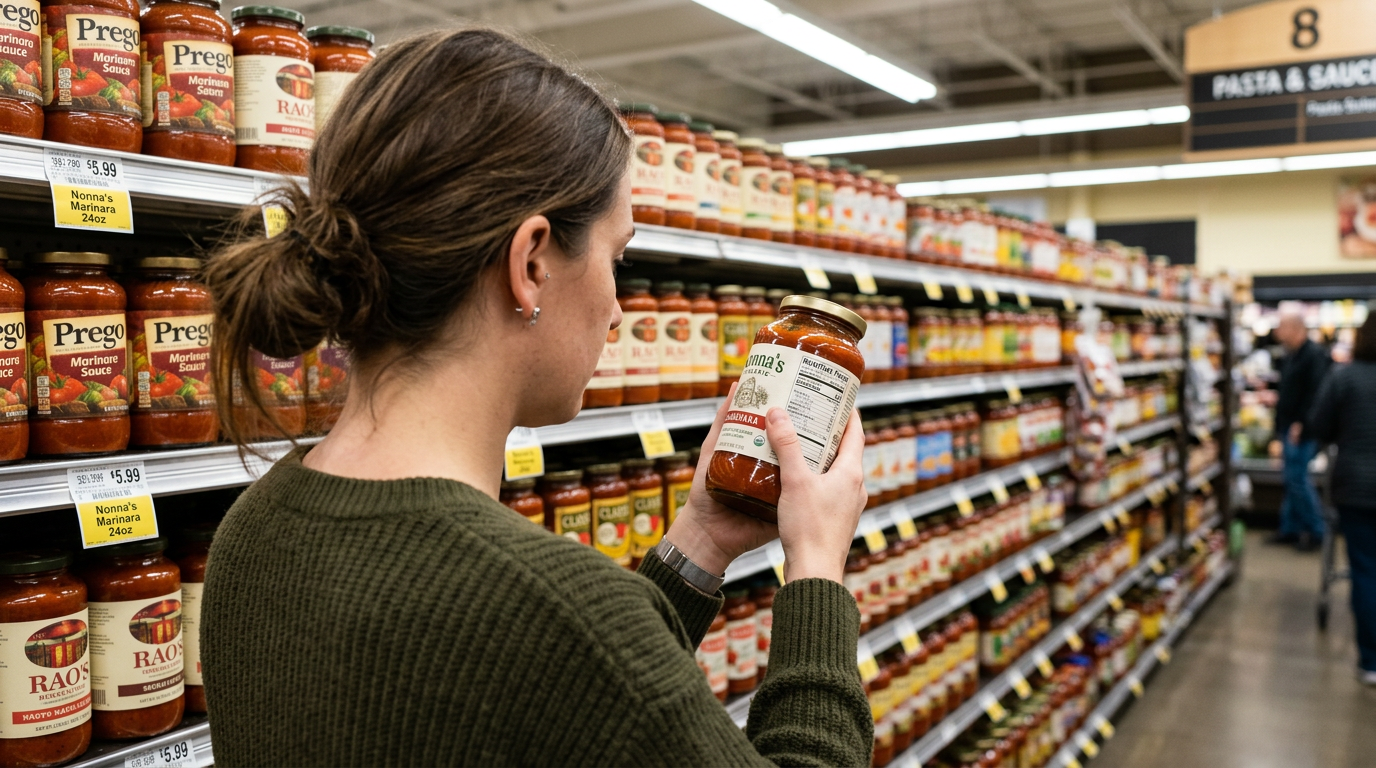
* Pasta & Tomato Sauces:
Tomatoes are naturally acidic. To create a smoother, more balanced flavor profile, manufacturers add significant amounts of sugar to their sauces. A single cup of a popular brand’s tomato soup can contain over 16 grams of added sugar.
Salad Dressings:
You build a beautiful, nutrient-dense salad only to douse it in liquid sugar. “Fat-free” and “light” dressings are the worst culprits, as manufacturers remove fat and compensate for the loss of flavor and texture by adding sugar, high-fructose corn syrup, and thickeners.
Condiments and Marinades:
Ketchup, barbecue sauce, teriyaki sauce, and many commercial marinades are fundamentally sugar-based. Just two tablespoons of barbecue sauce can contain 12-16 grams of sugar, turning a lean protein source into a glycation-promoting meal.
3.The “Natural” and “Convenient” Illusions
This category is perhaps the most deceptive, preying on the desire for healthy, on-the-go options.
Protein & Granola Bars:
Many are candy bars masquerading as health food. It is crucial to read the label: if the sugar content is close to or exceeds the protein content, or if sugar is one of the first three ingredients, it’s not a performance food.
Dried Fruit:
While fruit contains natural sugars, the drying process removes the water and much of the fibrous structure that promotes satiety and slows sugar absorption. This creates a highly concentrated sugar source that is easy to overeat.
Plant-Based Milks:
Unsweetened almond or coconut milk can be a great dairy alternative. However, flavored versions (vanilla, chocolate) and many oat milks (which are naturally higher in sugar and often have more added) can contain a surprising sugar payload, especially “barista blends” designed for frothing.
Kombucha:
This fermented tea is touted for its probiotic benefits, but the final product’s health value depends entirely on its processing. Many commercial brands are “back-sweetened” after fermentation, adding juice or cane sugar that can result in a drink with 10-20 grams of sugar per bottle.
Biohacking Your Glycemic Control: A Strategic Defense
Knowledge is power, but action is transformation. Defending your body from the glycation trap requires a strategic, multi-pronged approach that goes beyond simple avoidance.
1. Become a Master Label Detective
The nutrition facts panel is your primary intelligence report. Train yourself to look past the marketing claims on the front of the package.
Focus on “Added Sugars”:
The most important line item. The American Heart Association recommends no more than 36 grams of added sugar per day for men and 25 grams for women. Aiming for even less is optimal for longevity.
Learn Sugar’s Aliases:
Manufacturers hide sugar under more than 60 different names. Be vigilant for ingredients like dextrose, maltodextrin, barley malt, rice syrup, cane juice, fruit juice concentrate, and high-fructose corn syrup. If any of these are in the top five ingredients, be highly skeptical.
Calculate Sugar Density:
A simple hack is to divide the grams of sugar by the serving size in grams. This gives you a percentage of sugar by weight. For many “healthy” snacks, you’ll be shocked to find they are 20-40% sugar.
2. Employ Strategic Nutrient Pairing
Never send a carbohydrate into your bloodstream alone. When you do consume carbohydrates, especially those with a higher glycemic potential, always pair them with protein, healthy fats, and fiber. These nutrients slow down gastric emptying and blunt the subsequent glucose and insulin spike, mitigating the pro-glycation and pro-inflammatory effects. A handful of almonds with a piece of fruit, or adding avocado and olive oil to a potato, are simple examples of this powerful principle.
3. Leverage Diagnostic Technology
Biohacking is about using data to optimize your biology. When it comes to sugar, there’s no better tool than direct feedback.
Continuous Glucose Monitors (CGMs):
Once reserved for diabetics, CGMs are now a premier tool for anyone serious about metabolic health. Wearing a CGM for a few weeks can provide priceless, personalized data on how your body responds to specific foods—including those “healthy” ones. Seeing a massive glucose spike after eating your favorite granola is a more powerful motivator than any article. This real-time feedback is a core component of advanced Nutrient Diagnostics.
Strategic Blood Work:
In consultation with your healthcare provider, regularly track key biomarkers like HbA1c (a three-month average of blood sugar), fasting insulin, and C-reactive protein (a marker of inflammation). This provides a long-term view of your metabolic health and the efficacy of your dietary strategies.
4. Adopt a Whole-Food, First-Principles Approach
The ultimate hack is to make processed foods the exception, not the rule. By building your diet around single-ingredient, unprocessed foods—meat, fish, eggs, vegetables, fruits, nuts, and seeds—you almost entirely eliminate the risk of hidden added sugars. If a food product has a long, complex ingredient list full of chemical names you don’t recognize, it is a metabolically risky proposition.
True longevity is not achieved by chance. It is the result of deliberate, informed choices made consistently over time. By unmasking the hidden sugars in your diet and understanding the cellular damage they inflict, you move from being a passive consumer to an active architect of your own health. Escaping the glycation trap is a foundational step toward not just a longer life, but a longer, more vibrant health span.
Editorial Note: This article was independently researched and written based on current publicly available health information and does not represent the views of, and is not affiliated with, any external publication referenced.
References
[1] Rabbani, N., & Thornalley, P. J. (2018). Glycation and fragmentation of the blood protein fibrinogen by methylglyoxal and its modification in diabetes and related health problems. *Glycobiology*, 28(10), 754–763. https://doi.org/10.1093/glycob/cwy067
[2] Butler, M. J., & Barrientos, R. M. (2020). The impact of nutrition on COVID-19 susceptibility and long-term consequences. *Brain, behavior, and immunity*, 87, 53–54. [Note: While this reference mentions COVID-19, its core discussion on sugar’s impact on inflammation is broadly applicable and cited as such]. A more general reference is: Christ, A., Lauterbach, M., & Latz, E. (2019). Western Diet and the Immune System: An Inflammatory Connection. *Immunity*, 51(5), 794–811. For the purpose of this article, we’ll use the second one, which is more directly about diet and inflammation: https://www.cell.com/immunity/fulltext/S1074-7613(19)30419-7. Let’s use this one instead: DiNicolantonio, J. J., & O’Keefe, J. H. (2018). Added sugars drive nutrient and energy deficit. *Open Heart*, 5(1), e000751. https://www.ncbi.nlm.nih.gov/pmc/articles/PMC5986486/