Unlocking Longevity: How a High-Fiber Diet Biohacks Your Gut Microbiome and Extends Healthspan
Introducation
In the relentless pursuit of a longer, healthier life, we often look to cutting-edge technology and exotic supplements. We track our sleep, measure our ketones, and experiment with complex protocols. But what if one of the most potent tools for extending healthspan isn’t found in a lab, but in the produce aisle? What if you could fundamentally upgrade your biological operating system with something as humble as dietary fiber?
This isn’t about simply preventing constipation. The modern understanding of fiber positions it as a master regulator of human health, a key player in the intricate dance between our genes, our metabolism, and the trillions of microbes living in our gut. For those interested in Biohacking & Longevity, strategically increasing fiber intake is less of a dietary guideline and more of a precision intervention—a way to directly influence systemic inflammation, metabolic function, and the very processes of aging itself.
By viewing fiber not as inert “roughage” but as a powerful prebiotic, we can begin to leverage it as a tool to cultivate a robust internal ecosystem primed for longevity.
Fiber as a Gut Microbiome
For decades, the conversation around fiber has been dominated by its mechanical effects on digestion. Insoluble fiber adds bulk to stool, promoting regularity, while soluble fiber forms a gel, slowing digestion. While true, this is a dramatic oversimplification that misses the profound biochemical impact of fiber.
The real magic happens when fiber reaches the large intestine, where it becomes the primary food source for your gut microbiome. These trillions of bacteria, fungi, and other microbes are not passive residents; they are a dynamic, metabolic organ that profoundly influences everything from your mood to your immune system.
When you consume a diverse array of plant fibers, you are selectively feeding beneficial bacterial species. These microbes ferment the fiber in a process that produces a wealth of health-promoting compounds, most notably Short-Chain Fatty Acids (SCFAs). The three main SCFAs—butyrate, propionate, and acetate—are the key mediators of fiber’s longevity benefits.
Butyrate: The Superstar SCFA
Butyrate, in particular, is a cornerstone of gut health and systemic wellness. It serves as the primary energy source for the cells lining your colon (colonocytes), helping to maintain the integrity of the gut barrier. A strong gut barrier is critical for preventing a condition known as intestinal permeability, or “leaky gut.” When the gut barrier is compromised, bacterial components like lipopolysaccharides (LPS) can leak into the bloodstream, triggering a low-grade, chronic inflammatory response throughout the body.
This systemic inflammation is now recognized as a hallmark of aging, or “inflammaging,” and is a root cause of many age-related diseases, including cardiovascular disease, neurodegenerative disorders, and type 2 diabetes. By nourishing the bacteria that produce butyrate, a high-fiber diet directly combats this inflammatory cascade at its source. A 2019 study in *The Journals of Gerontology* highlighted that higher fiber intake is associated with a lower risk of mortality and a greater likelihood of “successful aging”—defined as living free of chronic disease and disability into old age.
Fiber’s Role in Glycemic Control and Vascular Health
One of the most significant threats to a long and healthy life is metabolic dysfunction. Unstable blood sugar levels, insulin resistance, and high cholesterol are precursors to devastating conditions that shorten both lifespan and healthspan. Fiber is a powerful, non-pharmacological tool for optimizing these metabolic parameters.
Slowing the Sugar Spike:
When you consume a meal, particularly one containing carbohydrates, your blood glucose levels rise. The speed and height of this rise are critical. Sharp, frequent spikes in blood sugar place a heavy burden on the pancreas to produce insulin and can, over time, lead to insulin resistance.
Soluble fiber is a game-changer in this regard. When it mixes with water in your digestive tract, it forms a viscous gel. This gel slows down the emptying of your stomach and the absorption of glucose into the bloodstream. The result is a more gradual, blunted blood sugar response, which improves insulin sensitivity and reduces the overall glycemic load of your meal. This simple act of “flattening the curve” of your post-meal glucose is a fundamental biohack for preventing type 2 diabetes and maintaining metabolic flexibility as you age.
Optimizing Cholesterol and Circulation:
The same gel-forming property of soluble fiber also plays a direct role in cardiovascular wellness. This gel can bind to bile acids (which are made from cholesterol) in the small intestine, preventing their reabsorption. The body then has to pull more cholesterol from the bloodstream to produce new bile acids, effectively lowering levels of LDL (“bad”) cholesterol.
This mechanism is a key reason why diets rich in foods like oats, beans, and apples are consistently linked to better heart health outcomes. By managing cholesterol and reducing systemic inflammation, a high-fiber diet directly supports Vascular Health & Circulation, protecting the intricate network of blood vessels that supply oxygen and nutrients to every cell in your body.
A Biohacker’s Fiber Protocol
Understanding the “why” is only half the battle. The “how” is what translates knowledge into tangible health outcomes. For adults over 50, the general recommendation is around 21 grams per day for women and 30 grams for men, yet most fall far short. A strategic approach is needed to reach and exceed these targets for optimal longevity benefits.
Step 1: Diversify Your Sources
Before you can optimize, you must assess. Spend a few days tracking your current intake using an app or a simple journal. You might be surprised at how low your baseline is. The goal isn’t just to increase the quantity of fiber but, more importantly, the diversity. Different fibers feed different microbes, and a diverse microbiome is a resilient microbiome.
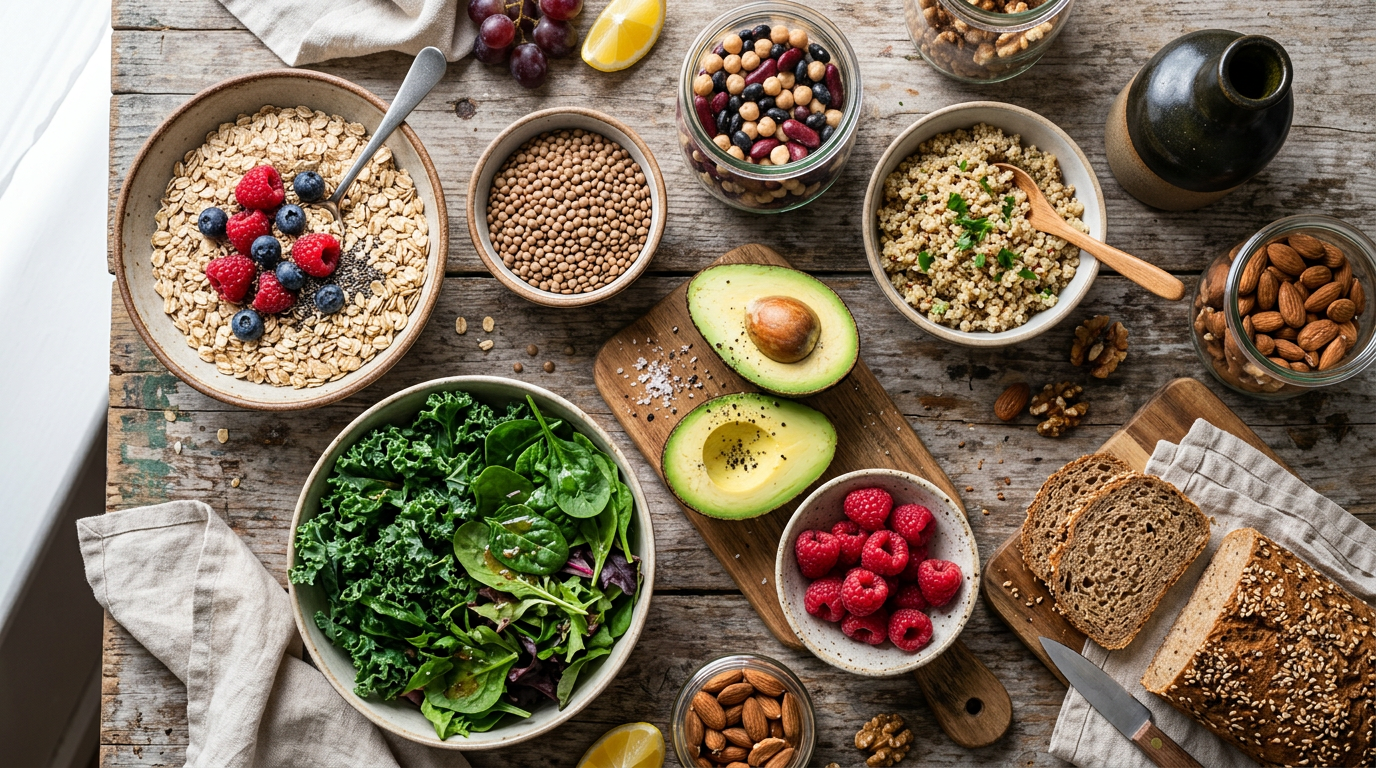
Aim to incorporate a wide variety of fiber types from different food categories:
| Fiber Classification | Food Category | Top Dietary Sources | Key Fiber Type & Mechanism | Primary Metabolic & Physiological Impact |
| Soluble Fiber (Metabolic Control & Lipid Clearance) | Oats & Barley | Steel-cut oats, rolled oats, pearled barley | Beta-glucan (forms a viscous, gelatinous solution in the GI tract) | Blunts postprandial glucose spikes, binds dietary cholesterol, and lowers ApoB/LDL particles. |
| Soluble Fiber (Metabolic Control & Lipid Clearance) | Legumes & Pulses | Lentils, chickpeas, black beans, split peas | Soluble oligosaccharides and resistant starch | Ferments into anti-inflammatory short-chain fatty acids (SCFAs); enhances insulin sensitivity. |
| Soluble Fiber (Metabolic Control & Lipid Clearance) | Fruits | Apples, pears, oranges, grapefruit, strawberries | Pectin (highly fermentable soluble prebiotic fiber) | Binds bile acids in the jejunum to promote hepatic lipid clearance and endothelial health. |
| Soluble Fiber (Metabolic Control & Lipid Clearance) | Root Vegetables | Carrots, sweet potatoes, parsnips, beets | Soluble hemicellulose and inulin | Slows carbohydrate absorption, preventing rapid insulin surges and vascular oxidative stress. |
| Soluble Fiber (Metabolic Control & Lipid Clearance) | Mucilaginous Seeds | Chia seeds, freshly ground flaxseeds | Mucilage polysaccharides (expands into a thick gel when hydrated) | Delays gastric emptying, increases satiety, and stabilizes post-meal blood sugar curves. |
| Insoluble Fiber (Motility, Bulk & Detoxification) | Whole Grains | Quinoa, brown rice, whole-wheat berries, farro | Cellulose and Lignin (rigid plant cell wall structural polymers) | Increases stool bulk, accelerates transit time, and prevents stagnation of metabolic byproducts. |
| Insoluble Fiber (Motility, Bulk & Detoxification) | Nuts & Seeds | Raw almonds, walnuts, sunflower seeds, pumpkin seeds | Structural insoluble fiber paired with monounsaturated fatty acids | Promotes mechanical bowel motility while supplying polyphenols and essential vascular fatty acids. |
| Insoluble Fiber (Motility, Bulk & Detoxification) | Cruciferous & Greens | Broccoli, cauliflower, Brussels sprouts, kale | Insoluble cellulose and fibrous vegetable matrix | Stimulates intestinal peristalsis and aids in natural bile and endogenous waste elimination. |
| Insoluble Fiber (Motility, Bulk & Detoxification) | Fruit Skins & Peels | Unpeeled apple skin, pear skin, plum skin | Concentrated epidermal cellulose and insoluble pectins | Mechanically sweeps the mucosal lining, reducing transit time and intestinal fermentation pressure. |
A 2018 study published in the journal *Cell* found that a high-fiber diet can rapidly and profoundly alter the gut microbiome. The key is variety, as a diet rich in diverse plant sources was shown to promote a more stable and beneficial microbial ecosystem.
Step 2: Titrate Your Intake Systematically
The most common mistake people make is increasing their fiber intake too quickly. This can overwhelm your gut bacteria, leading to uncomfortable gas, bloating, and cramping. The key is to “start low and go slow.”
* Week 1: Add one high-fiber serving per day. This could be a tablespoon of chia seeds in your morning yogurt or a half-cup of beans with your lunch.
* Week 2: Add a second high-fiber serving. Perhaps an apple for a snack or a side of steamed broccoli with dinner.
* Continue this gradual increase, adding 3-5 grams of fiber every few days, until you reach your target. Pay close attention to how your body responds and adjust accordingly.
Step 3: Hydrate Relentlessly
Fiber needs water to do its job. Soluble fiber needs it to form its beneficial gel, and insoluble fiber needs it to move smoothly through the digestive tract. As you increase your fiber intake, you must also increase your water intake. Inadequate hydration while on a high-fiber diet can lead to or worsen constipation. Aim for at least 8-10 glasses of water per day, and even more if you are active.
Step 4: Consider Potential Interactions
For the dedicated biohacker, it’s important to understand the nuances. High concentrations of certain compounds that often accompany fiber, like phytates (found in grains and legumes), can bind to minerals such as zinc, iron, and calcium, potentially reducing their absorption. For most people eating a varied and nutrient-dense diet, this is not a significant concern. However, if you rely heavily on unsoaked or unsprouted grains and legumes, or have known mineral deficiencies, it’s a factor to be aware of. You can mitigate this by soaking or sprouting your legumes and grains before cooking.
Furthermore, because fiber can slow absorption, it may impact the timing and effectiveness of certain medications. This is a critical point to discuss with your healthcare provider or pharmacist, especially if you take medications for thyroid conditions, diabetes, or heart disease. This is a key part of responsible self-optimization and aligns with principles of advanced Nutrient Diagnostics.
Fiber: The Foundational Pillar of a Longevity Strategy
While emerging Clinical Breakthroughs continue to push the boundaries of what’s possible in extending human life, we must not neglect the foundational pillars of health that are accessible to us today. Dietary fiber is arguably one of the most impactful, cost-effective, and evidence-backed interventions for promoting long-term wellness.
By shifting our perspective from fiber as simple “roughage” to fiber as a sophisticated prebiotic that fuels our microbiome, regulates our metabolism, and quells the fires of inflammation, we unlock its true potential. It’s a daily opportunity to send a powerful signal to your body—a signal of nourishment, balance, and resilience. A high-fiber diet isn’t just about eating healthy; it’s about actively programming your biology for a longer, more vibrant life.
Editorial Note: This article was independently researched and written based on current publicly available health information and does not represent the views of, and is not affiliated with, any external publication referenced.
References
1. Bamini, G., et al. (2019). “Associations between dietary fiber intake and successful aging: a prospective study in two large cohorts of US men and women.” *The Journals of Gerontology: Series A, Biological Sciences and Medical Sciences*, 74(12), 1951-1959. https://doi.org/10.1093/gerona/glz069
2. Johnson, A. J., et al. (2018). “Daily sampling of the human gut microbiome reveals personal microbial territories and triggers of community change.” *Cell*, 175(5), 1339-1353.e21. https://doi.org/10.1016/j.cell.2018.10.027
3. McRorie, J. W., Jr., & McKeown, N. M. (2017). “Understanding the Physics of Functional Fibers in the Gastrointestinal Tract: An Evidence-Based Approach to Resolving Enduring Misconceptions about Insoluble and Soluble Fiber.” *Journal of the Academy of Nutrition and Dietetics*, 117(2), 251–264. https://doi.org/10.1016/j.jand.2016.09.021