The Biohacker’s Guide to Building Unbreakable Bones Without Dairy
Medical Disclaimer: The information provided in this article is for educational and informational purposes only and does not constitute medical advice. Always consult a qualified healthcare provider regarding any medical condition or treatment.
Introduction
The quest for longevity often focuses on visible signs of aging—skin, hair, and energy levels. Yet, the silent, invisible framework that supports our entire existence, our skeleton, is arguably the most critical pillar of a long, active life. For decades, the public health narrative has been deceptively simple: drink milk for strong bones. This calcium-centric view, however, is a dangerously incomplete picture. True skeletal resilience isn’t about flooding your system with a single mineral; it’s about understanding and strategically influencing a dynamic, lifelong biological process.
Welcome to the biohacker’s approach to bone health. This isn’t about quick fixes or miracle supplements. It’s about viewing your skeleton as a living, intelligent system that is constantly being broken down and rebuilt. By providing this system with a precise, synergistic matrix of nutrients and the right environmental signals, you can actively guide its development, enhancing its density and strength for decades to come. This is the foundation of structural longevity, and it goes far beyond the dairy aisle.
Your Skeleton is a Living System: The Science of Bone Remodeling
To truly optimize bone health, you must first appreciate that bone is not inert, rock-like material. It is a vibrant, metabolically active tissue in a perpetual state of renovation, a process known as bone remodeling. This process is governed by two key cell types:
* Osteoclasts: These are the “demolition crew.” They move along the bone surface, breaking down and resorbing old, worn-out bone tissue. This process releases minerals like calcium back into the bloodstream for other bodily functions.
* Osteoblasts: This is the “construction crew.” They follow the osteoclasts, laying down a new, flexible protein matrix (primarily collagen) and then mineralizing it with calcium phosphate crystals to form strong, new bone.
In youth, the activity of osteoblasts outpaces that of osteoclasts, leading to a net gain in bone mass, which typically peaks around age 30. After this point, the balance can slowly shift, and if osteoclast activity begins to dominate, bone density gradually declines, setting the stage for conditions like osteopenia and osteoporosis.
The biohacker’s goal is to intervene in this process. By understanding the nutritional and mechanical signals that stimulate osteoblast activity and temper excessive osteoclast activity, we can maintain a favorable balance well into our later years. This is the core principle of Biohacking & Longevity: using targeted inputs to guide biological outcomes.
The Nutrient Matrix: A Symphony of Bone-Building Compounds
Calcium is a crucial building block, but it’s like a pile of bricks without a construction crew, a blueprint, or mortar. To build a resilient skeletal structure, you need an entire team of nutrients working in concert. Focusing on this synergy is what separates a basic diet from a strategic nutritional protocol.
The Structural Foundation: Beyond Calcium
- Calcium: The primary mineral that gives bone its hardness and compressive strength. While dairy is a well-known source, it’s abundant elsewhere. The recommended daily intake for most adults is 1,000 to 1,200 mg.
-
Protein Requirement: First, adequate amino acids build the flexible collagen frame of your skeleton. Consequently, low protein intake leaves bones dangerously brittle, regardless of your calcium numbers.
-
Phosphorus Support: Furthermore, phosphorus represents the second largest mineral fraction within human bone. As a result, it pairs with calcium to build rigid hydroxyapatite crystals. Fortunately, standard whole-food diets supply ample amounts, making deficiencies very unlikely.
The Regulatory and Absorption Team: The Directors of Mineral Traffic
* Vitamin D3:
This is not just a vitamin; it’s a potent steroid hormone that acts as the primary gatekeeper for calcium absorption in the gut. Without sufficient Vitamin D, dietary calcium passes through your system largely unused, forcing your body to draw calcium from your bones to maintain blood levels.
* Vitamin K2 (as MK-7):
If Vitamin D is the gatekeeper, Vitamin K2 is the traffic cop. Its primary role is to activate two key proteins: osteocalcin, which helps bind calcium to the bone matrix, and Matrix Gla Protein (MGP), which prevents calcium from being deposited in soft tissues like arteries and kidneys. This dual action is crucial for ensuring calcium ends up where it’s needed (bones) and not where it can cause harm (arterial calcification). A 2013 study published in *Osteoporosis International* demonstrated that a three-year supplementation with a specific form of Vitamin K2 (MK-7) significantly decreased age-related bone loss in healthy postmenopausal women. [1]
* Magnesium:
This is the master mineral, involved in over 300 enzymatic reactions. For bone health, it’s indispensable. It helps convert Vitamin D into its active form, stimulates the hormone calcitonin which helps preserve bone structure, and is required for the enzymes that build new bone crystals.
The Support and Maintenance Crew: Essential Co-Factors
* Vitamin C: An essential co-factor for the synthesis of collagen, the protein “scaffolding” of bone.
* Potassium: Helps maintain an alkaline environment in the body. A highly acidic state (often promoted by modern processed diets) can cause calcium to be leached from the bones to act as a buffer.
* Trace Minerals (Boron, Manganese, Zinc): These minerals are required in small amounts but play critical roles. Boron, for example, influences the metabolism of calcium, magnesium, and Vitamin D. Manganese is a co-factor for enzymes involved in forming the bone matrix.
Engineering Your Diet: The Dairy-Free Longevity Pantry
Building your diet around nutrient synergy allows you to construct a powerful, dairy-free protocol for skeletal resilience. Forget single-food solutions and embrace dietary patterns rich in these key categories.
The Mineral Powerhouses: Greens and Crucifers
Dark leafy greens are nutritional champions, offering a payload of calcium, magnesium, vitamin K, and potassium.
* Top Choices:
Cooked collard greens, turnip greens, bok choy, and kale are exceptional. A single cup of cooked collard greens, for example, delivers over 260 mg of calcium.
* A Note on Spinach:
While healthy, spinach contains high levels of oxalates, compounds that can bind to calcium and inhibit its absorption. Lightly steaming or cooking spinach can help reduce its oxalate content, improving mineral bioavailability.
* Cruciferous Vegetables:
Broccoli and Brussels sprouts are not only sources of calcium and magnesium but are also packed with Vitamin C for collagen synthesis and Vitamin K1.
The Triple-Threat: Fatty Fish
Small, bone-in fish are a perfect food for skeletal health, delivering a trifecta of essential nutrients.
* Sardines and Salmon:
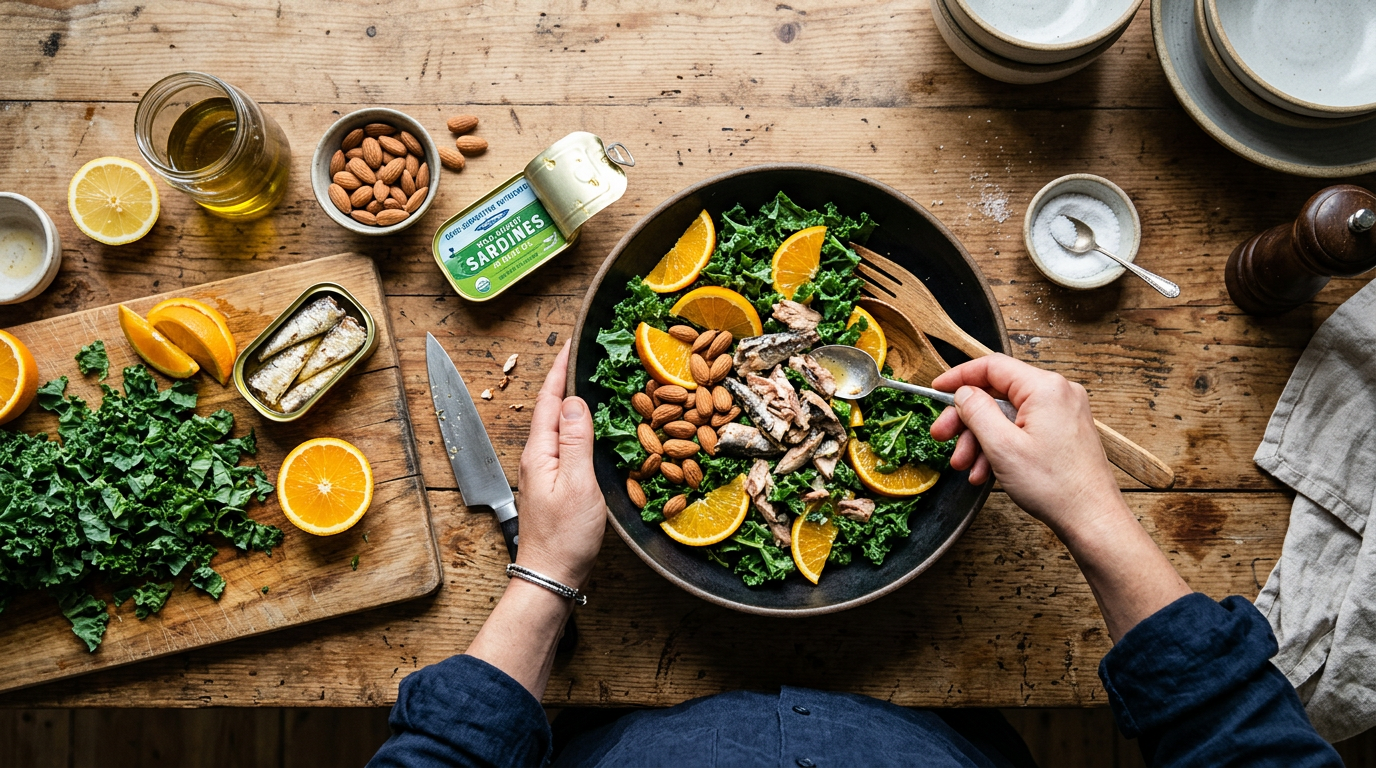
A single can of sardines with bones provides a massive dose of calcium (over 350 mg), a significant amount of Vitamin D3, and anti-inflammatory Omega-3 fatty acids, which help temper the bone-breakdown process. Canned salmon with bones is another excellent choice.
The Fortified Advantage: Smart Plant-Based Choices
For those seeking a direct replacement for milk’s calcium content, fortified foods are a strategic option.
* Fortified Plant Milks: Unsweetened almond, soy, or oat milks are often fortified to contain as much or more calcium and Vitamin D as dairy milk. Check the label to ensure they are fortified.
* Fortified Tofu: Firm tofu prepared with calcium sulfate is an outstanding source of both high-quality plant protein and absorbable calcium.
The Functional Fruit: Prunes (Dried Plums)
Prunes have emerged as a surprising superstar in bone health research. They offer a unique cocktail of nutrients that work synergistically.
* The Prune Protocol: They contain Vitamin K, potassium, and magnesium. But their real power may lie in their high concentration of boron and phenolic compounds that appear to enhance bone formation and inhibit bone resorption. A landmark study in the *British Journal of Nutrition* found that postmenopausal women who ate 50 grams of prunes (about 5-6 prunes) daily for six months were able to prevent the loss of total body bone mineral density. [2]
The Mighty Micros: Nuts, Seeds, and Legumes
Don’t underestimate these pantry staples. They are concentrated sources of the “support crew” nutrients.
-
Magnesium Sources: Incorporate pumpkin seeds, almonds, and cashews into your daily routine for concentrated magnesium.
-
Plant-Based Omega-3s: These vital ALA fatty acids concentrate heavily inside chia seeds and freshly ground flaxseeds.
-
Protein and Minerals: Legume staples like lentils and chickpeas contribute essential building blocks, including structural phosphorus.
Lifestyle Biohacks: Activating Your Skeleton
Nutrition is only half of the equation. To trigger the bone-building process, you must send the right physical signals to your body.
1. Embrace Mechanical Loading
Bone adapts to the stress placed upon it. This principle is called Wolff’s Law. High-impact and resistance exercises create micro-stresses on the skeleton, signaling osteoblasts to get to work and build stronger, denser bone in response.
* Osteogenic Exercises: Activities like weightlifting (squats, deadlifts), plyometrics (box jumps), running, and even brisk walking create the necessary impact and tension. A 2018 meta-analysis confirmed that resistance training protocols are effective at improving and maintaining bone mineral density in both pre- and postmenopausal women. [3]
2. Optimize Your Hormonal Environment
Your endocrine system is a master regulator of bone remodeling.
* Sunlight Exposure: Sensible, unprotected sun exposure on large areas of skin is the most effective way for your body to synthesize Vitamin D3.
* Stress & Sleep: Chronic stress elevates cortisol, a hormone that can directly inhibit osteoblast function and accelerate bone breakdown. Prioritizing sleep and stress management techniques (like meditation or yoga) is a non-negotiable aspect of bone health.
3. Cultivate a Healthy Gut
The most nutrient-dense diet in the world is useless if you can’t absorb it. A healthy gut microbiome is essential for extracting vitamins and minerals from your food. Poor gut health and inflammation can severely impair nutrient absorption, creating downstream deficiencies that impact your entire system, including your skeleton. Optimizing your diet with fiber-rich plants can be a first step, but for some, more advanced analysis may be required. This is where the field of Nutrient Diagnostics can play a role in identifying specific absorption issues.
By shifting your perspective from a single-nutrient mindset to a holistic, systems-based strategy, you can take direct control over the health and longevity of your skeleton. Building unbreakable bones is not a passive process dependent on a single food group; it is an active, lifelong project of strategic nutrition, targeted physical stress, and hormonal optimization. This is the blueprint for a strong, resilient foundation that will support you for a lifetime.
Editorial Note: This article was independently researched and written based on current publicly available health information and does not represent the views of, and is not affiliated with, any external publication referenced.
References
[1] Knapen, M. H. J., Drummen, N. E., Smit, E., Vermeer, C., & Theuwissen, E. (2013). Three-year low-dose menaquinone-7 supplementation helps prevent bone loss in healthy postmenopausal women. *Osteoporosis International*, 24(9), 2499–2507. https://doi.org/10.1007/s00198-013-2325-6
[2] Hooshmand, S., Kern, M., Metti, D., Shamloufard, P., Chai, S. C., Johnson, S. A., Payton, M. E., & Arjmandi, B. H. (2016). The effect of two different doses of dried plum on bone density and bone biomarkers in postmenopausal women. *British Journal of Nutrition*, 116(7), 1231–1239. https://doi.org/10.1017/S000711451600238X
[3] Hong, A. R., & Kim, S. W. (2018). Effects of Resistance Exercise on Bone Health. *Endocrinology and Metabolism*, 33(4), 435–444. https://doi.org/10.3803/EnM.2018.33.4.435