Gene Therapy for Vascular Disease: Benefits, Risks & Latest Research
By Maria Shafiq | Founder & Health Research Writer, The Veins Vercel |Oct 9, 2026
Medical Disclaimer: The information provided in this article is for educational and informational purposes only and does not constitute medical advice.Always consult a qualified healthcare provider regarding any medical condition or treatment.
Gene Therapy for Vascular Disease: A New Hope for Damaged Blood Vessels
Gene therapy for vascular disease is an emerging area of medicine that aims to help damaged blood vessels work better by changing how cells produce certain proteins. It may one day support treatment for blocked leg arteries, narrowed heart arteries, and inherited high cholesterol, but most treatments are still being studied in clinical trials.[ahajournals][pmc.ncbi.nlm.nih]
Key Takeaways
- Gene therapy is an experimental or early-stage treatment for many vascular conditions; it is not yet a routine replacement for stents, bypass surgery, medicines, or lifestyle care.[mdpi][ahajournals]
- Research is exploring gene therapy for critical limb ischemia, restenosis after stenting, vein-graft failure, and inherited high cholesterol.[ahajournals][pmc.ncbi.nlm.nih][nature]
- Early studies of hepatocyte growth factor (HGF) gene therapy have shown improvements in pain and ulcer healing in some patients with critical limb ischemia, but larger trials have had mixed results.[mdpi][nature]
- CRISPR-based PCSK9 editing is being studied to lower LDL cholesterol in people with familial hypercholesterolemia; early human data show meaningful LDL reductions, but long-term safety and effectiveness are still being evaluated.[ahajournals][academic.oup]
- Doctor recommendation: Do not stop prescribed heart or vascular medicines or delay revascularization procedures because of gene-therapy news. Speak with a vascular specialist or cardiologist about whether a clinical trial is appropriate for your specific diagnosis, symptoms, and test results. Symptoms and disease severity differ from person to person, so treatment must be individualized.
What Is Vascular Disease?
Vascular disease refers to conditions that affect blood vessels—the arteries, veins, and tiny capillaries that carry blood around the body. Common examples include peripheral artery disease (PAD), coronary artery disease, carotid artery disease, and problems caused by poor circulation.
When arteries become narrowed or blocked, tissues may not receive enough oxygen-rich blood. This can cause leg pain when walking, non-healing wounds, chest pain, or, in severe cases, tissue damage and limb loss.
Current treatment usually includes lifestyle changes, medicines such as statins and blood-pressure drugs, supervised exercise, stents, angioplasty, or bypass surgery. These treatments can be life-saving, but they do not always fully repair the underlying damage inside the blood-vessel wall.
What Is Gene Therapy in Vascular Medicine?
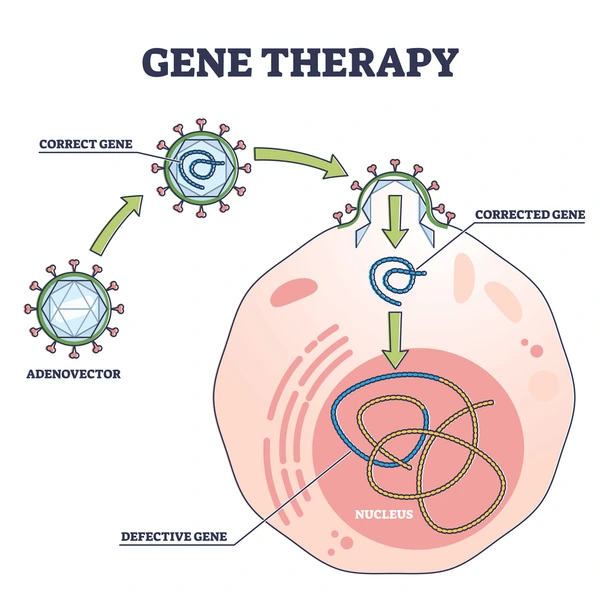
Gene therapy uses genetic material—such as DNA, mRNA, or gene-editing tools—to change how cells work. In vascular medicine, researchers are studying whether these methods can help blood vessels grow new collateral circulation, reduce inflammation, improve blood-vessel function, or lower harmful cholesterol.
The goal is not to “replace” blood vessels with artificial pipes. Instead, gene therapy may encourage the body to produce helpful proteins, such as growth factors or nitric-oxide-related enzymes, in the areas that need them.[pmc.ncbi.nlm.nih][ahajournals]
Main delivery methods
Researchers are studying several ways to deliver gene therapy:
- Plasmid DNA injections: A circular DNA molecule is injected into muscle, where cells may temporarily produce a therapeutic protein such as HGF.[nature]
- Viral vectors: Modified, non-disease-causing viruses can carry genetic instructions into cells. Adeno-associated virus (AAV) vectors are commonly studied because they generally do not integrate into the patient’s DNA.[pmc.ncbi.nlm.nih]
- Lipid nanoparticles: These tiny fatty particles can deliver mRNA or gene-editing instructions, similar to the technology used in some vaccines.[ahajournals]
- CRISPR gene editing: CRISPR can make a very specific change in DNA. In vascular research, it is mainly being studied in the liver to reduce cholesterol production.[ahajournals][clinicaltrials]
Why Researchers Are Studying It
Standard treatments often focus on opening or bypassing a blocked artery. Gene therapy aims to address the biology of the vessel wall and surrounding tissue.
Possible goals include:
- Encouraging new small blood vessels to form around a blockage
- Improving blood flow to the legs or heart
- Reducing scar-tissue growth after stent placement
- Protecting vein grafts used in bypass surgery
- Lowering LDL cholesterol over the long term
This approach is promising, but it is still developing. Early success in small studies does not always translate into benefit in large, randomized trials.[mdpi]
Gene Therapy for Critical Limb Ischemia
Critical limb-threatening ischemia (CLTI) is the most severe form of peripheral artery disease. It can cause rest pain, non-healing foot ulcers, gangrene, and a high risk of amputation.
Some patients cannot have bypass surgery or stenting because their blood vessels are too diseased or their anatomy is not suitable. This is why researchers have studied gene therapy as a possible option.
HGF and VEGF research
Hepatocyte growth factor (HGF) and vascular endothelial growth factor (VEGF) are proteins involved in blood-vessel growth and repair. Scientists have tested plasmid DNA that instructs muscle cells to produce these proteins.
In one randomized, double-blind, placebo-controlled trial, HGF plasmid therapy showed a higher improvement rate than placebo in patients with critical limb ischemia, with no major safety problems reported. Other studies of HGF or combined VEGF/HGF plasmids have reported improvements in rest pain, ankle-brachial index, ulcer healing, and visible collateral vessels in selected patient groups.[pmc.ncbi.nlm.nih][nature][journals.sagepub]
However, results across all studies are not consistent. A large trial called TAMARIS did not show a clinical benefit from gene therapy in critical limb ischemia, and reviews note that effectiveness varies from moderate improvement to no statistically significant difference.[mdpi]
Plain-language takeaway: HGF-based gene therapy may help some patients, especially those with limited options, but it is not a guaranteed limb-saving treatment and remains under investigation.
Gene Therapy to Prevent Restenosis
After angioplasty or stenting, scar tissue can sometimes grow inside the artery and narrow it again. This is called restenosis.
Researchers have studied local gene delivery to the artery wall to reduce smooth-muscle overgrowth and support healing of the endothelium, the thin inner lining of blood vessels. Nitric oxide synthase (NOS) genes are one area of interest because nitric oxide helps blood vessels relax and may reduce abnormal cell growth.[ahajournals][pmc.ncbi.nlm.nih]
At present, this is mainly a research approach. Drug-eluting stents and standard medicines remain the established care for most patients undergoing stent procedures.
Gene Therapy for Vein Grafts
During coronary bypass surgery, surgeons may use a vein from the leg to create a new route around a blocked heart artery. Over time, some vein grafts narrow or fail because they are exposed to higher pressure and different blood-flow patterns than they were designed for.
Scientists are studying ways to treat the harvested vein before implantation, sometimes called ex vivo gene therapy. The aim is to strengthen the graft wall, reduce inflammation, and lower the chance of early blockage.
This research is interesting, but it is not yet standard practice in routine bypass surgery.
CRISPR and High Cholesterol
One of the most advanced areas of vascular-related gene therapy involves PCSK9, a liver protein that affects how the body removes LDL cholesterol from the blood. High LDL cholesterol is a major risk factor for atherosclerosis, heart attack, and stroke.
VERVE-101 is an investigational CRISPR base-editing therapy designed to turn off PCSK9 production in the liver. In early human studies, it produced substantial reductions in PCSK9 and LDL cholesterol; reported LDL reductions included 49% and 69% at certain doses over the study period. Another report of early trial participants found LDL reductions of 39%, 48%, and 55% at higher doses.[ahajournals][academic.oup]
This does not mean CRISPR cholesterol editing is ready for everyone. The treatment is being studied first in people with heterozygous familial hypercholesterolemia and established atherosclerotic cardiovascular disease, and researchers are still assessing long-term safety, durability, and real-world outcomes.[ahajournals][academic.oup][clinicaltrials]
How Gene Therapy May Help Blood Vessels
1. Therapeutic angiogenesis
Therapeutic angiogenesis means encouraging new small blood vessels to grow around a blockage. Growth factors such as VEGF, FGF, and HGF may signal nearby cells to form new capillaries or improve existing collateral circulation.[mdpi][pmc.ncbi.nlm.nih]
2. Improving endothelial function
The endothelium is the delicate inner lining of blood vessels. Healthy endothelial cells produce nitric oxide, which helps vessels relax and supports healthy blood flow. Gene therapy research is exploring ways to restore or support this function.[ahajournals][pmc.ncbi.nlm.nih]
3. Reducing scar tissue
After a stent or balloon procedure, smooth-muscle cells can multiply and create scar-like tissue inside the artery. Researchers are studying gene-based methods to slow this process and keep the artery open.[ahajournals][pmc.ncbi.nlm.nih]
4. Lowering cholesterol
Gene-editing approaches aim to reduce LDL cholesterol by changing liver-cell activity. This may help slow the buildup of plaque, but it is not a substitute for proven cholesterol-lowering medicines unless a specialist determines otherwise.[ahajournals][clinicaltrials]
Current Treatments vs. Gene Therapy
| Treatment | What it does | Status |
| Stents and angioplasty | Physically open a narrowed artery | Established treatment |
| Bypass surgery | Creates a new route around a blockage | Established treatment |
| Statins and other medicines | Lower cholesterol, control blood pressure, and reduce cardiovascular risk | Established treatment |
| HGF/VEGF gene therapy | May encourage new blood-vessel growth in severe limb ischemia | Experimental or limited-use research |
| Local anti-restenosis gene therapy | May reduce scar tissue after artery injury | Mostly preclinical or early clinical research |
| CRISPR PCSK9 editing | May permanently lower LDL cholesterol by editing liver genes | Early-stage clinical research |
Benefits and Limitations
Potential benefits
- May help patients who have few standard treatment options
- Could support new blood-vessel growth in severely blocked limbs
- May reduce the need for repeated procedures in the future
- CRISPR-based cholesterol therapy could offer long-lasting LDL reduction after a single course
Important limitations
- Many vascular gene therapies are not approved for routine use
- Benefits vary between studies, and some large trials have not shown benefit.[mdpi]
- Delivery to the exact target tissue is difficult
- The immune system may react to viral vectors
- New blood vessels must mature properly; uncontrolled growth-factor signaling can create fragile or leaky vessels
- Gene-editing therapies raise long-term safety questions that require more research
- Cost, manufacturing complexity, and access may limit availability
Is Gene Therapy Safe?
Early studies often report that gene therapy is generally well tolerated, but “generally well tolerated” does not mean risk-free. Possible concerns depend on the therapy and delivery method and may include injection-site reactions, immune responses, off-target effects, unwanted blood-vessel growth, or long-term effects that are not yet fully known.[ahajournals][pmc.ncbi.nlm.nih]
People with active infection, unstable heart disease, certain immune conditions, pregnancy, or other serious medical issues may not be suitable for a trial. Eligibility is decided by the research team and treating doctors.
What This Means for Patients
If you have PAD, coronary artery disease, or high cholesterol, gene therapy may become an important option in the future—but it is not something to pursue instead of proven care today.
You can ask your cardiologist or vascular specialist:
- Is my condition severe enough to consider a clinical trial?
- Are there approved treatments I have not tried yet?
- Would a clinical trial be safe for my anatomy and overall health?
- What are the risks, costs, travel requirements, and follow-up visits?
- How will researchers measure whether the treatment is working?
Reliable trial information can be found through ClinicalTrials.gov and your national clinical-trial registry. For example, the VERVE-101 study is listed on ClinicalTrials.gov as a study of PCSK9 base editing in people with familial hypercholesterolemia and cardiovascular disease.[clinicaltrials]
How to Protect Your Vascular Health Now
While gene therapy research continues, these evidence-based steps remain essential:
- Do not smoke, and avoid secondhand smoke
- Control blood pressure, blood sugar, and cholesterol with your clinician’s plan
- Stay physically active as advised, especially if you have PAD
- Eat a balanced diet rich in vegetables, fruits, whole grains, legumes, fish, and healthy fats
- Take prescribed medicines consistently
- Check your feet regularly if you have diabetes or PAD
- Seek urgent care for sudden chest pain, stroke symptoms, a cold pale-blue limb, or a rapidly worsening wound
Frequently Asked Questions
What is gene therapy for vascular disease?
It is a research-based treatment approach that uses genetic material to change how cells in or around blood vessels work. It may help grow collateral blood vessels, improve vessel function, reduce scar tissue, or lower cholesterol.[ahajournals][pmc.ncbi.nlm.nih]
Can gene therapy cure blocked arteries?
No. Gene therapy cannot safely or reliably “cure” blocked arteries at this time. Stents, bypass surgery, medicines, exercise, and risk-factor control remain the main proven treatments.
Will vascular gene therapy change my children’s genes?
Most vascular gene therapies being studied are somatic therapies, meaning they target body cells rather than sperm or egg cells. However, safety and inheritance-related questions depend on the exact therapy, so patients should discuss this with the trial team.
When will vascular gene therapy be widely available?
There is no single date. Some approaches remain in early trials, while CRISPR cholesterol-editing therapies are in early clinical development. Larger and longer studies are needed before broad use can be recommended.[mdpi][ahajournals][clinicaltrials]
Should I join a vascular gene-therapy trial?
Only if a qualified vascular specialist or cardiologist confirms that the trial matches your diagnosis and that the potential benefits outweigh the risks for you. Clinical trials are not guaranteed treatments.
Conclusion
Gene therapy for vascular disease is a promising but still developing field. Early research suggests it may help some people with severe circulation problems or inherited high cholesterol, especially where standard treatment options are limited.[ahajournals][pmc.ncbi.nlm.nih][nature]
At the same time, results have been mixed, and many approaches remain experimental. The safest approach today is to continue proven vascular care, manage risk factors, and discuss clinical-trial options with a qualified specialist if standard treatment has not worked well.
Medical disclaimer: This article is for general education only and does not provide personal medical advice. Symptoms and treatment needs vary from person to person. Always consult a licensed doctor, vascular specialist, or cardiologist before changing treatment or considering a clinical trial.
Editorial note: This article was independently researched and written using publicly available health information. It is not affiliated with, and does not represent the views of, any external publication, company, or research group referenced below.
References
- National Center for Biotechnology Information. Stent-based delivery of adeno-associated viral vectors with anti-restenosis genes. https://pmc.ncbi.nlm.nih.gov/articles/PMC5709213/
- National Center for Biotechnology Information. Double VEGF/HGF Gene Therapy in Critical Limb Ischemia. https://pmc.ncbi.nlm.nih.gov/articles/PMC8219552/
- Nature Gene Therapy. Randomized, double-blind, placebo-controlled clinical trial of HGF plasmid in critical limb ischemia. https://www.nature.com/articles/gt201051
- National Center for Biotechnology Information. The Efficacy of HGF/VEGF Gene Therapy for Limb Ischemia. https://pmc.ncbi.nlm.nih.gov/articles/PMC9737863/
- Circulation. Efficacy and Safety of an Investigational Single-Course CRISPR Base-Editing Therapy, VERVE-101. https://www.ahajournals.org/doi/10.1161/CIRCULATIONAHA.122.062132
- Circulation Research. Gene Therapy for Restenosis. https://www.ahajournals.org/doi/10.1161/01.res.82.3.295
- ClinicalTrials.gov. A Study of VERVE-101 in Participants With Heterozygous Familial Hypercholesterolemia (NCT05398029). https://clinicaltrials.gov/study/NCT05398029
- Human Gene Therapy. pUDK-HGF Gene Therapy to Relieve CLI Rest Pain and Ulcer. https://journals.sagepub.com/doi/10.1089/hum.2020.290
- European Heart Journal – Cardiovascular Pharmacotherapy. VERVE-101: a promising CRISPR-based gene editing therapy. https://academic.oup.com/ehjcvp/article/10/2/89/7492807
- Cells. Angiogenic Gene Therapy for Lower Extremity Ischemia. https://www.mdpi.com/2073-4409/15/12/1104