Are Low-Fat and Low-Sugar Foods Healthy? Health Claims Explained
Medical Disclaimer: The information provided in this article is for educational and informational purposes only and does not constitute medical advice. Always consult a qualified healthcare provider regarding any medical condition or treatment.
Are “Low-Fat” and “Low-Sugar” Foods Healthy? What Health Claims Mean for Long-Term Wellness
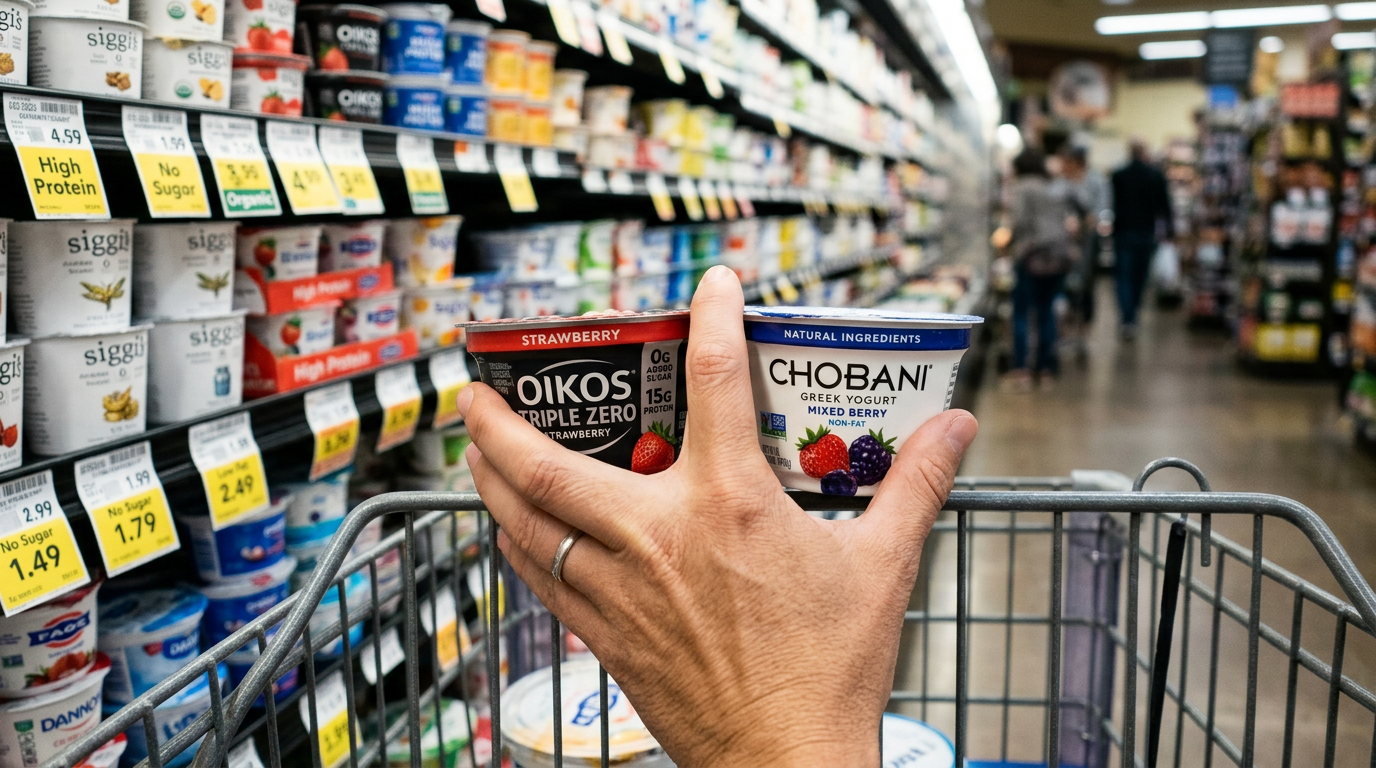
“Low-fat” and “low-sugar” labels can be useful, but they do not automatically mean a food is healthy. Some products reduce one nutrient while adding sugar, salt, refined carbohydrates, or additives to improve taste and texture—so the back label matters more than the front claim.[pmc.ncbi.nlm.nih][fda]
Key Takeaways
- A “low-fat,” “low-sugar,” “natural,” or “no added sugar” claim is only one piece of information—not proof that a product supports your health.[pmc.ncbi.nlm.nih]
- The health halo effect can make people underestimate calories and choose larger portions or extra sides after seeing a health claim.[jstor]
- Check the serving size, added sugars, fiber, sodium, saturated fat, and ingredient list before deciding whether a packaged food fits your goals.[fda][fda]
- The FDA considers 5% Daily Value or less “low” and 20% Daily Value or more “high” for a nutrient per serving.[fda]
- The American Heart Association suggests no more than 25 g of added sugar daily for most women and 36 g for most men; the FDA’s Daily Value is 50 g for a 2,000-calorie diet.[fda][heart]
- Whole or minimally processed foods—vegetables, fruits, beans, nuts, fish, eggs, yogurt, and whole grains—usually offer more nutrition per calorie than heavily packaged “diet” foods.
- Health needs differ. People with diabetes, kidney disease, high blood pressure, heart disease, pregnancy, or food allergies should personalize food choices with a qualified healthcare professional.
Why “Healthy” Labels Can Mislead
Food packaging is designed to catch attention. Words such as “low-fat,” “light,” “low-sugar,” “high-protein,” “natural,” and “no added sugar” can make a product seem healthier than it really is.
Researchers call this the health halo effect. In a well-known study, people underestimated calories in meals from restaurants presented as healthy and were more likely to choose higher-calorie sides, drinks, or desserts. A review of nutrition-claim research also found that claims can make foods seem healthier, lead people to underestimate energy content, and make suitable portions appear larger.[pmc.ncbi.nlm.nih][jstor]
That does not mean every health claim is dishonest. It means a claim is not enough information. A low-fat cookie can still be high in sugar and refined flour. A sugar-free drink may still contain sweeteners and provide little nutrition. A “high-protein” snack may also be high in saturated fat or sodium.
The Nutritional Trade-Off
Removing fat, sugar, or salt from a processed food is not always simple. Fat, sugar, and salt affect flavor, texture, shelf life, and how satisfying a food feels. When manufacturers reduce one, they may add or increase another ingredient.
For example, a low-fat salad dressing may contain more sugar to improve taste. A low-sugar dessert may use sweeteners, thickeners, or refined starches. This is why two products with similar calories can affect hunger, blood sugar, and overall diet quality very differently.
The practical rule is simple: do not judge a food by what it removes—judge it by what it provides.
Low-Fat Foods: Not Always the Better Choice
Fat is not automatically bad. It helps you absorb fat-soluble vitamins, supports hormone production, and makes meals more satisfying. The type and amount of fat matter more than simply choosing “low-fat.”
Plain full-fat Greek yogurt, for example, may be more filling than a sweetened low-fat yogurt with added sugar. Nuts, olive oil, avocado, seeds, and fish provide fats along with other useful nutrients.
A better approach is to look at the full label:
- Choose foods lower in saturated fat when possible.
- Avoid products with trans fat.
- Prefer foods with useful nutrients such as fiber, protein, potassium, calcium, or vitamins.
- Be cautious when “low-fat” comes with a long list of added sugars or refined carbohydrates.
“Low-Sugar” and “Sugar-Free”: Read Carefully
“Low-sugar” and “no added sugar” can be helpful claims, especially for people trying to reduce sweetened foods. But they do not guarantee a product is nutritious.
The FDA explains that added sugars include sugars added during processing, table sugar, syrups, honey, and sugars from concentrated fruit or vegetable juices. Naturally occurring sugars in milk, fruit, and vegetables are different.[fda]
The FDA’s Daily Value for added sugars is 50 g per day on a 2,000-calorie diet, while the American Heart Association recommends lower limits: about 25 g daily for most women and 36 g for most men.[fda][heart]
What about sweeteners?
Sugar substitutes such as aspartame, sucralose, stevia, and sugar alcohols can reduce sugar intake, but they are not a reason to ignore the rest of the label. Some people experience digestive discomfort from certain sugar alcohols, especially in large amounts.
Erythritol has received attention because a 2023 study found that higher blood erythritol levels were associated with a higher risk of major cardiovascular events. However, this was an observational study, mainly in people already undergoing cardiac risk assessment, so it does not prove that erythritol caused heart attacks or strokes. More long-term research is needed.[nature][fda][nih]
A balanced approach is to use sweeteners occasionally if they help you reduce excess sugar—not as permission to eat more ultra-processed “sugar-free” products.
How to Read a Food Label in 30 Seconds
Ignore the front of the package first. Turn the product around and check these five things.
1. Serving size
This is one of the most overlooked parts of the label. A small package may contain two or three servings. Multiply calories, sugar, sodium, and fat if you plan to eat the whole package.
2. Added sugars
Look for “Added Sugars,” not just “Total Sugars.” Total sugars include natural sugars from milk or fruit, while added sugars are the ones most worth limiting.[fda]
A simple guide from the FDA:
- 5% Daily Value or less = low in that nutrient
- 20% Daily Value or more = high in that nutrient[fda]
3. Fiber
Fiber slows digestion, supports fullness, and helps feed beneficial gut bacteria. When comparing breads, cereals, crackers, or pasta, a higher-fiber option is often the better choice.
4. Sodium and saturated fat
Packaged foods can contribute a large share of daily sodium. Use the %Daily Value to compare products, and choose lower-sodium and lower-saturated-fat options more often.[fda]
5. Ingredient list
Ingredients are listed by weight, from highest to lowest. Look for recognizable whole-food ingredients near the top.
Common names for added sugar include:
- Dextrose
- Maltose
- Sucrose
- High-fructose corn syrup
- Rice syrup
- Cane juice
- Fruit juice concentrate
- Honey and maple syrup
A shorter ingredient list is not always better, but a long list of sweeteners, refined starches, artificial colors, and additives can be a sign of an ultra-processed product.
Nutrient Density Beats “Diet” Labels
Instead of asking, “Is this food low-fat or low-sugar?” ask, “What nutrition does this food give me?”
Nutrient-dense foods provide more beneficial nutrients per calorie. Examples include:
- Vegetables and fruits
- Beans, lentils, and chickpeas
- Plain yogurt or kefir
- Eggs and fish
- Nuts and seeds
- Whole grains such as oats, brown rice, and quinoa
- Olive oil, avocado, and other minimally processed fat sources
A 100-calorie pack of low-fat crackers may fit into a diet, but it usually provides less fiber, protein, vitamins, and minerals than a small handful of nuts or a bowl of Greek yogurt with berries.
For long-term health, the goal is not perfection. It is building an eating pattern made mostly of minimally processed foods, while keeping ultra-processed snacks and sweetened products occasional rather than daily staples.
Simple Label Checklist
Use this quick checklist while shopping:
- Ignore front-package claims until you read the back label.
- Check the serving size before checking calories.
- Choose products with little or no added sugar when practical.
- Prefer higher fiber and protein if you want better fullness.
- Compare sodium and saturated fat between similar products.
- Look for whole-food ingredients at the beginning of the list.
- Avoid assuming “low-fat,” “low-sugar,” “keto,” or “natural” means healthy.
- Choose mostly whole foods, and treat packaged health foods as convenience—not the foundation of your diet.
Doctor’s Recommendation
“Do not judge a packaged food by a single claim on the front. Check the serving size, added sugars, fiber, sodium, and ingredient list. For most people, a diet built around vegetables, fruits, legumes, whole grains, nuts, fish, and other minimally processed foods supports health better than relying on ‘low-fat’ or ‘low-sugar’ packaged products. If you have diabetes, kidney disease, high blood pressure, heart disease, or another medical condition, ask your doctor or a registered dietitian for advice tailored to you.”
Editorial Note
This article was independently researched and written for general educational purposes. It is based on publicly available health and nutrition information and does not represent the views of, and is not affiliated with, any external publication, organization, or study referenced. It is not medical advice and should not replace personalized guidance from a qualified healthcare professional.
References
- Chandon, P., & Wansink, B. (2007). The Biasing Health Halos of Fast-Food Restaurant Health Claims: Lower Calorie Estimates and Higher Side-Dish Consumption Intentions. Journal of Consumer Research, 34(3), 301–314. https://www.jstor.org/stable/10.1086/519499[jstor]
- Systematic review of the impact of nutrition claims related to fat, sugar, and energy content on product packaging. (2019). https://pmc.ncbi.nlm.nih.gov/articles/PMC6794740/[pmc.ncbi.nlm.nih]
- U.S. Food and Drug Administration. Added Sugars on the Nutrition Facts Label. https://www.fda.gov/food/nutrition-facts-label/added-sugars-nutrition-facts-label[fda]
- U.S. Food and Drug Administration. Daily Value on the Nutrition and Supplement Facts Labels. https://www.fda.gov/food/nutrition-facts-label/daily-value-nutrition-and-supplement-facts-label[fda]
- U.S. Food and Drug Administration. How to Understand and Use the Nutrition Facts Label. https://www.fda.gov/food/nutrition-facts-label/how-understand-and-use-nutrition-facts-label[fda]
- American Heart Association. How Much Sugar Is Too Much? https://www.heart.org/en/healthy-living/healthy-eating/eat-smart/sugar/how-much-sugar-is-too-much[heart]
- Witkowski, M., Nemet, I., Alamri, H., et al. (2023). The artificial sweetener erythritol and cardiovascular event risk. Nature Medicine, 29, 710–718. https://www.nature.com/articles/s41591-023-02223-9[nature]
- U.S. Food and Drug Administration. FDA Memo: An evaluation of the article “The artificial sweetener erythritol and cardiovascular event risk.” https://www.fda.gov/media/182122/download[fda]
- National Institutes of Health. Erythritol and cardiovascular events. https://www.nih.gov/news-events/nih-research-matters/erythritol-cardiovascular-events[nih]