Artificial Heart Technology: How It Works, Benefits & Risks
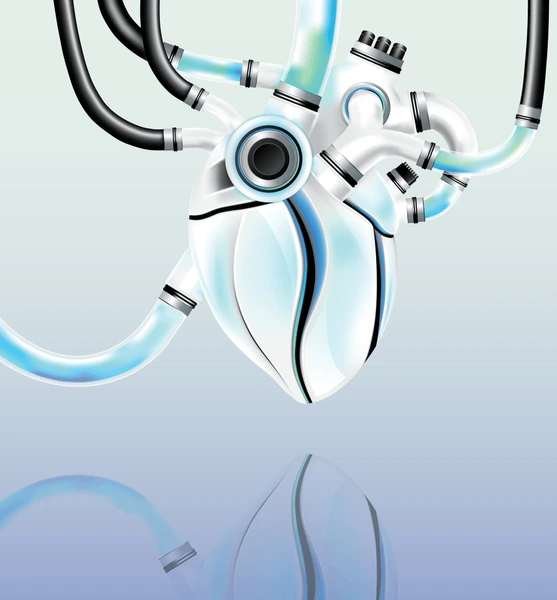
By Maria Shafiq | Founder & Health Research Writer, The Veins Vercel | 9 , Oct 2026
Medical Disclaimer: The information provided in this article is for educational and informational purposes only and does not constitute medical advice.Always consult a qualified healthcare provider regarding any medical condition or treatment.
Artificial Heart Technology: How It Works, Benefits, and Limits
Artificial heart technology uses implanted mechanical devices to help pump blood when a person’s own heart can no longer do so safely. These devices can be life-saving for some people with severe biventricular heart failure, especially while they wait for a donor heart transplant.[link.springer][pubmed.ncbi.nlm.nih]
Key Takeaways
- A total artificial heart (TAH) replaces both pumping chambers of the heart. It is different from an LVAD, which supports the left side of a person’s existing heart.[link.springer]
- Artificial hearts are mainly used as a bridge to transplant, keeping critically ill patients alive until a donor heart becomes available.[link.springer][pubmed.ncbi.nlm.nih]
- The SynCardia TAH is an established bridge-to-transplant device, but serious risks remain, including infection, bleeding, stroke, and organ failure.[pubmed.ncbi.nlm.nih][annalsthoracicsurgery]
- Newer devices include the Carmat Aeson, which uses biologic tissue surfaces, and BiVACOR, a titanium pump with a magnetically levitated rotor. Both are still in limited clinical testing in the United States.[mddionline][pharmaphorum][globenewswire]
- Doctor recommendation: Artificial hearts are not suitable for every person with heart failure. Eligibility depends on heart function, body size, other organs, infection risk, bleeding risk, and transplant status. If you or a family member has advanced heart failure, ask an advanced heart-failure or transplant cardiology team whether an LVAD, total artificial heart, transplant evaluation, or clinical trial is appropriate.
What Is an Artificial Heart?
An artificial heart is a medical device that replaces the pumping function of the heart. A total artificial heart replaces both ventricles—the heart’s two main pumping chambers.
It is different from a ventricular assist device (VAD). An LVAD helps the left ventricle pump blood to the body but does not remove the natural heart. A total artificial heart is implanted after surgeons remove the patient’s ventricles and connect the device to the remaining atria and major blood vessels.[link.springer]
Artificial hearts are used in very specific situations, usually when both sides of the heart are failing and other treatments are not enough.
Artificial Heart vs. LVAD
| Feature | Total artificial heart (TAH) | LVAD |
| What it replaces | Both ventricles | Supports the existing left ventricle |
| Natural heart | Ventricles are removed | Heart remains in place |
| Main use | Severe biventricular heart failure | Left-sided heart failure |
| Common goal | Bridge to heart transplant | Bridge to transplant or long-term support |
| Example devices | SynCardia, Carmat Aeson, BiVACOR | HeartMate, HeartWare |
An LVAD is much more commonly used than a total artificial heart. A TAH is generally reserved for patients whose right and left sides of the heart are both failing or who are not suitable for an LVAD.[link.springer]
Main Types of Artificial Heart Technology
SynCardia Total Artificial Heart
The SynCardia TAH is a pneumatic, pulsatile total artificial heart. It has been used for many years as a bridge to heart transplantation in patients with end-stage biventricular heart failure.[link.springer]
In one study of 196 patients, 35.2% successfully received a heart transplant while on SynCardia support. However, the same study reported major complications, including neurological events in 39.3% and gastrointestinal bleeding in 24.6%. This shows both the potential benefit and the serious risks of the technology.[pubmed.ncbi.nlm.nih]
Carmat Aeson
The Carmat Aeson is a newer total artificial heart designed with biocompatible materials, including bovine pericardial tissue on blood-contacting surfaces. It is intended to support circulation while a patient waits for a donor heart.[mddionline][pharmaphorum]
In Europe, Aeson has CE marking as a bridge-to-transplant device. In the United States, it remains available only through an FDA-approved early feasibility study, not as a routine treatment.[trial.medpath][cardiacvascularnews]
BiVACOR
BiVACOR is an investigational titanium total artificial heart that uses a single magnetically levitated rotor to support circulation. Magnetic levitation is designed to reduce mechanical contact and wear.[globenewswire]
Australia’s first BiVACOR implant was reported at St Vincent’s Hospital in March 2025, and early human feasibility work is ongoing. This is promising, but BiVACOR is still experimental and not yet a standard treatment.[pharmaphorum][globenewswire]
How an Artificial Heart Works
Most total artificial heart systems have three main parts:
- An implanted pump or pumping chambers that move blood through the lungs and body
- An external controller and batteries that power and monitor the device
- A driveline, a cable that passes through the skin to connect the internal device with external equipment
The device pumps blood from the body to the lungs and from the lungs to the rest of the body. This can improve blood pressure, reduce fluid buildup, and help organs such as the kidneys and liver work better in carefully selected patients.[link.springer][pubmed.ncbi.nlm.nih]
Who May Need an Artificial Heart?
An artificial heart may be considered for someone with end-stage biventricular heart failure—when both the right and left sides of the heart cannot pump enough blood.
Possible reasons include:
- Severe cardiomyopathy
- Heart failure after a major heart attack
- Failure of a previous heart transplant
- Severe heart-valve disease in selected cases
- Life-threatening heart failure that cannot be managed with medicines, an LVAD, or other support
It is not a first treatment for ordinary heart failure. Most people with heart failure are treated with medicines, lifestyle changes, implanted devices such as pacemakers or defibrillators, and sometimes an LVAD.[link.springer]
Benefits of Artificial Hearts
For the right patient, an artificial heart may:
- Keep a critically ill person alive while waiting for a donor heart
- Improve blood flow to vital organs
- Reduce severe congestion and low blood pressure
- Allow some patients to leave the hospital and wait for transplant at home
- Provide an option for people who may not be suitable for an LVAD
The main goal for most current devices is to serve as a bridge to transplantation, not to permanently replace a donor heart.[link.springer][pubmed.ncbi.nlm.nih]
Risks and Limitations
Artificial hearts are major surgeries and carry serious risks.
Bleeding and clots
Patients usually need blood-thinning medicines to reduce the risk of clots. But these medicines also increase the risk of bleeding, including gastrointestinal bleeding and bleeding in the brain.[pubmed.ncbi.nlm.nih][annalsthoracicsurgery]
Infection
The driveline passes through the skin, creating a possible entry point for bacteria. Infection remains an important complication and requires careful daily wound care.[annalsthoracicsurgery]
Stroke and neurological problems
Blood clots, bleeding, or changes in blood flow can lead to stroke or other neurological complications. In one SynCardia study, neurological events occurred in more than one-third of patients.[pubmed.ncbi.nlm.nih]
Body-size limits
Total artificial hearts must fit inside the chest. Smaller adults and some women may not be suitable for certain devices because of anatomical size limits.[link.springer]
Cost and access
These devices require specialized surgical teams, intensive follow-up, expensive equipment, and long-term care. Availability varies by country and hospital.
Are Artificial Hearts Permanent?
Some devices are being developed for longer-term or destination therapy, but it is misleading to say that artificial hearts are now a routine permanent replacement for a human heart transplant.
The SynCardia device is approved in the United States as a bridge to transplantation. Carmat Aeson is also primarily positioned as a bridge-to-transplant device, with broader approval and long-term data still developing. BiVACOR remains in early clinical testing.[link.springer][mddionline][pharmaphorum][globenewswire]
For many patients, the goal is to remain stable until a donor heart becomes available.
What Recovery Looks Like
Recovery after artificial-heart implantation is complex. Patients usually spend time in intensive care, then receive training on:
- Managing the external controller and batteries
- Caring for the driveline site
- Recognizing alarm signals
- Taking anticoagulant medicines safely
- Watching for infection, bleeding, or stroke symptoms
- Attending frequent follow-up visits
Some patients can return home while waiting for a transplant, but they need strong caregiver support and close contact with their transplant or mechanical-circulatory-support team.[link.springer][pubmed.ncbi.nlm.nih]
Questions to Ask Your Heart Team
- Am I a candidate for an LVAD, total artificial heart, or heart transplant?
- Would an artificial heart be used as a bridge to transplant or another purpose?
- What are my personal risks of bleeding, stroke, infection, and device complications?
- How long might I need to use the device?
- Can I wait at home, or will I need to stay near the hospital?
- Who will care for me if a problem happens at night or while traveling?
- Are there clinical trials that may be appropriate for my condition?
Frequently Asked Questions
Can a person live with an artificial heart?
Yes. Some patients live with an artificial heart for months or longer while waiting for a donor heart. However, it requires major surgery, lifelong monitoring, medicines, and careful management of complications.[link.springer][pubmed.ncbi.nlm.nih]
Is an artificial heart better than a heart transplant?
A donor heart transplant is still the preferred long-term option for many eligible patients. An artificial heart is usually a temporary support option when a patient is too sick to wait safely for a transplant.[link.springer][pubmed.ncbi.nlm.nih]
Can you feel a pulse with an artificial heart?
It depends on the device. Pulsatile devices may create a detectable pulse, while continuous-flow devices may produce a weaker or less obvious pulse even when blood flow is adequate.
Can patients exercise with an artificial heart?
Many patients can walk and do light activity after recovery, but exercise limits vary. Patients must follow the specific advice of their surgical and heart-failure team.
Are artificial hearts available to everyone with heart failure?
No. They are reserved for carefully selected patients with severe, life-threatening heart failure and are performed at specialized centers.[link.springer]
Conclusion
Artificial heart technology has advanced from early experimental devices to life-supporting systems that can help selected patients survive while waiting for a heart transplant. Devices such as SynCardia have an established role as a bridge to transplant, while Carmat Aeson and BiVACOR represent newer approaches still being studied.[pubmed.ncbi.nlm.nih][mddionline][globenewswire]
However, artificial hearts are not a simple cure for heart failure. They involve major surgery, blood thinners, infection risk, stroke risk, and lifelong follow-up. For most patients, the goal is to stabilize circulation until a donor heart transplant becomes possible.[link.springer][pubmed.ncbi.nlm.nih]
Medical disclaimer: This article is for general education only and is not personal medical advice. Symptoms and treatment needs differ from person to person. Always consult a licensed cardiologist, advanced heart-failure specialist, or transplant team about diagnosis and treatment.
Editorial note: This article was independently researched and written using publicly available health information. It is not affiliated with, and does not represent the views of, any external publication, device manufacturer, hospital, or research group referenced below.
References
- PubMed. Outcomes after SynCardia temporary total artificial heart implantation. https://pubmed.ncbi.nlm.nih.gov/39283166/
- The Annals of Thoracic Surgery. Experience With SynCardia Total Artificial Heart as a Bridge to Transplantation. https://www.annalsthoracicsurgery.org/article/S0003-4975(22)01539-9/fulltext
- Springer Nature. SynCardia Total Artificial Heart. https://link.springer.com/rwe/10.1007/978-3-031-09048-6_12
- National Institute for Health and Care Excellence (NICE). Artificial heart implantation as a bridge to transplantation. https://www.nice.org.uk/guidance/htg459/evidence/overview-final-pdf-4718098333
- PubMed. SynCardia total artificial heart as a bridge to transplant. https://pubmed.ncbi.nlm.nih.gov/31113193/
- MD+DI. FDA Green-Lights Next Phase of Carmat’s Artificial Heart Study. https://www.mddionline.com/cardiovascular/artificial-heart-takes-major-step-towards-us-market
- CARMAT / Cardiovascular News. CARMAT receives FDA conditional approval to initiate the second cohort of the EFS study for Aeson. https://cardiacvascularnews.com/carmat-receives-fda-conditional-approval-to-initiate-the-second-cohort-of-the-efs-study-in-the-united-states/
- Pharmaphorum. First US patient receives CARMAT Aeson total artificial heart as part of early feasibility study. https://pharmaphorum.com/news/first-us-patient-gets-total-heart-replacement-with-carmat-device
- GlobeNewswire. Australia Bionic Devices Market report; first BiVACOR implant at St Vincent’s Hospital, March 2025. https://www.globenewswire.com/news-release/2026/10/22/3386632/0/en/australia-bionic-devices-market-size-share-growth-and-forecast-2026-2034-Featuring-Profiles-of-Cochlear-Medtronic-Australasia-Edwards-LifeSciences-Australia-Baxter-Boston-Scientific-Abbott-Labs.html