The Anabolic Dinner: How to Use Your Last Meal to Build Muscle, Boost Metabolism, and Extend Healthspan
By Maria Shafiq | Founder & Health Research Writer, The Veins Vercel | Updated: 27 September 2026
Medical Disclaimer: The information provided in this article is for educational and informational purposes only and does not constitute medical advice. Always consult a qualified healthcare provider regarding any medical condition or treatment.
Introduction
Many people pursue longevity through complex interventions. For example, they test cutting-edge supplements or intricate fasting routines. However, a potent healthspan tool sits on your plate every evening. Your final meal is not just a caloric necessity. Instead, it offers a critical biological window of opportunity. This evening meal can stimulate cellular repair and build physical strength. Consequently, it protects your body against age-related decline.
This strategy involves more than eating a standard “healthy” dinner. Instead, you must strategically engineer an anabolic meal. Specifically, anabolic meals stimulate tissue growth and repair lean muscle. Understanding protein metabolism helps you optimize your evening nutrition. Therefore, dinner becomes a cornerstone of your Biohacking & Longevity routine. Most importantly, this approach combats a major driver of physical aging: sarcopenia.
The Silent Epidemic: Sarcopenia and Anabolic Resistance
Sarcopenia is the progressive loss of skeletal muscle mass and physical strength. Notably, this condition does not affect only the elderly. In fact, muscle loss can begin quietly in our 30s. Adults typically lose 3% to 8% of their muscle mass per decade. Furthermore, this decline accelerates dramatically after age 60. As a result, sarcopenia increases the risk of frailty, falls, and fractures. It also degrades metabolic health and overall vitality.
At the core of sarcopenia lies a phenomenon called anabolic resistance. In young adults, moderate dietary protein easily triggers muscle protein synthesis (MPS). During MPS, cells utilize circulating amino acids to repair muscle fibers. However, aging muscles become far less responsive to this stimulus. For example, a 25-year-old responds vigorously to a modest protein dose. In contrast, that same dose produces a blunted response in a 65-year-old.
Therefore, older adults require larger protein doses to activate muscle repair. A clinical study in the Journal of the American Dietetic Association confirmed this disparity. Young adults maximize their MPS response with just 20 to 25 grams of protein. Conversely, older adults often need up to 40 grams per meal. This higher threshold makes the anabolic dinner essential for longevity.
Hacking Your Biology: The Three Pillars of the Anabolic Dinner
The human body constantly balances muscle building against muscle breakdown. Clinically, this is the balance between synthesis and catabolism. Your primary goal is tipping this equilibrium toward synthesis. This balance is critical during the overnight fast, when catabolism often dominates. Therefore, you should structure your dinner around three core pillars: Dose, Quality, and Timing. Together, these pillars provide the anabolic stimulus needed to preserve strength for decades.
1. The Protein Dose Threshold
The most critical factor is consuming an adequate dose of protein to overcome anabolic resistance. The science points to a “leucine threshold” as the primary trigger for MPS. Leucine is an essential branched-chain amino acid (BCAA) that acts like a key in an ignition, activating a cellular pathway known as mTOR (mammalian target of rapamycin), the master regulator of cell growth and protein synthesis.
To activate mTOR effectively, especially in an aging body, you need a sufficient bolus of leucine, which in turn requires a sufficient dose of high-quality protein.
* The Target: Aim for 30-40 grams of high-quality protein in your evening meal.
* What this looks like:
* A 5-6 ounce (140-170g) chicken breast or salmon fillet
* A 6-ounce (170g) lean steak
* 1.5 cups of Greek yogurt combined with a scoop of protein powder
* A large block of firm tofu (approx. 1.5 cups) combined with a cup of lentils
Consuming a meal with less than this amount may fail to provide the necessary leucine pulse to maximally stimulate MPS, leaving valuable potential for muscle repair on the table.
2. The Quality and Source of Protein
Not all proteins are created equal. The “quality” of a protein is determined by its amino acid profile—specifically, whether it contains all nine essential amino acids (making it a “complete” protein) and its concentration of leucine.
* Animal-Based Proteins: Meat, poultry, fish, eggs, and dairy are all complete proteins and are naturally rich in leucine. They are considered the gold standard for stimulating MPS due to their high bioavailability and ideal amino acid ratios. Whey protein, a dairy derivative, is particularly potent due to its rapid digestion and exceptionally high leucine content.
* Plant-Based Proteins: While many plant sources are “incomplete” on their own, a well-planned vegan or vegetarian meal can be just as effective. Soy products (tofu, tempeh, edamame) are complete proteins and excellent choices. Combining other sources, such as lentils with brown rice or beans with quinoa, creates a complete amino acid profile. Plant-based biohackers should be mindful of prioritizing sources high in leucine or consider supplementing with a vegan BCAA or leucine powder.
3. The Critical Timing: Pre-Sleep Anabolism
The timing of this protein-rich meal is what elevates it from a healthy dinner to a strategic biohack. Consuming a significant protein dose 2-3 hours before sleep sets the stage for overnight repair. During sleep, your body releases growth hormone and engages in deep cellular maintenance. Providing it with a rich pool of amino acids from your dinner ensures these processes have the raw materials they need.
Groundbreaking research from scientists like Dr. Luc van Loon has demonstrated the power of pre-sleep protein. One pivotal study published in *The Journal of Nutrition* found that consuming casein protein before sleep effectively digested and absorbed, leading to a significant increase in muscle protein synthesis rates overnight. This essentially turns the catabolic overnight fasting period into an anabolic window of opportunity.
This strategy directly counters the age-old myth that eating before bed leads to weight gain. When the “meal” is a bolus of protein, the body preferentially uses it for repair and maintenance, not fat storage. In fact, due to protein’s high thermic effect of food (TEF), your body burns more calories digesting it compared to fats or carbohydrates, providing a slight metabolic advantage.
Beyond Muscle: The Systemic Benefits of an Anabolic Dinner
While preserving muscle is a primary goal, the benefits of a protein-optimized evening meal extend throughout the body, reinforcing its role in a holistic approach to Preventative Medicine.
* Enhanced Satiety and Weight Management:
Protein is the most satiating macronutrient. A high-protein dinner helps control evening cravings and promotes a feeling of fullness, reducing the likelihood of late-night snacking on processed, high-sugar foods. This contributes to better overall calorie management and a healthier body composition.
Improved Glycemic Control:
Pairing protein with fiber-rich vegetables and healthy fats slows down the absorption of carbohydrates, preventing the sharp blood sugar spikes and subsequent crashes that can disrupt sleep and contribute to insulin resistance over time. Stable blood glucose is a cornerstone of metabolic health and longevity.
Support for Sleep Architecture:
While a heavy, carb-laden meal can disrupt sleep, a protein-rich one can actually improve it. Many protein sources, like turkey and dairy, are rich in the amino acid tryptophan, a precursor to serotonin and melatonin—the neurotransmitter and hormone that regulate mood and sleep-wake cycles.
Strengthened Immune Function and Tissue Repair:
Amino acids are the building blocks not just for muscle, but for everything: immune cells, enzymes, hormones, and connective tissues. Providing an ample supply before the body’s nightly repair cycle ensures all of these critical systems are well-supported.
Building Your Plate: Practical Application
Translating this science to your dinner plate is straightforward. Focus on a “protein-first” template.
1. Start with the Protein Foundation (30-40g): Choose a high-quality source. Examples include:
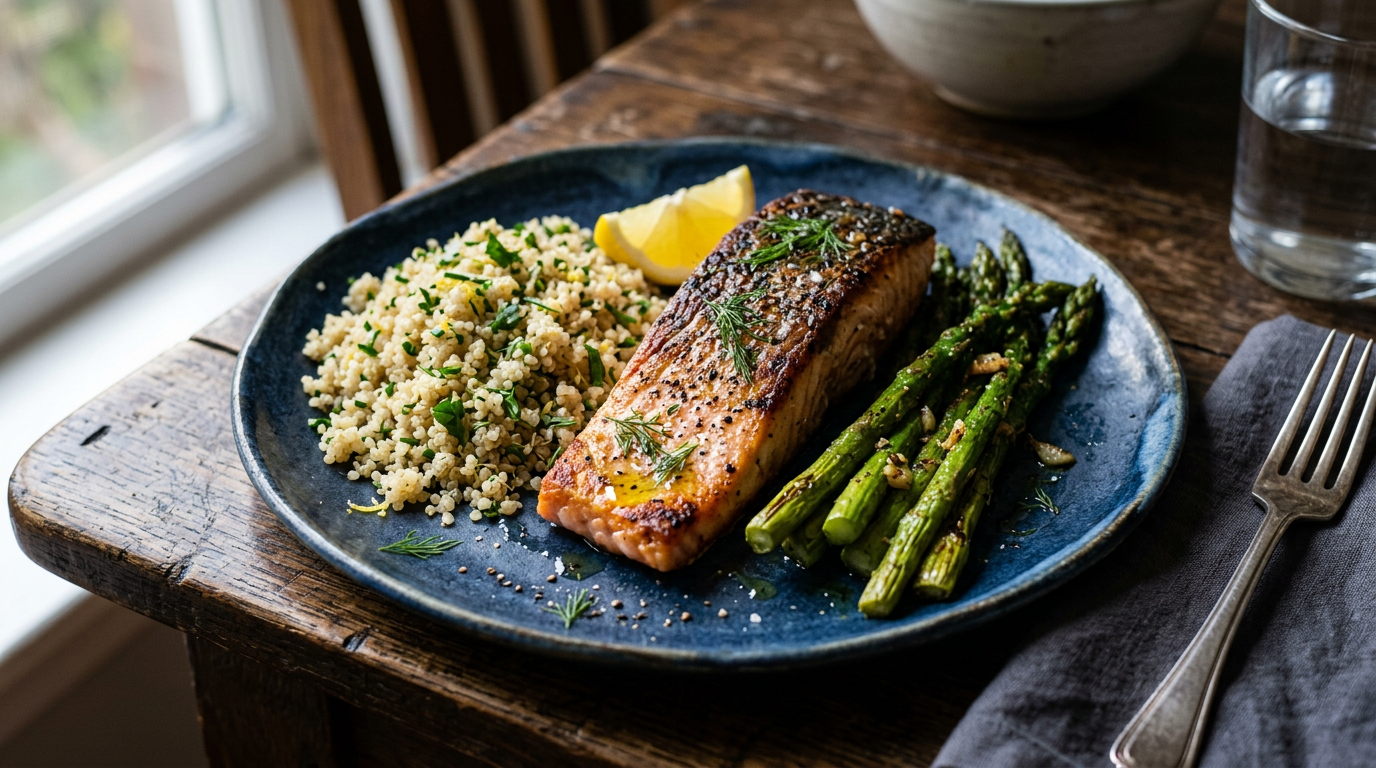
* 6 oz (170g) Grilled Salmon: ~34g protein
* 6 oz (170g) Chicken Breast: ~50g protein
* 2 Scoops of Collagen Peptides in a Bone Broth Soup: ~20g protein (add chickpeas for more)
* 1 cup Lentils + 1 cup Quinoa: ~26g protein (add nuts/seeds to increase)
* 7 oz (200g) Firm Tofu Scramble: ~20g protein (add a side of edamame)
2. Add Fibrous Vegetables (Unlimited): Fill at least half your plate with non-starchy vegetables. Broccoli, spinach, kale, asparagus, bell peppers, and cauliflower are packed with fiber, vitamins, and phytonutrients that reduce inflammation and support gut health.
3. Incorporate Healthy Fats (1-2 servings): Fats are crucial for hormone production and absorbing fat-soluble vitamins. Good sources include avocado, olive oil, nuts, and seeds.
4. Include a Smart Carb (Optional, in moderation): A small portion of a slow-digesting carbohydrate like quinoa, sweet potato, or brown rice can help replenish glycogen stores and may aid in the transport of amino acids into muscle cells.
By reframing your last meal of the day as a strategic anabolic trigger, you are engaging in a powerful form of preventative medicine and practical biohacking. You are sending a clear signal to your body to build, repair, and resist the sarcopenic drift of aging. This simple yet profound shift in perspective can have a compounding effect over time, helping you maintain strength, vitality, and a high quality of life for decades to come.
Editorial Note: This article was independently researched and written based on current publicly available health information and does not represent the views of, and is not affiliated with, any external publication referenced.
References
1. Paddon-Jones, D., & Rasmussen, B. B. (2009). Dietary protein recommendations and the prevention of sarcopenia. *Current Opinion in Clinical Nutrition and Metabolic Care*, 12(1), 86–90. https://doi.org/10.1097/MCO.0b013e32831cef8b
2. Moore, D. R., Churchward-Venne, T. A., Witard, O., Breen, L., Burd, N. A., Tipton, K. D., & Phillips, S. M. (2015). Protein ingestion to stimulate myofibrillar protein synthesis requires greater relative protein intakes in healthy older versus younger men. *The Journals of Gerontology: Series A*, 70(1), 57-62. https://doi.org/10.1093/gerona/glu103
3. Trommelen, J., & van Loon, L. J. C. (2016). Pre-Sleep Protein Ingestion to Improve Overnight Muscle Protein Synthesis. *Nutrients*, 8(12), 763. https://doi.org/10.3390/nu8120763
4. Layman, D. K. (2009). The role of leucine in weight loss diets and glucose homeostasis. *The Journal of Nutrition*, 139(1), 261S-267S. https://doi.org/10.3945/jn.108.097493